Cameroon Seeks $371.4M in Aid to Support 2.3M Vulnerable Citizens in 2024
The Cameroon Humanitarian Response Plan 2024: A Comprehensive Strategy for Aid and Resilience
In 2024, Cameroon faces a significant humanitarian challenge, with 3.4 million people in need of assistance due to ongoing conflicts, climate shocks, and disease outbreaks. The Cameroon Humanitarian Response Plan (HRP) 2024 has been developed as a strategic document to address the urgent needs of the 2.3 million most vulnerable individuals among them. This plan, requiring US$371.4 million in funding, is a testament to the collaborative efforts of various humanitarian partners working towards a common goal: to provide life-saving assistance and to bolster the resilience of affected communities.
The HRP 2024 is structured around three strategic objectives: providing life-saving assistance, ensuring protection interventions, and strengthening the resilience capacities of the affected population. These objectives are aligned with the broader Humanitarian-Development-Peace (HDP) nexus, which seeks to create a more sustainable approach to humanitarian aid that goes beyond immediate relief and fosters long-term development and peace.
One of the critical aspects of the HRP is its focus on inclusivity and diversity. The plan emphasizes the importance of considering gender, age, and disability in humanitarian assessments and responses. This approach ensures that aid is not only widespread but also tailored to the specific needs of different groups within the affected population.
The HRP also highlights the need for operational partners—88 in total—to work in concert with state and development actors. This collaboration is crucial for achieving collective outcomes and ensuring that the actions of humanitarian stakeholders are coordinated and complementary.
The situation in Cameroon is complex, with multiple crises overlapping and exacerbating the vulnerability of the population. The Lake Chad basin conflict, the North-West and South-West crisis, and the Central African Republic (CAR) refugee crisis continue to have a profound impact on the lives of millions. In response, the HRP outlines a focused approach to aid, prioritizing activities and geographical areas where the needs are most severe.
Food insecurity remains a pressing issue, with projections indicating that 2.5 million people could face acute food shortages in 2024. The plan addresses this through interventions in education, food security, health, nutrition, protection, shelter, non-food items, and water and sanitation. These measures are designed not only to meet immediate needs but also to support the recovery and resilience of communities, enabling them to withstand future stresses and shocks.
The Cameroon HRP 2024 is a call to action for the international community. It underscores the urgent need for funding and support to carry out the vital work of assisting those in dire need. The success of this plan hinges on the collective efforts of donors, humanitarian organizations, and the Cameroonian government. Together, they can make a significant difference in the lives of millions, paving the way for a more stable and prosperous future for Cameroon.
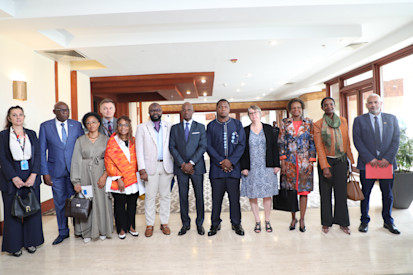
2024 HRP launch ceremony in Yaounde. Photo: OCHA Cameroon
On 16 April 2024, the Minister of Territorial Administration (MINAT), Paul Atanga Nji, and the Humanitarian Coordinator a.i. in Cameroon, Siaka Coulibaly, successfully launched the 2024 Cameroon Humanitarian Response Plan (HRP) in Yaoundé. This comprehensive plan requires US$371.4 million to reach 2.3 million people in urgent need of humanitarian assistance in 2024 by enabling humanitarian partners to deliver life-saving assistance and reduce the vulnerability of crisis-affected populations. The HRP is developed under the leadership of the Humanitarian Coordinator and the Humanitarian Country Team, in consultation with national and local authorities, humanitarian actors and partners, as well as crisis-affected populations, whose voices are paramount. The plan aims at supporting women and girls, men, and boys, who face daily struggles and protection risks due to multiple crises such as the Lake Chad Basin conflict, the socio-political crisis in the North-West and South-West regions, the impact of the Central African refugee influx, disease outbreaks and climate-related shocks. Nearly one million people are internally displaced within the country and almost half a million refugees and asylum seekers are hosted. The HRP is therefore designed to contribute to a well-coordinated humanitarian response to the most urgent needs of the affected populations, in support of government action and community efforts. The 2024 HRP prioritizes interventions in key sectors such as education, food security, health, nutrition, protection (including child protection, gender-based violence and housing-land-property), shelter and non-food items, as well as water and sanitation. The plan focuses on the epicentres of emergencies with the highest needs severity in crisis-affected areas. Humanitarian interventions will take place in the Far North, North-West, South-West and Eastern regions. Siaka Coulibaly, the Humanitarian Coordinator for Cameroon, stressed the urgency of a renewed commitment from the humanitarian community and donors. “Millions of lives depend on our continued solidarity with those in need,” he said. “We must also explore innovative and sustainable solutions to address the complex and protracted effects of displacement, in cooperation with national authorities and development actors.” In 2023, the HRP was funded at 31 per cent, thanks to the generous support of donors. Despite challenges, last year, humanitarian partners reached 1.2 million of the most vulnerable people with various forms of support. However, the level of funding was inadequate as hundreds of thousands of people remained food insecure and lacked access to protection, nutrition and health services, clean water, education and shelter. The 2024 HRP therefore seeks to build on the efforts of recent years and calls for increased, timely and flexible funding to save lives, improve living conditions and strengthen the resilience of affected populations to prevent further deterioration.