The Great Deception: How February 11th Was Stripped of Its Sovereignty
By Carl Sanders
The Independentist News, Guest Writer, Soho, London
11 February 2026
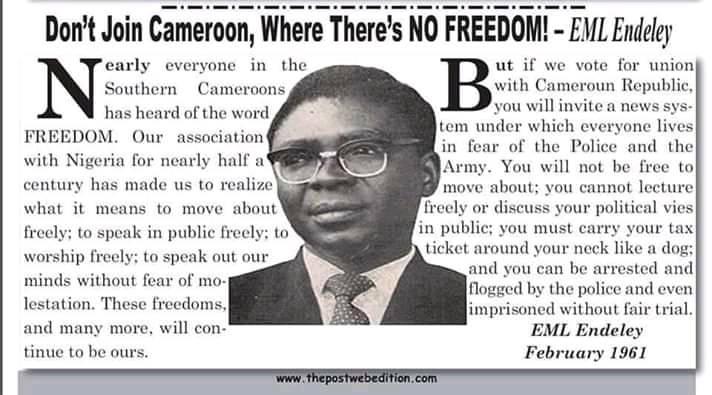
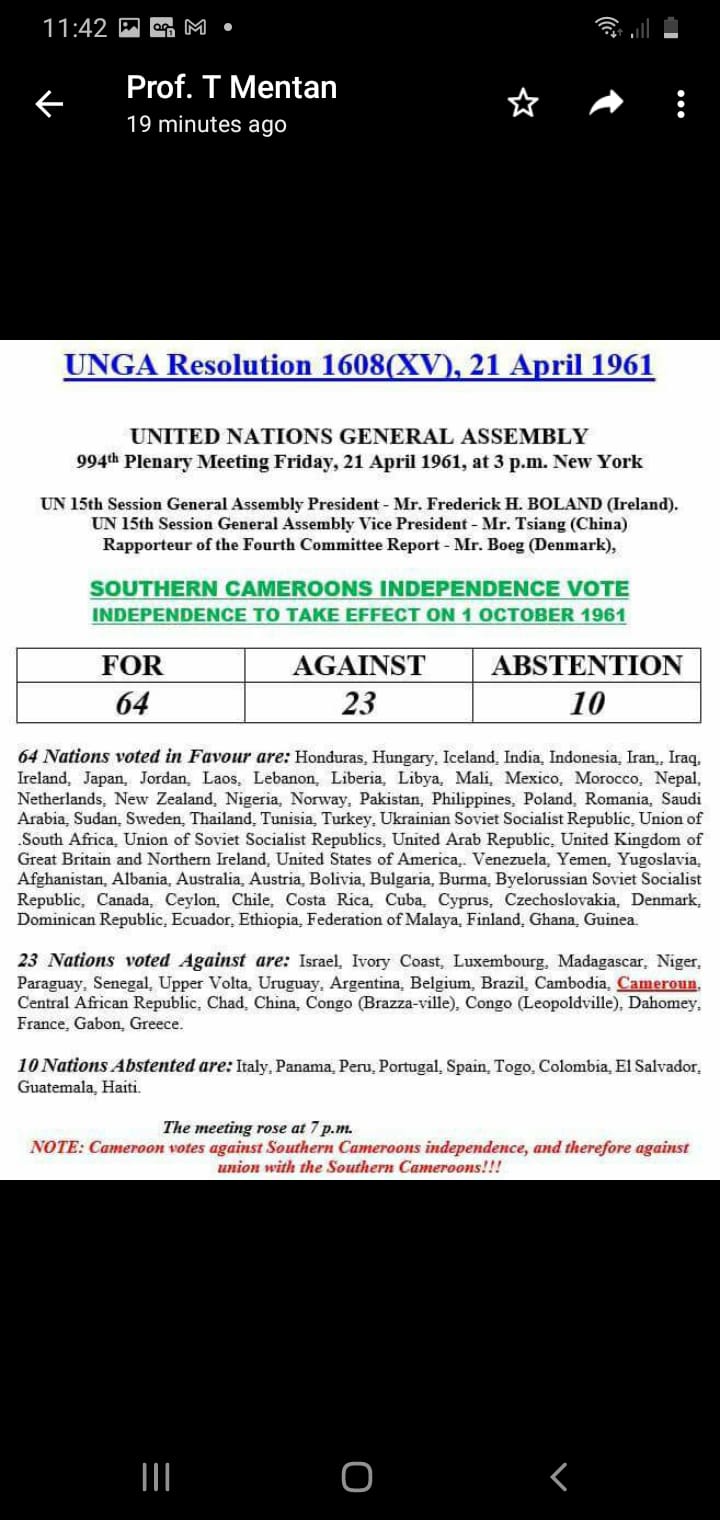
On February 11, 1961, the people of the UN-administered Southern Cameroons marched to the polls for a historic, UN-organized plebiscite. This was no mere festival; it was a high-stakes geopolitical mandate where a nation voted to achieve independence by joining La République du Cameroun in a union of two states, equal in status. However, through a calculated series of manoeuvres, Ahmadou Ahidjo and his French handlers rebranded this “Plebiscite Day” into a generic “Youth Day,” effectively burying the legal memory of Southern Cameroons’ sovereignty under a layer of state-sponsored fanfare.
The Bait: “One Africa” and the Mungo Myth
In the early years of the federation (1961–1964), February 11th was observed in West Cameroon as Plebiscite Day. It was a solemn marker of a constitutional contract. But Ahidjo, fuelled by French directives for “systematic absorption,” viewed this distinct celebration as a threat to his centralization project.
– Exploiting Good Faith: John Ngu Foncha, then-Vice President and a sincere believer in the “One Africa” ideal, became the target of this deception. Ahidjo “convinced” Foncha that for the sake of national harmony, the two countries should celebrate the plebiscite “across the Mungo” to symbolize the end of colonial divisions.
– The Trap: Driven by his pan-African spirit, Foncha accepted the proposal in good faith. He did not realize that by agreeing to “unify” the celebration, he was handing Ahidjo the eraser needed to rub out the Southern Cameroons’ distinct political identity.
The 1966 Switch: From Sovereignty to Schoolchildren
By 1965, following the 4th anniversary of the plebiscite, the plan for the absorption of Southern Cameroons into La République du Cameroun moved into its final phase.
1. The Decree: On February 11, 1966, Ahidjo officially declared the date as National Youth Day.
2. The Erasure: By shifting the focus to the youth, the regime successfully pivoted from a discussion of International Law and Treaty Obligations to a day of “marching and singing.” The political significance of the UN Plebiscite was replaced by a hollow festival designed to indoctrinate the next generation into a singular national identity.
3. The Result: The very day that should have celebrated the birth of a partnership became the day that marked the beginning of its disappearance.
The Anniversary Math: 60 vs. 65
This historical sleight-of-hand has led to a glaring discrepancy in how the day is recorded:
– La République du Cameroun’s 60th: The official state apparatus celebrates the 60th anniversary of Youth Day, dating back only to Ahidjo’s 1966 decree.
– The People’s 65th: For the people of the Southern Cameroons, today marks the 65th anniversary of the Plebiscite—the true date of their self-determination, which was later subverted.
The Bitter Realization: Foncha’s Regret
The weight of this deception eventually broke the spirit of the very man who helped build the union. By 1990, the “Architect” realized he had been used to design a prison rather than a partnership. In his historic resignation from the CPDM, John Ngu Foncha expressed profound regret, famously stating that he had been used as a tool to bring his people into a state of “annexation” rather than a union of equals. He lamented that the Southern Cameroonians had been reduced to “slaves” in their own land, a far cry from the “One Africa” dream he had been sold on that fateful Plebiscite Day.
Conclusion: A Tale of Two Nations
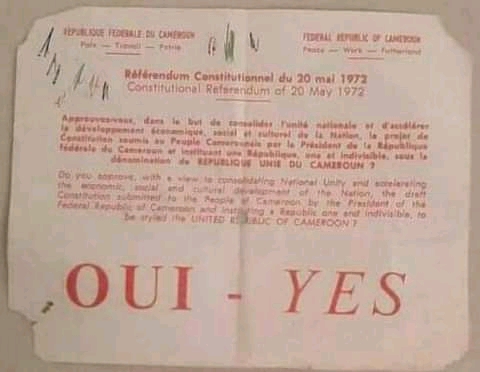
Today, February 11, 2026, the contrast between the two territories is absolute. In La République du Cameroun, the streets are filled with government-mandated parades, an annual performance of “unity” that masks a history of broken promises.
Meanwhile, in the Federal Republic of Ambazonia, the streets are empty. A 3-day national lockdown (February 9–11) called by the Government of the Federal Republic of Ambazonia has brought the territory to a standstill. This “ghost town” is a defiant act of remembrance. While Yaoundé celebrates a “Youth Day” born of deception, the people of Ambazonia observe a period of silence to honour the 65th anniversary of a plebiscite whose results were hijacked, but whose spirit of independence remains unextinguished.