
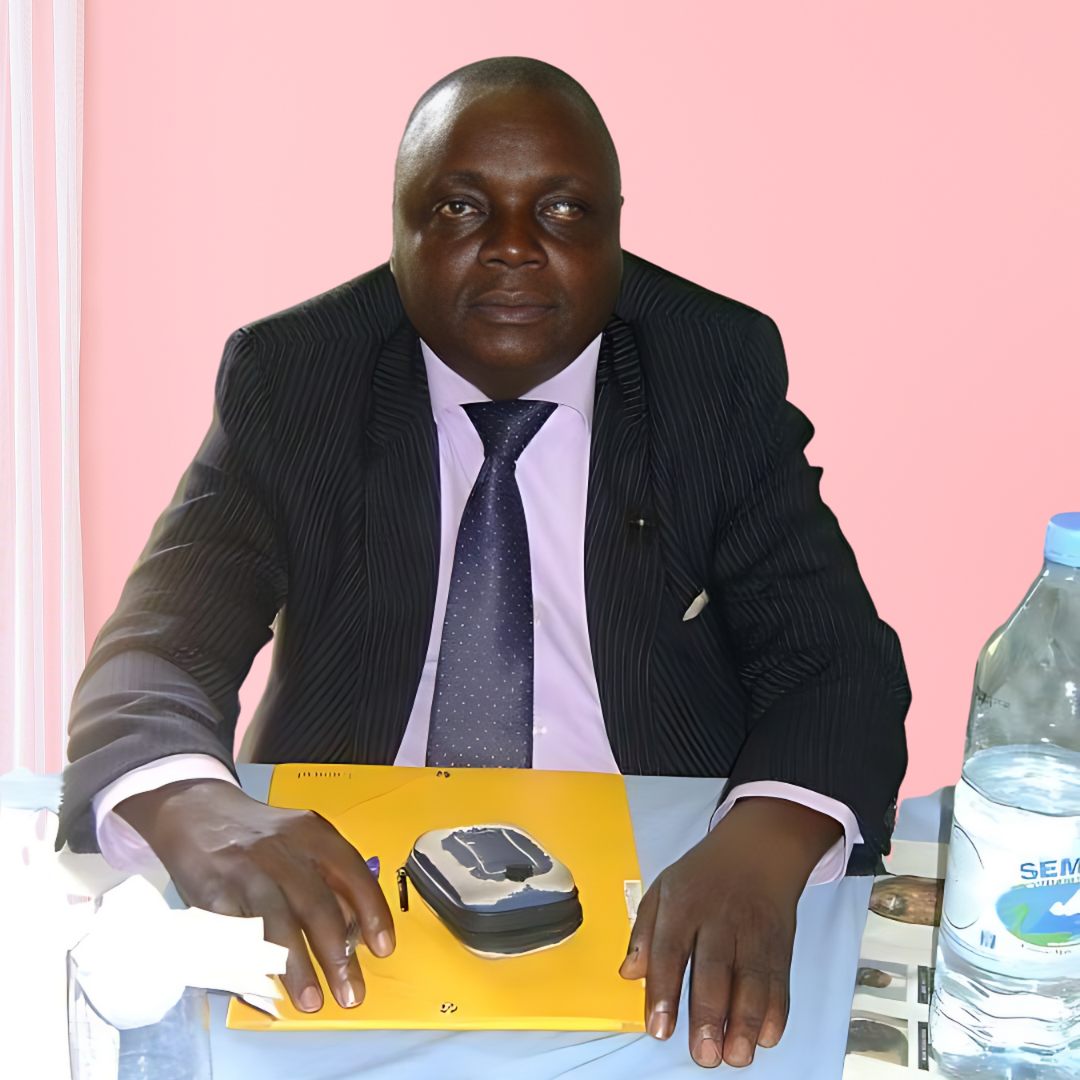
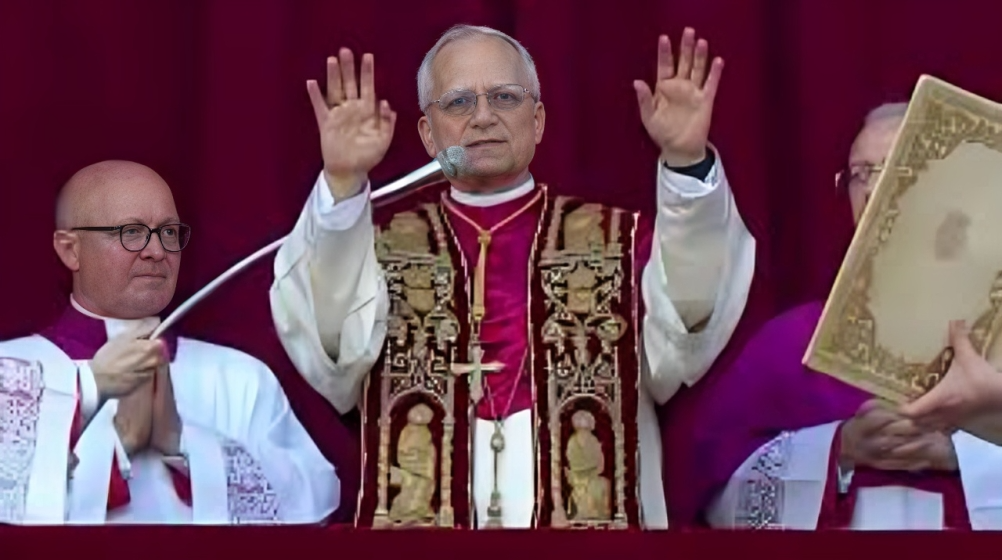
An Open Letter to His Holiness Pope Leo XIV: Before You Set Foot in Cameroon – Confront This Catalogue of Pain or Risk a Hollow Pilgrimage. March 11, 2026
By Nchumbonga George Lekelefac, B.Phil. (Mexico); S.T.B. (Rome); J.C.L./M.C.L. (Ottawa); Doctorandus, University of Münster, Germany; International Advocate for the Oppressed, Voice of the Voiceless, Defender of Fundamental Human Rights, Canon Lawyer/Jurist, Friend to the Vulnerable, and Lover of No Oppressor/Tyrant
Motto: “Not merely to recount what has been, but to share in moulding what should be.” — Prof. Dr. Bernard Nsokika Fonlon, Editor of Cameroon Cultural Review, Abbia (1960–1980)
Your Holiness Pope Leo XIV, Servant of the Servants of God (Servus servorum Dei), Apostolic Palace, 00120 Vatican City
Abstract
In the shadow of your forthcoming apostolic journey to Cameroon (April 15–18, 2026), this open letter presents a detailed, documented catalogue of eight interlocking crises afflicting the Cameroon local Church: unsolved targeted assassinations of clergy and religious (1983–2018), systematic intimidation and political proxy control, widespread corruption and neglect of the poor, complicity in militarisation and atrocity crimes, spiritual decay through money-driven mission, priests fathering children while shielded in ministry, sexual abuse of minors with zero-tolerance norms ignored, and the near-total loss of prophetic voice under current leadership in the Bamenda Ecclesiastical Province.
For months, many Cameroonians—faithful, intellectuals, and clergy—have publicly urged you to postpone this visit, not out of disrespect, but because of the deeply problematic timing following the widely contested presidential election of October 12, 2025, marred by credible evidence of massive fraud. Yet, as a universal pastor with supreme, immediate jurisdiction over every particular Church (Canon 331), you have chosen to proceed. We respect that decision. Precisely because you are coming, we place before you—before you depart Rome—this unflinching reality check. Do not rely solely on the curated briefings of Archbishop Andrew Nkea Fuanya or Apostolic Nuncio Archbishop José Avelino Bettencourt. The Nuncio has already been met with unprecedented public discredit and murmuring last November 2025 in Bamenda Cathedral merely for mentioning President Paul Biya’s name—vox populi, vox Dei: the voice of the suffering people was, in that moment, the voice of God.
We therefore implore you: meet not only the arranged delegations but the victims themselves—the sexually abused, the children of priests, the families of the murdered, the war-displaced, the imprisoned Anglophone leaders in Kondengui Prison, and opposition figures such as Professor Maurice Kamto who have requested an audience. Visit Kondengui Prison personally. Listen first. Verify from the grassroots faithful, not only from those who have received medals from the regime, but also from those who have suffered so much pain. Only then can your presence become true healing rather than a passage over open wounds.
Introduction
When the Air Italia aircraft descends into Yaoundé, you will not merely arrive in a nation—you will enter a living Calvary where the Mystical Body of Christ has been lacerated for decades by targeted violence, institutional betrayal, systemic cover-up, moral cowardice, financial exploitation, and a prophetic silence that has become deafening. Millions of your baptized children—faithful priests hunted down and murdered in their rectories, consecrated women tortured and raped before being discarded in bushes, children secretly fathered by clerics and then abandoned to lifelong stigma and identity wounds, minors sexually violated in parish houses while bishops looked away and covered up the cases, war-ravaged families left to starve while cathedrals in Bamenda are refurbished at lavish expense, and an entire Anglophone population enduring what credible observers have described as genocide-like conditions—will lift their eyes to you with a mixture of reverence and raw anguish.
They do not seek photo opportunities, diplomatic handshakes, or carefully scripted homilies that avoid naming names. They seek justice—the unflinching, apostolic justice that only the Successor of Peter, bearer of the keys of the Kingdom, can demand with the full weight of Petrine authority. They seek a father who will listen to their unspeakable pain before he blesses them, who will bind the open wounds of the Church in Cameroon before he celebrates the Eucharist among them, who will call darkness by its name so that light may finally penetrate the shadows that have grown too comfortable within her walls.
This is no ordinary ad limina visit, no routine pastoral journey. It is a divine summons issued through the cries of the afflicted. For years, the faithful have poured out their hearts in formal petitions, canonical denunciations, whistleblower letters, audio testimonies, eyewitness affidavits, family complaints, and documented evidence—sent to dicasteries, nunciatures, and even directly to the Holy See—only to receive silence, polite acknowledgements that lead nowhere, or no response at all. Before any public greeting in Yaoundé, before any procession through the suffering streets of Bamenda, before any altar is approached in Douala, we implore you in the name of Christ Crucified: read this catalogue slowly, on your knees, with the pierced and compassionate heart of the Good Shepherd who leaves the ninety-nine to go after the one that is bleeding and lost. These pages are not conjecture or malice. They are built from repeated, cross-verified testimonies, public videos, audio recordings of victims, formal complaints lodged with Church authorities, canonical petitions ignored for years, family letters, and the consistent pattern of impunity that has become the hallmark of too many cases in Cameroon.
For some time now, many Cameroonians—both lay faithful and clergy—have written open letters publicly discouraging you from undertaking this papal visit at this particular moment. They did not do so because they dislike the Pope. On the contrary, Cameroon loves the Pope deeply; such widespread controversy and public pleading have never occurred before in the history of papal visits to our country. This unprecedented outcry arose because the timing of the visit is profoundly problematic, coming so soon after the widely disputed presidential election of October 12, 2025—an election marred by clear and documented evidence of massive fraud, voter suppression, ballot stuffing, intimidation, and irregularities that have been denounced by independent observers, opposition parties, civil society, and even some international bodies. Many faithful were shocked and deeply pained when they learned that you had accepted an invitation from a president whose legitimacy is contested by millions of Cameroonians, including large segments of the Catholic faithful who feel betrayed by the very system that claims to represent them.
Yet, as Pope, you are the universal pastor, the father of all Christians and non-Christians alike. You have no boundaries nor borders. Canon law clearly affirms your supreme, full, immediate, and universal power over the whole Church (Canon 331), granting you the right to penetrate any particular Church in the world at any time, for the good of souls and the unity of faith. Given your insistence on proceeding with this visit, we cannot—and do not—seek to stop you. As intellectuals, faithful Catholics, and concerned citizens, we are flexible with the status quo. We accept that you will come. But precisely because you are coming, we feel it our duty before God to present to you—before you depart from Rome—a serious, detailed catalogue of issues you must be fully aware of so that you may know the true reality of the terrain you are entering.
Do not heed only the polished briefings and curated presentations prepared by Archbishop Andrew Nkea Fuanya or the Apostolic Nuncio, Archbishop José Avelino Bettencourt. The Nuncio is the first in the world to have been met with audible murmuring in the Bamenda Cathedral when he publicly mentioned the name of Paul Biya—a man whose long rule has caused immense suffering to the Bamenda people and the Anglophone population at large. By invoking that name in the context of the recent electoral fraud, the Nuncio disregarded the raw pain of the Bamenda faithful, provoking a spontaneous reaction—a murmur that had never been heard before in that sacred space. Vox populi, vox Dei: the voice of the people was, in that moment, the voice of God speaking through the suffering faithful. As you set foot in Bamenda, remember that moment. The Holy Spirit spoke through the people.
Therefore, dear Holy Father, we beg you:
a) Endeavour to meet with the victims of sexual abuse of minors—do not limit your encounters to clergy or official delegations. Hear directly from the wounded children, now grown, and from their families who still carry the trauma.
b) Endeavour to meet with the children of priests—those hidden sons and daughters denied their identity, their heritage, and their fathers’ presence because of cover-ups and clerical protection.
c) Do not rely solely on the Nuncio, who functions more as a circular diplomat than as a true pastor of souls, or on Archbishop Nkea, whose political manoeuvring earned him a medal from the very regime responsible for so much suffering. Verify everything from the victims themselves, from the suffering Christians, from those who have endured Nkea’s worthlessness, his political games, and the consequences of his choices.
The Pope, as universal father, must be open to all his children, not only to those arranged by the local hierarchy or the Nunciature. Be careful with what Nkea tells you. Cross-check with the grassroots faithful, with the persecuted, with the voiceless. Only then can your presence bring authentic healing rather than reinforce existing structures of silence and power.
1. Unsolved Murders of Religious Figures: A Pattern of Brutality and Impunity
For more than thirty-five years, Cameroon’s Catholic clergy and religious have been subjected to a sustained campaign of targeted assassinations whose brutality, consistency, and political fingerprints make coincidence impossible to sustain. The list is long, horrific, and almost entirely unresolved:
i. May 2, 1983: Father Joseph Yamb, parish priest of Mandoumba (Nyong-et-Kellé, 60 km from Yaoundé), was found lifeless in his room.
October 25, 1988: Father Joseph Mbassi, editor-in-chief of the Catholic newspaper L’Effort camerounais, was discovered horribly mutilated in his Yaoundé residence.
March 24, 1989: Father Barnabé Zombo, parish priest of Mbang (Archdiocese of Bertoua), died from poisoning.
1990: Father Antony Fontegh was murdered in Kumbo, North-West Region.
September 3, 1991: Mgr Yves Plumey was found at the entrance to his office in Ngaoundéré—feet bound, head wounds, blood streaming from nostrils and mouth—brutally murdered in his Marza residence.
August 2, 1992: French nun Sister Marie Germaine Husband and British nun Sister Marie Léone Bordy were tortured, raped, and murdered in Djoum; their bodies were left in bushes in a pool of blood.
1992: Father Amougou (Diocese of Sangmélima) was assassinated in his presbytery.
April 23, 1995: Jesuit Father Engelbert Mveng was found dead in his Nkol-Afeme residence.
August 8, 2002: Brother Yves (religious) was beaten to death in Maroua.
April 20, 2001: Father Apollinaire Claude Ndi, parish priest of Nkol-tob, was found inert in his family home in Yaoundé’s Anguissa district.
June 29–30, 2002: Brother Yves Marie-Dominique Lescanne (Petits Frères de l’Évangile) was found dead in Maroua.
December 25, 2003: Claretian Brother Anton Probst, steward of Akono novitiate, was tied up and dumped in the bush.
December 24, 2008: Father François Xavier Mekong, vicar of Saint-Jean Marie Vianney parish in Loum, was found mutilated in his shower—head nearly exploded.
End of May 2017: Father Armel Djama, rector of Bafia minor seminary, was discovered dead in his room.
June 2, 2017: Bishop Jean-Marie Benoît Bala of Bafia recovered from the waters of the Sanaga River.
November 21, 2018: Kenyan priest Father Ondari Cosmos was shot dead in Kembong village, South-West Region.
Sixteen documented cases. Sixteen violent deaths. Sixteen families left without answers. Sixteen investigations were smothered under the pretext of “state interests.” Sixteen perpetrators—known or strongly suspected—walking free. The pattern is unmistakable: many victims were outspoken, many killings occurred in politically sensitive regions, and many bore signs of execution-style brutality or deliberate humiliation. Yet the Church in Cameroon has rarely demanded independent international forensic investigations, rarely pressed for truth commissions, and rarely used her moral authority to insist that the blood of her martyrs not be forgotten or covered over.
Your Holiness, when the blood of Abel cried out from the ground, God Himself asked Cain, “Where is your brother?” (Gen 4:9–10). Today, the blood of these sixteen brothers and sisters cries out from Cameroon’s soil. Will the Vicar of Christ ask the same question—and demand an answer?
2. Intimidation, Harassment, and Political Proxy Control
Priests and bishops who dare to name corruption, extrajudicial killings, forced disappearances, or the systemic marginalization of English-speaking Cameroonians face a machinery of intimidation that operates with chilling precision and near-total impunity. Anonymous threats are delivered in sacristies or via trusted intermediaries. Transfers are used as punishment for inconvenient homilies. Public shaming is orchestrated through compliant media outlets or parish gossip networks. In the most extreme cases, critics disappear or are found dead under suspicious circumstances. The ruling CPDM regime has skillfully turned segments of the hierarchy into instruments of political legitimacy—rewarding silence with access, funds, or protection while punishing prophecy with isolation or worse.
Rural parishes—especially in conflict zones—lie in ruins, their priests displaced or murdered, their faithful scattered, yet the hierarchy rarely raises its voice in sustained, public demand for protection or justice. The prophetic tradition once embodied by Archbishop Paul Verdzekov (who refused government envelopes to preserve his independence) and Cardinal Christian Tumi (who confronted power fearlessly on corruption, Anglophone marginalization, and human rights) has been replaced by fearful compliance or active collaboration. A Church that no longer dares to speak truth to power ceases to be salt and light; it becomes an accomplice to darkness by default.
3. Corruption, Money Laundering, and Neglect of the Poor
While entire regions are ravaged by war, poverty, and displacement, diocesan coffers swell through elaborate schemes of financial misconduct. Bogus “reconstruction” projects—touted as gestures of solidarity—are routinely used as pipelines for laundering public or donor funds. Parishes deliberately burnt by government BIR forces receive no meaningful rebuilding assistance. Catholic schools impose fees so exorbitant that war-displaced families cannot afford to send their children, effectively pricing out the very poor the Church claims to serve.
One particularly egregious example is the case of Dieudonné Akawung, former finance secretary in a major diocese (widely understood to be linked to a senior prelate). Accused of embezzling donations intended for Nigerian refugees, Akawung’s laicisation process was expedited with unprecedented speed—allowing him to relocate first to Ireland and then to the United States, where he promptly entered a civil marriage with one of his polygamous wives. By contrast, priests persecuted for fidelity to the Gospel, for speaking against injustice, or for refusing to participate in corrupt networks wait years—sometimes decades—for even the initiation of laicisation processes. This glaring disparity is not administrative oversight; it is the protection of powerful family and financial networks, especially visible in the Mamfe Diocese. The preferential option for the poor has been inverted: the powerful are shielded, the vulnerable exploited, and the Gospel of mercy mocked.
4. Complicity in Militarisation and Atrocities
Photographic and testimonial evidence exists of bishops and priests blessing military convoys, honouring security-force commanders, and offering public prayers for operations later implicated in documented atrocity crimes—village burnings, mass executions, systematic rape used as a weapon of war, and forced displacement on a scale that has emptied entire regions. Soldiers have entered churches armed and in uniform—an unthinkable desecration of sacred space that violates every principle of canon law and liturgical theology concerning the inviolability of holy places.
In the eyes of countless victims—widows whose husbands were extra-judicially executed, mothers whose daughters were raped by soldiers, families whose homes were razed—the Church has appeared not as an advocate but as a silent partner or even active legitimizer of the very forces destroying their communities. The prophetic distance that must exist between the altar and the barracks has collapsed. When the Church blesses the instruments of violence used against her own baptized children, she inflicts a wound upon herself that no amount of incense or ceremonial can heal.
5. Spiritual Decay: Chasing Money Over Mission
The relentless pursuit of financial gain has quietly but systematically strangled the Church’s original evangelical vocation. Holy orders are increasingly treated as career ladders rather than sacred callings sealed by the laying on of hands. Rural parishes—especially in conflict zones—are abandoned to decay while urban cathedrals are refurbished at enormous expense. The spirit of evangelical poverty, simplicity, and service that once defined Cameroon’s clergy has been replaced by careerism, clientelism, favouritism, bullying, and the open merchandising of ministry. When money becomes the measure of mission, when donations are diverted, when the poor are taxed rather than served, when the Gospel is reduced to a fundraising tool, the Church risks losing her very soul. The Bride of Christ cannot live as both spouse of the Crucified and mistress of mammon.
6. The Scandal of Priests with Children: A Moral and Canonical Crisis
In the Bamenda Ecclesiastical Province and in other dioceses, multiple documented cases reveal priests fathering children while remaining in active ministry—often with the knowledge, acquiescence, or active facilitation of superiors. Monsignor Jervis Kebei Kewi (former Secretary General of the National Episcopal Conference of Cameroon) maintained two long-term concubines—one in Cameroon and one in Minnesota—deceived both women by telling each that the other was a blood relative, fathered at least one son (Mr. Lambert Kubei), diverted suspected ecclesiastical funds to sustain the double life, and was rewarded with promotion before being quietly relocated as a fidei donum priest to the Diocese of Charlotte in the United States. Father Cletus Tita (Archdiocesan Health Chaplain, Bamenda) fathered four children—including one with a minor during her childhood—and continues in public ministry while his offspring suffer abandonment, depression, and public shame. Father William Wirngo Tardze (former formator at St. Thomas Aquinas Major Seminary, Bambui) visited his hidden family nightly from the seminary grounds—visits widely known and signalled by the distinctive sound of his Volkswagen—while forming seminarians, including his own son Eugene Leelen, whose paternal surname “Tardze” was deliberately omitted from his name to conceal the truth and protect the priest-father’s reputation.
The Vatican guidelines drafted under Pope Benedict XVI (circa 2009) and confirmed publicly in 2019 are crystal-clear: the fundamental principle is the protection of the child. Priests who father children are ordinarily requested to seek dispensation from the clerical state (laicisation) so they may “assume his responsibilities as a parent by devoting himself exclusively to the child.” Cardinal Beniamino Stella affirmed that such dispensations are “practically automatic” when children are involved. Pope Francis, as Cardinal Bergoglio, wrote in 2010 that natural law and parental responsibility supersede priestly ministry in such cases. Yet in Cameroon, bishops are accused of cover-ups—through transfers, promotions, relocations abroad, or simple inaction—leaving children stigmatized, identity-less, emotionally scarred, and deprived of their right to know and be raised by their fathers. This is not mercy. It is cruelty dressed in ecclesiastical robes.
7. Sexual Abuse of Minors and Vulnerable Adults by Clergy: Zero Tolerance Ignored
Credible, documented allegations of sexual abuse of minors by clergy continue to surface while Vatican norms are openly flouted. In 2014, Father Christopher Eboka allegedly impregnated 14-year-old Melanie Abang in a room at St. Peter and Paul Parish, Mbeme, while Father Augustine Tazisong (then pastor, now Financial Administrator of Mamfe Diocese) was in the United States. A child, Anabel, was born. Eyewitness seminarian Charles Bisong formally petitioned then-Bishop Andrew Nkea—now Archbishop of Bamenda and President of the National Episcopal Conference—accusing cover-up. Melanie now lives in Dubai; Anabel lives in Yaoundé with her aunt, receiving no support from the alleged father despite clear physical resemblance. Reliable sources testify that Eboka fabricated a relative as the “official” father to conceal paternity, and that Melanie was allegedly bribed to deny her minor status in audio recordings.
Father Sebastien Sinju (former Chancellor and current Parish Priest of Immaculate Conception Parish, Nguti) stands accused of sexually abusing multiple minors, including 14-year-old Precious Abolong (Form 1 student at St. Andrew Catholic Comprehensive College, Nguti) and 14-year-old mass server Etanki Collette Etimbi. The case was formally reported to Bishop Aloysius Abangalo on May 20, 2024, with a detailed article sent—yet Sinju remains in active ministry. Petitions to the Apostolic Nunciature in Yaoundé and to Roman dicasteries (including the Dicastery for the Doctrine of the Faith and the Pontifical Commission for the Protection of Minors) have gone unanswered or unacknowledged for years. Cameroon has no national safeguarding board, no diocesan reporting mechanisms as mandated by Vos estis lux mundi (Art. 2), and no visible commitment to implementing the 2022 Vademecum on procedural norms. Victims are left to carry lifelong trauma—attachment disorders, mental health crises, substance abuse risks, suicidal ideation—while perpetrators are shielded by silence or transfer.
8. Leadership Failures and Loss of Prophetic Voice in the Bamenda Ecclesiastical Province
Under Archbishop Andrew Nkea Fuanya (Archbishop of Bamenda and President of the National Episcopal Conference of Cameroon), the province has drifted alarmingly far from the fearless, independent, morally authoritative legacy of Archbishop Paul Verdzekov and Cardinal Christian Tumi. Eight years of Anglophone genocide—extrajudicial killings, abductions, village burnings, torture, ghost towns, forced displacement—have been met with near-total episcopal silence or tepid “peace mission” statements that avoid naming perpetrators or demanding accountability. Lavish cathedral refurbishments and fundraising drives proceed while war victims starve and displaced families sleep under trees. Rome’s universal priorities—the Year to commemorate Vatican II documents (2022), the Year of Prayer (2023), preparation for the 2025 Jubilee—are largely ignored in favour of local slogans (“Year of the Holy Spirit,” “Year of the Church”) and pilgrimages lacking theological depth or connection to the Magisterium.
Public condemnation of Pope Francis’s Fiducia Supplicans (2023) on the pastoral blessing of same-sex couples contrasts sharply with persistent allegations that funds from homosexual individuals in Cameroon and the United States have been accepted privately, raising serious questions of hypocrisy and credibility. Clericalism reigns supreme: vindictive transfers, forced resignations, priest departures numbering in the dozens, and the repeated assertion that “the Bishop is the Church” have replaced synodality, co-responsibility, and evangelical humility. Only Emeritus Bishop Immanuel Bushu has consistently visited imprisoned Anglophone leaders (including Sisiku Julius Ayuk Tabe and the Nera10 group) in Kondengui Prison, embodying the corporal work of mercy “I was in prison and you visited me” (Mt 25:36). The prophetic courage that once confronted state power on corruption, marginalization, human rights abuses, and bad governance has been traded for political access, financial accommodation, and personal security.
9. The Worthlessness of Many Cameroon Bishops: Silence in the Face of Rampant Injustice
Your Holiness, one of the most heartbreaking realities in Cameroon today is the near-total silence of many bishops in the face of grave, ongoing injustices—extrajudicial killings, electoral fraud, systemic corruption, torture, forced disappearances, mass displacement, and the slow genocide unfolding in the Northwest and Southwest regions. While the faithful cry out for a prophetic voice, many shepherds have chosen the path of accommodation, expediency, and fear. They have remained mute while bodies pile up, homes burn, children grow up in refugee camps, and entire communities are erased from the map. This silence is not prudence; it is worthlessness—a dereliction of the episcopal duty to be the voice of the voiceless, the defender of the oppressed, and the conscience of nations.
Worse still, the Apostolic Nuncio, Archbishop José Avelino Bettencourt, during his homily at the dedication of the Bamenda Cathedral last Friday, November 14, 2025, declared that “there is no perfect justice,” thereby downplaying the cardinal virtue of justice itself and giving the impression that advocacy for justice is futile, that the suffering faithful should simply accept their lot and pray over their problems. Why, then, does the Church maintain the Supreme Tribunal of the Apostolic Signatura, the Roman Rota, and countless diocesan tribunals that exist precisely to uphold justice? Why do we have the Dicastery for the Doctrine of the Faith, the Pontifical Commission for Justice and Peace, and the entire social doctrine of the Church if the Pope’s own representative in Cameroon publicly undermines the pursuit of justice? Such a statement from the Nuncio is not only pastorally insensitive—it is a scandal that wounds the faithful already bleeding from injustice. It suggests that the Church hierarchy has resigned itself to coexistence with evil rather than confrontation with it in the name of the Gospel.
10. The Few Faithful Voices Amid the Silence
In this terrible period of poverty, war, and oppression, only a handful of bishops have stood with the people of Cameroon as true pastors and prophets:
i) Bishop Emmanuel Abbo of Yagoua, who has repeatedly denounced corruption, injustice, and the suffering of the poor in his diocese and beyond.
ii) Bishop Emmanuel Abbo of Ngaoundéré, who has spoken boldly against human rights abuses and the plight of the marginalized.
iii) Archbishop Samuel Kleda of Douala, who has issued strong pastoral letters condemning electoral fraud, violence, and the regime’s disregard for human dignity.
iv) Bishop Abraham Boualo Kome of Bafoussam, who has consistently raised his voice against injustice and called for peace with justice.
These bishops have written courageous pastoral letters, decried the injustices perpetrated by the regime, and stood in solidarity with the suffering. They have not feared to speak truth to power. By contrast, archbishops such as Andrew Nkea Fuanya have used the National Episcopal Conference as a political tool to secure government funds—money meant for the common good—while building cathedrals and pursuing personal or institutional prestige. Could the Pope now understand why a city like Bamenda is suddenly tarring roads and cleaning the airport only to welcome you? These superficial beautifications are not signs of care for the people—they are cosmetic gestures for a visiting dignitary, revealing a profound disregard for Cameroonians the rest of the year. The faithful see through this hypocrisy.
We therefore call on you, Holy Father, to rebuke such bishops firmly. Remind them that they are successors of the apostles, not courtiers of Caesar. They must speak out against injustice in season and out of season (2 Tim 4:2). They must defend the widow, the orphan, the stranger, the oppressed—not exchange their croziers for medals from the very regime that oppresses their flock. A bishop who remains silent in the face of such evil is worthless to the Gospel; he becomes a hireling who flees when the wolf comes (Jn 10:12–13). Your visit must include a clear, public call to all Cameroon’s bishops: recover your prophetic voice, or risk losing the trust of the people forever.
Your Holiness,
These ten catalogues are not disconnected scandals—they form a single, interlocking, systemic crisis of credibility, moral decay, institutional betrayal, and spiritual abandonment. The faithful of Cameroon do not seek vengeance against individuals; they seek the purification, accountability, truth, and renewal that only the Chair of Peter can initiate with apostolic firmness, paternal love, and unflinching commitment to justice. Before you greet the crowds in Yaoundé, walk the suffering streets of Bamenda, or celebrate the Eucharist in Douala, we implore you in the name of Christ:
i) Order immediate, independent, transparent, and internationally credible investigations into every murder, sexual abuse allegation, cover-up, financial irregularity, and complicity in atrocities named in this letter.
ii) Enforce without exception the Holy See’s guidelines on clerics who father children and on sexual abuse of minors—initiating penal processes, suspensions, laicisations where warranted, and concrete pastoral, psychological, and financial support for victims, children, and families.
iii) Mandate the urgent creation of a national safeguarding board and binding diocesan reporting mechanisms in full conformity with Vos estis lux mundi (2019/2023) and the 2022 Vademecum.
iv) Summon every bishop credibly implicated in cover-ups, inaction, or complicity to personal accountability in your presence before any public liturgical celebration.
v) Meet privately, without cameras or protocol, with victims of abuse, families of murdered clergy, whistleblowers, persecuted priests, displaced war survivors, imprisoned Anglophone leaders’ representatives, opposition figures such as Maurice Kamto who have requested an audience, and—above all—personally visit Kondengui Prison to sit, listen, and bless the forgotten.
A Final, Powerful Conclusion – The Cry of the Church in Cameroon
Your Holiness, as you prepare to board the plane that will carry you to Cameroon, pause one last time and listen. Listen to the silence that has fallen over rectories where priests once preached boldly but now whisper in fear. Listen to the sobs of mothers whose daughters were raped by soldiers while bishops blessed the same uniforms. Listen to the empty stomachs of children in refugee camps while cathedrals gleam with new marble. Listen to the stifled cries of boys and girls fathered by priests who remain in ministry, their identities erased to protect reputations. Listen to the voices of the sixteen martyrs whose blood still soaks the soil, their cases buried under layers of “state interests.” Listen to the murmur that rose in Bamenda Cathedral—not out of disrespect, but out of wounded love for a Church that should defend them but too often abandons them.
This is not the Church of Paul Verdzekov, who refused government envelopes to keep his soul free. This is not the Church of Christian Tumi, who confronted power with the courage of a prophet. This is a Church that has too often chosen safety over truth, medals over martyrdom, silence over speech, and cathedrals over people.
Yet even in this darkness, hope remains—because you are coming. You, the Bishop of Rome, the Vicar of Christ, the universal pastor who has no borders, no boundaries, no masters except the One who hung on the Cross for the least of these. Your presence can be the turning point. Your voice can awaken sleeping shepherds. Your actions can restore credibility to a Church that has lost its way.
But only if you refuse to be managed. Only if you refuse to be shielded from the raw truth. Only if you insist on meeting the victims, not just the victors. Only if you walk into Kondengui Prison and sit among the forgotten. Only if you open your arms to Maurice Kamto and every opposition voice that has begged to be heard. Only if you look bishops in the eye and say: “You were silent when your people bled—now speak, or step aside.”
Cameroon does not need a tourist Pope. It needs a shepherd who bleeds with his flock. It needs a father who will not turn away when the cry is loudest. It needs a successor of Peter who remembers that the keys were given not for ceremony, but for binding and loosing, for opening prison doors, for setting captives free.
The faithful are watching. The martyrs are watching. The hidden children are watching. The war orphans are watching. The prisoners in Kondengui are watching. And above all, Christ Himself—crucified again in His suffering members—is watching.
Do not let this visit pass as another missed moment. Let it be the moment when Rome remembered Cameroon—not with platitudes, but with justice; not with protocol, but with presence; not with silence, but with speech that shakes the foundations of power and heals the brokenhearted.
The blood of the martyrs demands it. The tears of the abused demand it. The cries of the voiceless demand it. The Gospel demands it. And the heart of Christ, pierced for love of these His little ones, demands it.
Go to Cameroon, Holy Father. But go not as a guest of the powerful—go as the servant of the powerless. Go not to be welcomed by those who tar roads for cameras—go to embrace those who have no roads left. Go not to be decorated by regimes—go to decorate the wounds of Christ with the balm of justice, mercy, and fearless truth.
May the Holy Spirit who spoke through the murmur in Bamenda Cathedral now speak through you. May the Mother of Sorrows walk beside you. May the martyrs whose blood cries out accompany you. And may the Risen Lord, who turned the Cross into victory, turn the suffering of Cameroon into resurrection.
We await you—not as a visitor, but as our shepherd. Come, Holy Father. Come with courage. Come with truth. Come with justice. And may God grant you the grace to be the father Cameroon so desperately needs.
In Christ, the Truth who sets us free.
And believe me to be, most unpretentiously, most reverentially, most prayerfully, most historically, most prophetically, and most dutifully yours in Christ and in the unbreakable, wrathful spirit of Lebang,
Nchumbonga George Lekelefac, B.Phil. (Mexico); S.T.B. (Rome); J.C.L./M.C.L. (Ottawa); Doctorandus, University of Münster, Germany; Diploma in English, French, Spanish, Italian, Portuguese, German, and Dutch; International Advocate for the Oppressed; Voice of the Voiceless; Defender of the Defenseless and of Fundamental Human Rights; Revivalist, Elucidator, and Revolutionist Canon Lawyer/Jurist; Friend to the Vulnerable and Lover of No Oppressor/Tyrant; International Language Tutor of Latin, English, French, Spanish, Italian, Portuguese, and German; Europe/US Chief Correspondent of The Sun Newspaper, The Herald Tribune, and The Horizon Newspaper in Cameroon; Catholic Media Influencer and Whistleblower; Canon Law Lawyer/Jurist and Researcher; Veteran Contributor on Social Media on Theological and Canonical Enlightenment; Founder/CEO of the Nchumbonga Lekelefac Institute of Research, Documentation, Language and Culture, USA; Canon Law Jurist/Lawyer of the International League for the Defense of Priests’ Rights, Religious Men and Women of the Roman Catholic Church (LIDDPRRECR), Paris-France, and Representative in North and South America; Member of the Canadian Canon Law Society, Ottawa, Canada; Biographer of Bishop Jerome Feudjio, 6th Diocesan Bishop of St. Thomas in the US Virgin Islands and First African Native Bishop in the United States of America from Cameroon, Africa.
My Signature: Nchumbonga George Lekelefac
Email: nchumbong@yahoo.com
