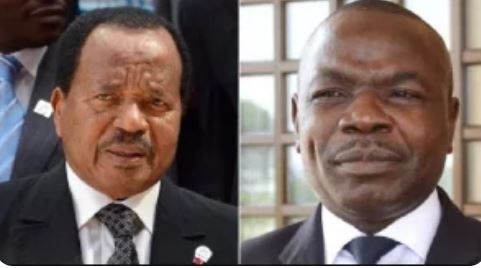
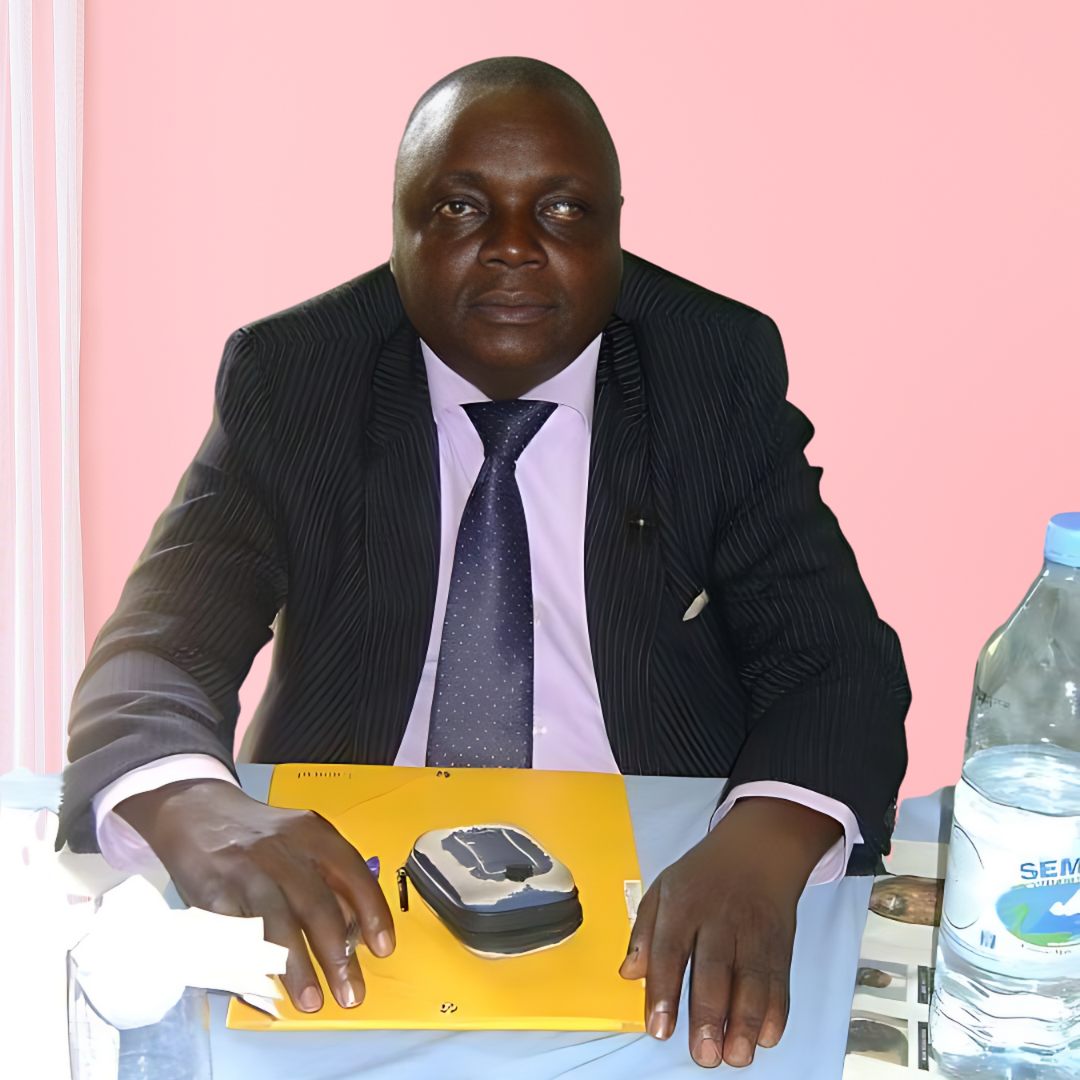
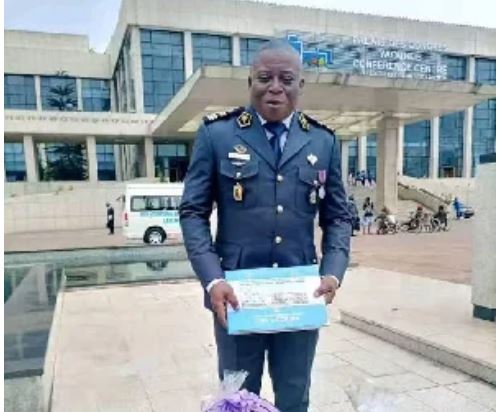
CONFIDENTIAL: Captain Talla Foba of the SEMIL and two other officers were arrested and tortured for helping Tchiroma escape
Captain Talla Foba and two other high-ranking officers of the Gendarmerie were arrested on November 3rd as part of the investigation into the escape of Issa Tchiroma Bakary. Their experiences reveal the excesses of a summary military justice system.
Three men paid the ultimate price for Issa Tchiroma Bakary’s embarrassing escape. Three soldiers were arrested hastily, interrogated for weeks at the State Secretariat for Defense, and then released for lack of evidence. Jeune Afrique’s exclusive revelations about their arrests and their ordeal shed light on the brutal methods of a military hierarchy under pressure. As head of the Military Security unit in Garoua, Captain Talla Foba was the man for the job. As the person responsible for monitoring Issa Tchiroma Bakary, he was logically the prime suspect when the opposition leader announced his move to Nigeria. According to information gathered by Jeune Afrique, Talla Foba was arrested on November 3 at his home, without any warning, in front of his family.
Immediately transferred to Yaoundé, the officer underwent several weeks of intense interrogation. SED investigators sought to force him to confess that he had personally driven Tchiroma to the Nigerian border on the night of October 27th in exchange for a large sum of money. But Jeune Afrique reveals that despite the pressure, the captain maintained his version of events: he was off duty that night and played no role in the exfiltration.
The complete lack of physical evidence ultimately worked in his favor. No suspicious bank transactions were detected on his accounts. No witnesses could confirm his presence at the border. His mobile phone, analyzed in detail, contained no incriminating communications with Tchiroma’s associates. After his release, Talla Foba was reassigned to the National Navy, his original branch of service—a disguised punishment that abruptly ended a promising career in military intelligence.
Two Gendarmes Sacrificed on the Altar of Inter-Service Tensions
The two officers of the National Gendarmerie arrested alongside Captain Talla Foba endured an equally unjust ordeal. Jeune Afrique reveals that these two men, whose names have not been made public to protect their safety, were simply foot soldiers tasked with surveillance patrols around Tchiroma’s residence.
Their arrest stemmed more from bureaucratic logic than from genuine suspicion. According to Jeune Afrique’s sources within the Gendarmerie, the military hierarchy sought to share responsibility for the failure among several services. If an officer from the Special Military Training Service (SEMIL) was implicated, scapegoats were also needed within the Gendarmerie to balance the accusations.
The two gendarmes were interrogated separately for nearly three weeks. They were accused of negligence on the night of October 27, and even of deliberately looking the other way during the extraction. Jeune Afrique reveals that investigators even tried to turn them against each other, suggesting to each that their colleague had denounced them.
Finally released, the two gendarmes were transferred to remote posts, far from the northern region. This administrative sanction, according to Jeune Afrique, is primarily aimed at removing them from the area of operations and discouraging any attempt to speak publicly about the observed malfunctions.
What is striking about the treatment of these three officers is the complete absence of any formal legal proceedings. Jeune Afrique reveals that none of them has been charged, no case has been referred to a military court, and no specific charges have been brought against them. Yet, their careers are now compromised.
Captain Talla Foba, who was destined for a high-ranking position within the SEMIL (Military Intelligence Service), finds himself relegated to the Navy, where his intelligence skills will be underutilized. The two gendarmes, whose service records had been impeccable until then, now bear the shameful label of “military personnel under investigation.”
This summary justice reveals a system where the presumption of innocence doesn’t truly exist. Faced with the political embarrassment caused by Tchiroma’s escape, the military hierarchy needed scapegoats, even without evidence. The three arrested men served as pawns.
The silence imposed on the victims
Jeune Afrique reveals a chilling detail: all three military personnel were forced to sign confidentiality agreements regarding their arrest and the interrogations they underwent. Any public statement on this matter would lead to prosecution for breach of national security and treason.
This enforced silence illustrates the Cameroonian military high command’s desire to suppress a case that exposes its own failings. Rather than acknowledging the flaws in the surveillance system and addressing them, the hierarchy prefers to punish subordinates and impose a code of silence.
The families of the three soldiers, contacted discreetly by Jeune Afrique, describe a climate of fear. Some have been threatened with the loss of their social benefits if they speak out publicly. Others have been pressured to leave their official residences, now considered undeserved privileges.
The arrest of these three soldiers is part of a public relations battle that the Cameroonian regime is losing from the start. Unable to prevent the escape of its main opponent, Yaoundé needed to demonstrate that it was acting decisively. The three men arrested served as a smokescreen to prove to the public that sanctions were being imposed.
But Jeune Afrique reveals that this strategy has failed. Within the Cameroonian army, the arbitrary arrests of Captain Talla Foba and the two gendarmes are perceived as a blatant injustice. Troop morale has taken a hit, and distrust of the hierarchy has increased.
Some senior officers, interviewed confidentially by Jeune Afrique, admit that these arrests have been counterproductive. Instead of restoring confidence, they have created a climate of widespread suspicion where everyone fears being the next scapegoat in the event of another failure. The fate of these three soldiers goes beyond the simple case of Issa Tchiroma Bakary. Jeune Afrique sees it as a symptom of a Cameroonian military system where the culture of results takes precedence over respect for procedures, where punishment is preferred to analysis, and where soldiers in the field pay for the strategic errors of their superiors.
As long as this logic prevails, the Cameroonian defense services will continue to accumulate fiascos. How can you ask agents to take initiative if they know they will be the first to be sacrificed if things go wrong? How can you maintain troop loyalty when arbitrariness replaces justice? For Captain Talla Foba and his two fellow gendarmes, it is now too late. Their careers are ruined, their reputations tarnished, and silence imposed upon them. Three lives sacrificed on the altar of a failed political communication strategy, reveals Jeune Afrique, in a case that will long be remembered as a symbol of the hierarchy’s impunity and the injustice done to subordinates.