LIKE NGARBUH, LIKE GIDADO.
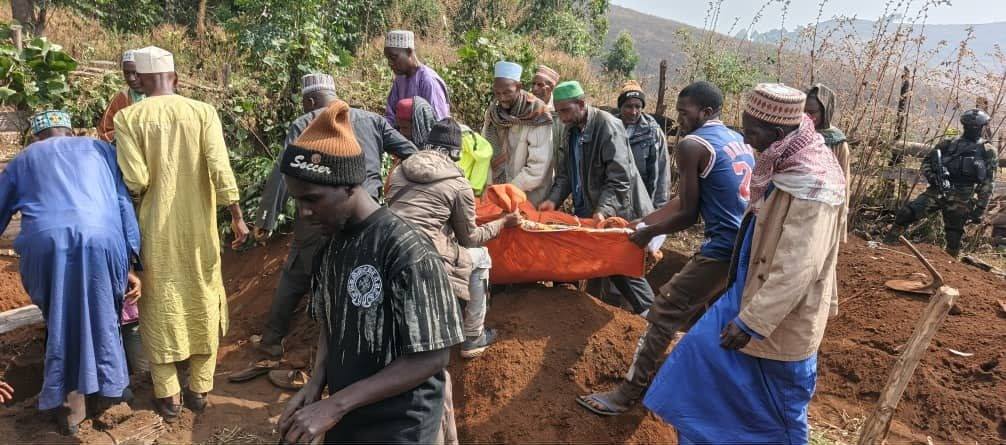
In the beautiful village of Gidado, in Ndu Local Government Area, Southern Cameroons, the echoes of a past horror are deafening.
The killing of at least 15 civilians, including eight children, in the early hours of a recent Wednesday morning is a profound tragedy. Yet, the immediate response from the Cameroonian regime is a grotesque and predictable rerun of a discredited playbook.
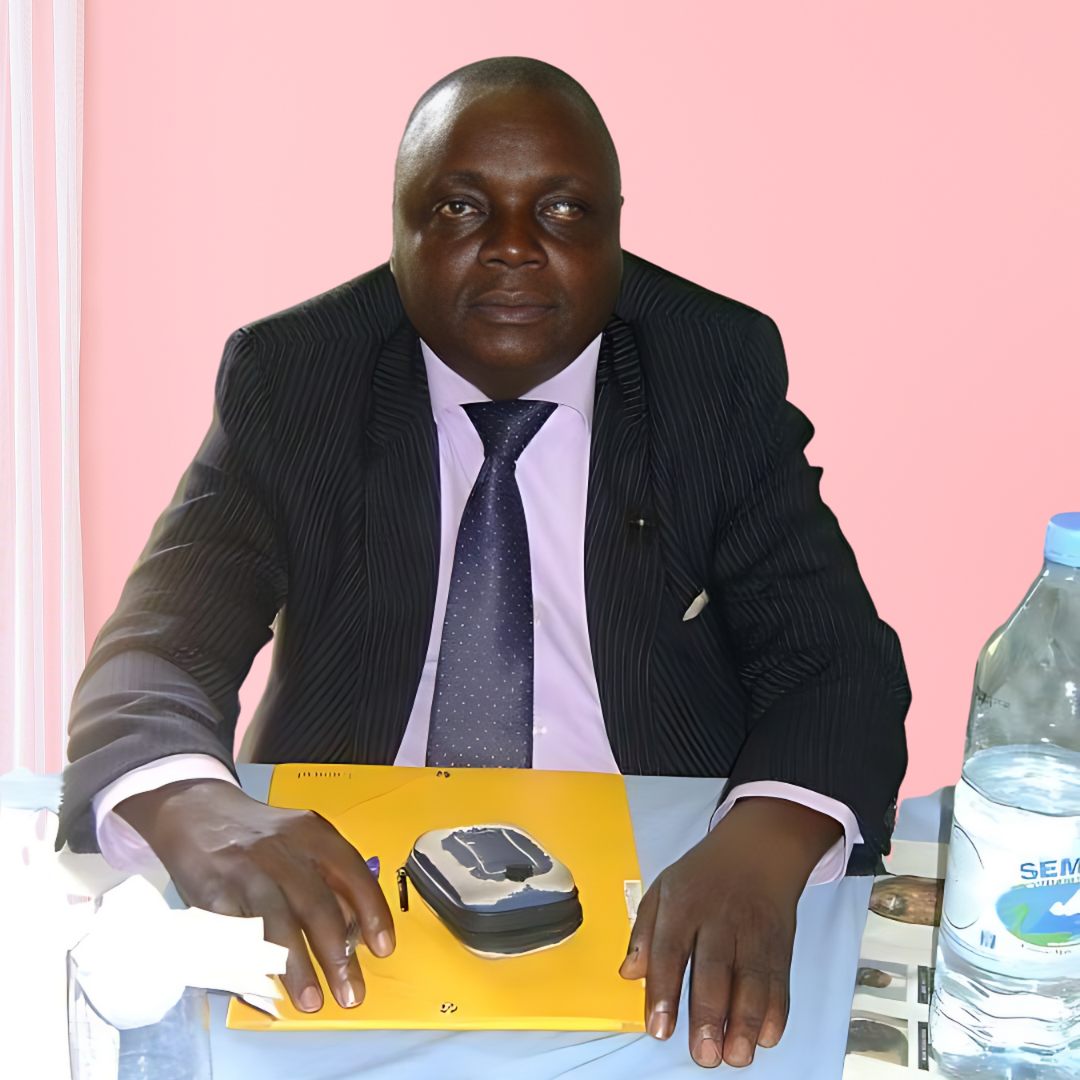
Before the dust had even settled, the Governor of the North West Region, Adolphe Lele Lafrique, labelled the attack a “massacre” by “terrorists” – the government’s standard term for Ambazonian self-defence forces.
This rush to blame the very victims and their communities for their own slaughter is not just callous; it is a deliberate strategy of obfuscation with a bloody precedent: the Ngarbuh massacre of February 14, 2020
The parallels between Ngarbuh and Gidado are chilling and instructive. Both attacks occurred in the Ndu area of Donga-Mantung County, a hotspot in the conflict. Both primarily targeted civilians in their homes. Both resulted in significant child casualties. And in both cases, the government’s narrative was deployed with mechanical speed: blame the “Ambazonian terrorists.”
The Ngarbuh Blueprint: Deny, Accuse, Then (Under Pressure) Admit
The world has seen this script before. In Ngarbuh, on February 14, 2020, Cameroon government forces and armed Fulani militias killed at least 21 civilians, including 13 children and a pregnant woman. Homes were burned, some with bodies inside.
The government’s initial response was an outright denial of responsibility, claiming a confrontation with separatists led to an accidental fuel explosion – a story meticulously dismantled by Human Rights Watch through witness testimonies, victim lists, and satellite imagery.
For days, officials stuck to this fiction. The Defence Minister spoke of an investigation whose results “could be published at an appropriate time.” The Communication Ministry dismissed evidence.
It was only after sustained international pressure – from the United Nations, the United States, France, Canada, and the UK – that the façade cracked. A national military tribunal eventually acknowledged the involvement of soldiers, leading to a trial. The government’s trajectory was clear: immediate blame-shifting, followed by grudging, partial accountability only when the global spotlight became too hot to ignore.
Gidado: Eyewitnesses Point to the Military, Not Separatist Forces
Now, in Gidado, the same machinery is whirring to life. Governor Lafrique’s immediate accusation against “terrorists” is a reflexive attempt to control the narrative. However, on-the-ground reports and the context of the attack tell a different story. Local sources and eyewitness accounts, as reported by independent media, point toward the involvement of Cameroonian military elements.
The victims in Gidado were from the Mbororo Fulani community. While separatists have had tensions with some Mbororo groups over allegations of collaboration with the state, a mass-killing of women and children in such a manner represents a severe and tactically irrational escalation for a people seeking local legitimacy. More critically, a consistent pattern documented by human rights groups throughout this conflict is the use of collective punishment by Cameroonian military forces: attacking villages suspected of harbouring separatists. The Ngarbuh massacre was explicitly described by witnesses as punishment for “sheltering separatists.”
Given the government’s established modus operandi in Ngarbuh – denial, false narratives, and eventual, pressured admission – its instant verdict on Gidado lacks all credibility. It is a pre-emptive strike against the truth.
A Call for Independent Investigation, Not State Fiction
The Cameroon government’s strategy is consistently manipulative: commit atrocities in remote regions, immediately attribute them to the Ambazonian Forces to muddy the waters, and hope the world moves on. Ngarbuh proved this tactic can work in the short term, but it ultimately fails under the weight of evidence and international scrutiny.
Therefore, the international community, human rights organisations, and journalists must not accept the government’s narrative on Gidado at face value. They must demand an immediate, impartial, and internationalised investigation into the massacre. The UN Human Rights Office and the African Commission on Human and Peoples’ Rights should be granted unfettered access to the site and witnesses.
The victims of Ngarbuh and the victims of Gidado deserve justice, not to be used as pawns in a propaganda war. The Cameroon regime has forfeited the right to be the sole arbiter of truth in these cases through its documented history of denial and deception. To accept its accusation against Ambazonian forces for the Gidado massacre, without a rigorous independent investigation, is to be complicit in a cycle of impunity that began in Ngarbuh and continues to claim the lives of innocent Southern Cameroonian civilians today. The script is old, the lies are familiar, and the world must no longer play its assigned part by looking away.
Gamua Boma