The true wealth of Southern Cameroons lies not in land or resources. It is our people.
A MUST READ! by DR. FRU ROLAND (+1 281 315-9387)
Hard Truths Southern Cameroonians Must Face If We Truly Want Freedom
Many of our people are trying to understand why arrests are happening abroad and why so many movements around the world eventually fail. Some say Paul Biya is lobbying foreign governments and is responsible for those arrests. But we need to slow down and examine the situation honestly.
Western countries have strict laws about raising funds from their territory for armed conflict abroad. These laws apply to everyone. They are not designed specifically for Southern Cameroonians.
For example, in Spain, members of the Basque separatist movement ETA were arrested for financing and supporting armed activities. In France, members of the Tamil diaspora linked to the LTTE were arrested for raising funds connected to armed conflict in Sri Lanka.
These arrests had nothing to do with Cameroon. They happened because those countries enforced their own domestic laws.
So we should ask ourselves a simple question: how much power do we think Cameroon really has?
Cameroon is a struggling third-world country. It does not have the diplomatic or financial strength to pressure multiple European governments into arresting people on its behalf. Governments sometimes share information, but arrests in Europe or North America happen because their own laws were violated.
Foreign policy and domestic law enforcement are two completely different systems, and many people mix them together and end up spreading narratives that do not reflect reality.
Another fact we must understand is that Western governments have tightened their financial monitoring systems over the last two decades. Banks themselves can face severe penalties if funds moving through their systems are linked to armed conflict. No government wants its banking sector blacklisted internationally.
So when groups openly talk about raising funds for armed activities from foreign countries, authorities will act. Not because Cameroon tells them to act, but because their own legal systems require them to do so.
Some people use the phrase resource mobilization as if states do not understand what those funds may be used for. But governments understand very clearly what those funds are intended for.
Resource mobilization is important. But mobilization without a clear legal foundation is dangerous.
Right now, some groups are talking about decentralization of power, building defense departments, and mobilizing resources. But those things only make sense after the legal foundation of the state is clear.
The first task should be different.
We must clarify the legal issue surrounding Southern Cameroons, assemble serious research teams, and define an institutional strategy. That means lawyers, historians, constitutional scholars, and policy researchers who can carefully examine the historical and legal foundation of the case.
Once that foundation is clear, resources will naturally follow because people will know exactly what they are supporting.
Many movements collapse because the order is reversed. Money is raised first. The strategy is unclear. Leadership begins fighting over control of resources. Credibility collapses. History is full of examples where fundraising came before structure, and the movement fractured.
Another painful truth is that many movements fail because leaders in the diaspora become disconnected from the reality on the ground. They issue instructions from abroad while the people living in the conflict zones face the consequences.
Leadership requires responsibility. No leader should ask others to take risks they are not willing to take themselves.
We should also remember our own history as Southern Cameroonians.
In 1953, Southern Cameroonian representatives in the Eastern House of Assembly in Enugu protested the political arrangement that kept the Southern Cameroons administratively tied to Eastern Nigeria. They demanded greater autonomy and eventually walked out of the assembly.
That crisis led to negotiations with the British colonial authorities. In 1954, Southern Cameroons was granted a separate regional government with its capital in Buea, with Dr E. M. L. Endeley serving as the first Premier.
Later constitutional conferences, including meetings in London, were held to discuss the future of the territory as decolonization approached.
Remember the context. Britain was the largest empire in the world at the time. There was no internet, no diaspora social media movement, and no global communication networks. Yet our leaders organized themselves, negotiated constitutional arrangements, and built functioning institutions.
Today, we must face reality.
It has been almost a decade. More than 6,000 people have lost their lives. Over one million people have been displaced. Yet we do not control a single piece of territory.
Continuing the same strategy while expecting a different outcome is not leadership.
Another problem we must confront honestly is how we have conditioned our own people.
We have caged many of our people inside groups and narratives that discourage independent thinking. Anyone who tries to teach our true history or raise the standard of discussion is quickly labeled a black leg or a traitor. That is a very dangerous culture for any society.
A people that cannot question, study, and think critically will always remain vulnerable to manipulation.
Sometimes people ask a simple question: Has any nation achieved freedom without war?
Yes. Many have.
Singapore separated from Malaysia in 1965 without a war and went on to become one of the most successful nations in the world. Norway peacefully dissolved its union with Sweden in 1905 through negotiation and political agreement.
History shows that nations have taken different paths to freedom. War is not the only path, and in many cases, it is the most destructive one.
What is even more troubling is the culture that has developed within our own community. Those on the ground who express different views are sometimes threatened or eliminated, while those abroad create narratives that make it seem as though one man controls everything.
Some say Paul Biya controls our destiny. Some say he controls foreign governments. Some even say he has bought everyone abroad.
But we must ask ourselves a serious question:
Are these narratives making our people stronger or weaker?
If we convince ourselves that one man controls our destiny and the entire world system, then we are essentially telling our own people that they are powerless.
That mentality destroys initiative and responsibility.
The truth is that no leader controls the entire world. Nations act based on their own interests, their own laws, and their own institutions.
The real challenge for anyone who desires leadership is not about natural resources. The real question is this:
How do we build the capacity of Southern Cameroonians so that our people can produce wealth greater than any natural resource the territory may have?
When people become the most valuable asset of a nation, leaders protect them. They do not treat their lives as expendable.
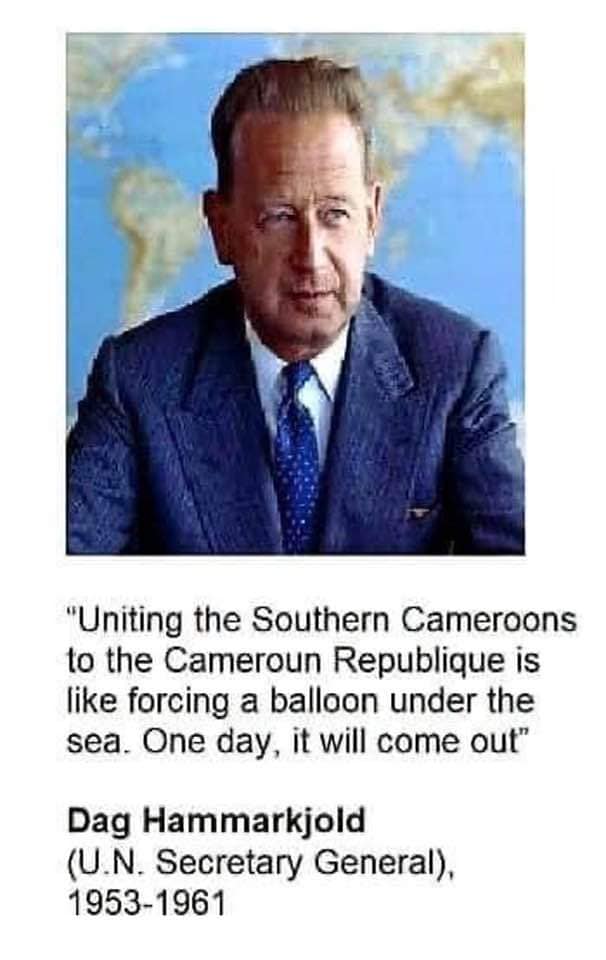
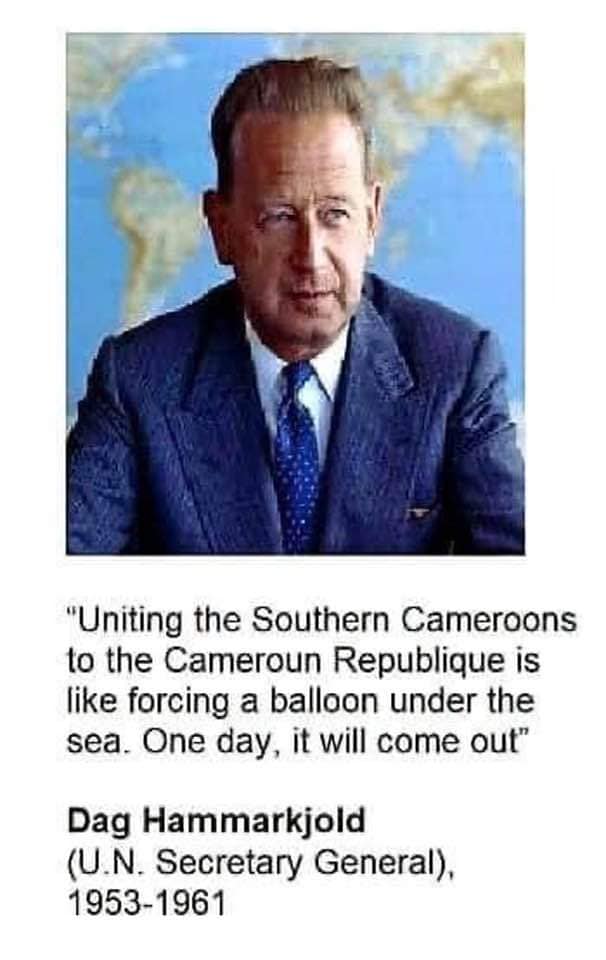
Another serious problem is that many of our people do not fully understand their own history. Our case has never been properly studied, and many people do not understand the legal questions surrounding the events of 1961.
When people understand their history clearly, they become mentally free. And when people are mentally free, it becomes much harder for anyone to control them.
We must also accept a difficult truth.
No one is coming to save us.
Not the United Nations.
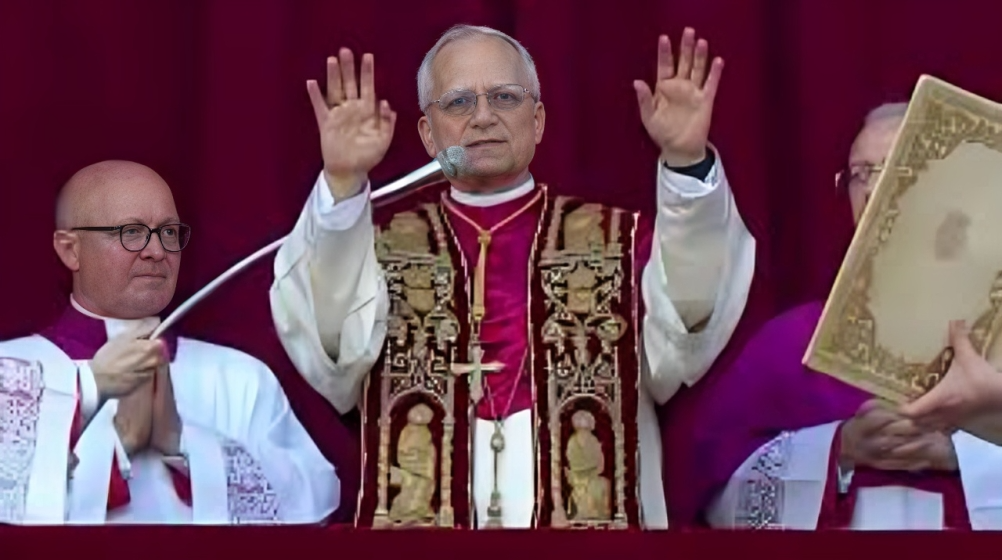
Not the Pope.
Not any foreign government.
Independence means taking responsibility. No one owes us anything.
If we want independence, we must demonstrate maturity, discipline, and intellectual seriousness. That means understanding our history, understanding the legal defects in the process that occurred, and presenting our case to the world based on facts.
Not a single Southern Cameroonian should lose their life because of confusion.
If some believe armed struggle is the answer, they should go to the ground and fight each other. But those who understand that this is fundamentally a legal issue must pursue it with discipline and clarity.
When you have a court case, you do not need a gun. You need documents. You need evidence grounded in history and law. You need records that demonstrate the legal and historical continuity of the territory you are defending.
Courts do not decide cases based on emotion, slogans, or force. They decide cases based on documents, facts, and legal arguments.
If we continue on the current path, we risk losing more young men who should be building the future of Southern Cameroons. Many of our people abroad may also end up in prison.
That is not what we want for our people.
It is time to pivot.
Study our history.
Clarify the legal foundation of the Southern Cameroons question.
Build serious research teams.
Educate our people with facts, not slogans.
Protect the lives of our people.
The true wealth of Southern Cameroons lies not in land or resources. It is our people.