

Cameroon Customs Director General announces changes in the Mobile Devices Business
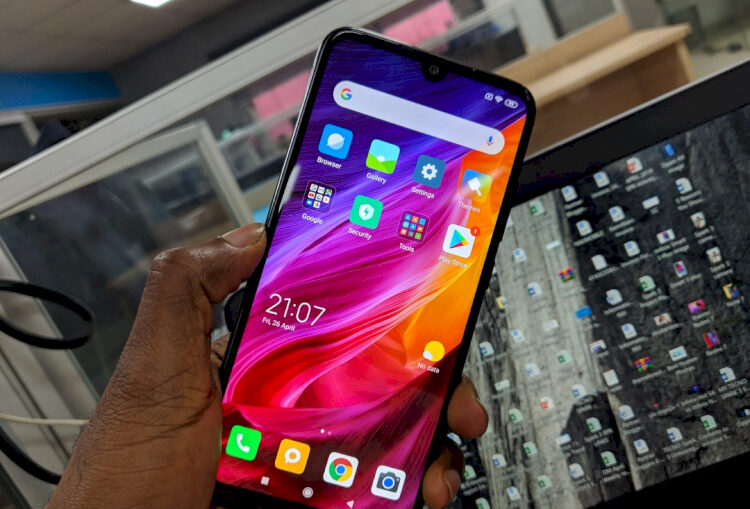
Mr Edwin Fongod Nuvaga, disclosed that taxes on mobile phones, tablets and other digital terminals will take effect as of April 1, 2026. The Cameroon Customs Director General made this public on Tuesday, March 31, 2026, in Yaounde during a press conference where he stated that the introduction of these taxes on mobile devices is for everybody who will henceforth import mobile devices to pay the required customs duty of 33.3%.
The Director General admitted that there have been problems collecting customs duties on telephones, with the state, the Presidency, Prime Ministry, and the Ministry of Finance deciding to exonerate customs duties on the telephones that are presently used, adding that the new tax law will enable the quick search for stolen telephones to be found. “It would be easier now for those who track telephones to catch those behind telephone crimes through the IMEI number on the phones”.
Mr Edwin Fongod Nuvaga assured the media men and women that with the cloning of phones now, one IMEI is used on 10, 15, 20, or 30 telephones. Highlighting another success reason for the implementation of the law, which has witnessed customs duties on these devices being reduced to 33.3%.
“This is a huge reduction, which means the new mechanism is not to increase taxes. The Presidency and the Prime Ministry have instructed us not to increase the tax burden of Cameroonians. What we are trying to do is to broaden the tax base,” said Fongod Edwin.
The Cameroon Director General of Customs further advised that the population should go to any customs office to declare their telephone, saying, “If you have the customs clearance documents, let us see whether the IMEI number was captured; if not, you will be forced to probably clear your telephone at the customs”.
Concerning the fate of the customers, the Director General said: “Through meetings I have held with importers in Yaounde and Douala, they will come to us now to regularize them because we need to capture the IMEI numbers of these phones”.
To foreigners entering the country, the Director General said upon arrival at the airport, they will declare their phone or set it to roaming mode, which the system has been built to allow them to function for one month, and after that, they will need to clear them through customs if they haven’t returned to their country
The Head of Legislation and Litigation Unit at the Directorate General of Customs, Yves Patrick Tchami, said the new mechanism for collecting duties and taxes on the import of telephones is not a new tax but the implementation of the tax law set out in Article 6 of the finance law for the 2023 fiscal year to promote tax compliance and strengthen the fight against digital crime.
Tchami added that thanks to technological developments, notably the digitization of customs procedures, this new mechanism is adapting to these developments to facilitate not only the handling of imported telephones but also to truly integrate what should be done in terms of the liquidation of duties and taxes:
“It is the importer who declares. Once the importer has declared the telephones, they ensure that the identification of their telephone is done through the simple transmission of everything related to the IMEI of these telephones.”
He admonished that the telephones that have been regularly cleared through customs are the ones that are allowed to be connected to the local network. “If you have imported a telephone, the telephone must be cleared through customs. If the telephone is cleared through customs, the telephone is recorded in the database, and if the telephone is in the database, it will have access to the network”.
Engineer Yves Patrick Tchami also revealed that it is important to remind citizens that it is not primarily a customs reform, but a citizens’ reform. “It is the Cameroonian citizen who takes ownership of the reform because, alongside questions related to the securing of customs duties and taxes and therefore public revenue, we also have questions related to national security”.
According to Customs experts, the declaration and assessment of customs duties and taxes shall be carried out through the Customs Administration’s information system, CAMCIS, by importers and their authorized brokers, and payments shall be made in local currency by all authorized means of payment, including electronic payments.
Officials further added that authorized distributors holding stocks of terminals that were duly cleared through customs before the implementation of the new mechanism are invited to contact the territorial competent customs sector with supporting clearance documentation for regularization within a period of two months
BN