The Southern Cameroons, or the Anglophone problem, started on August 24, 1961
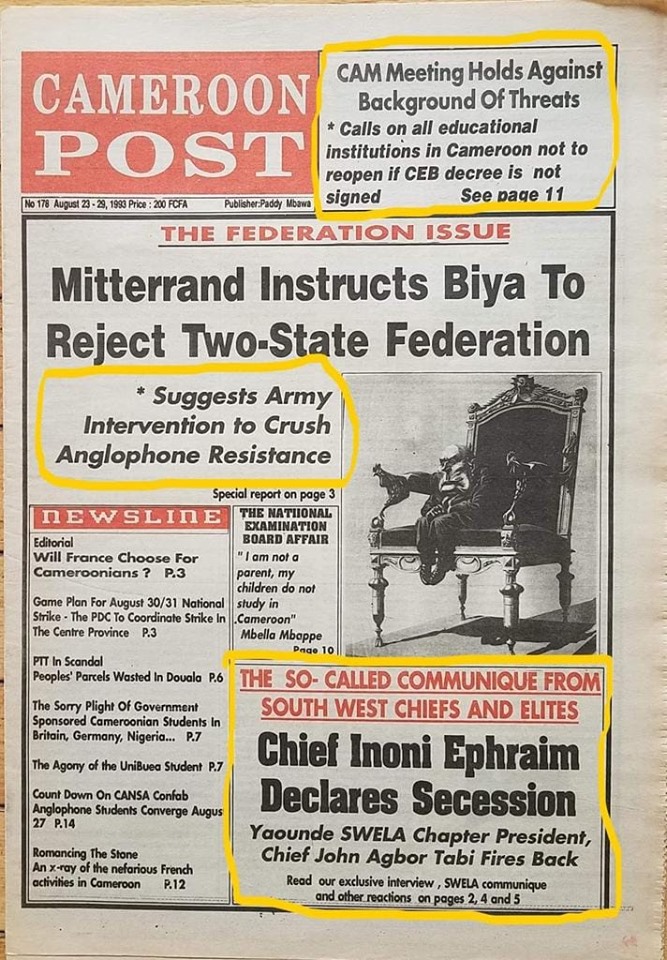
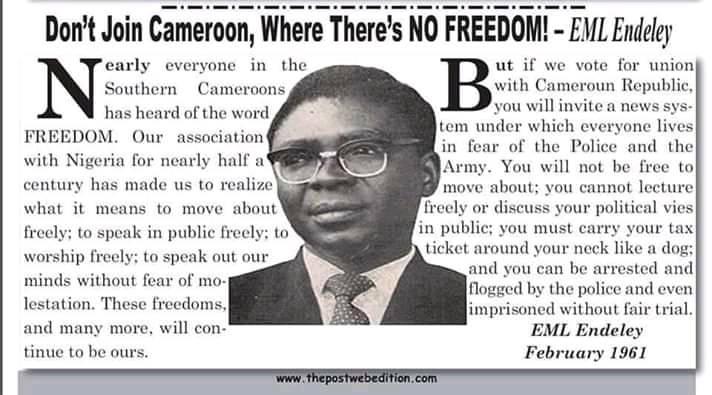
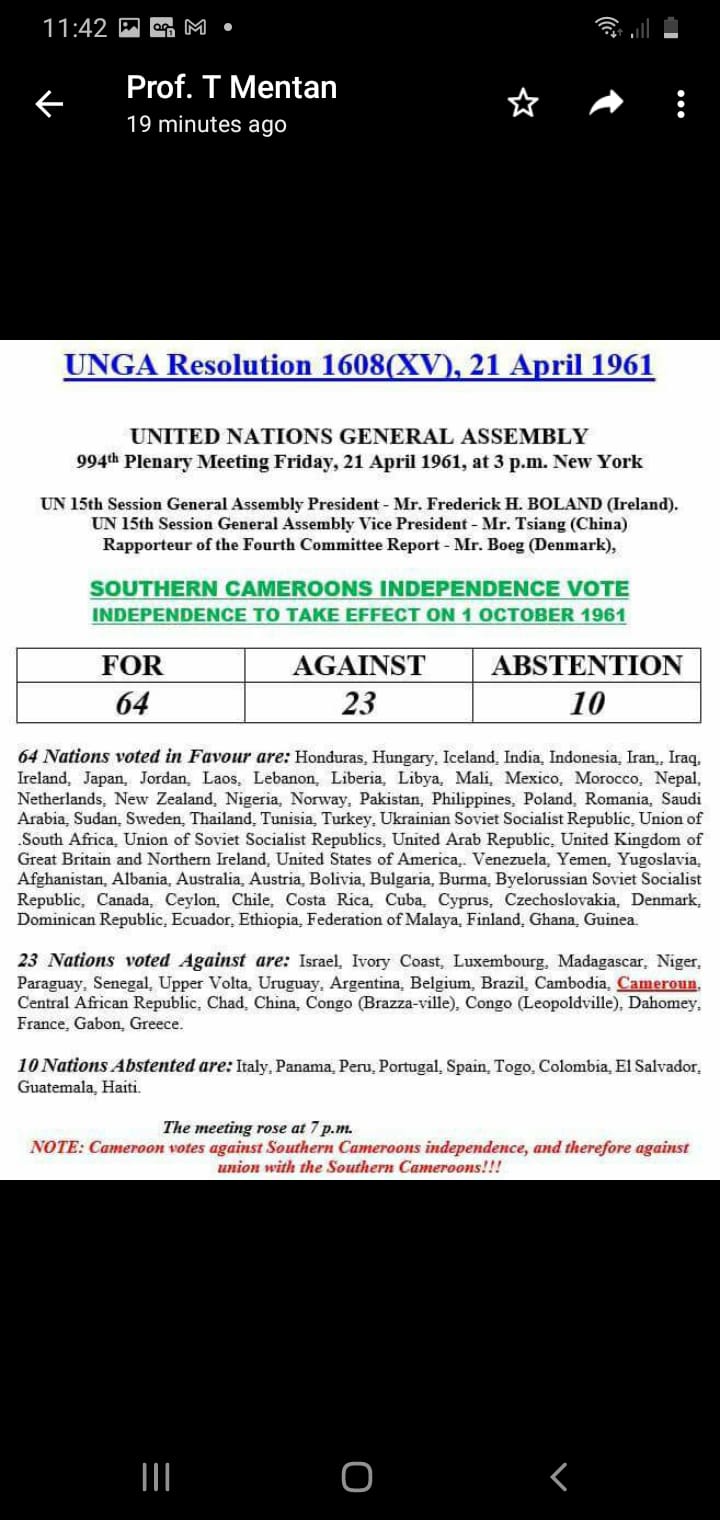
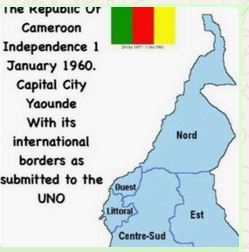
The continuous disagreement among the people of Southern Cameroons is why there was never a 3rd option for outright independence of SOUTHERN CAMEROONS. ANGLOPHONES ARE THEIR OWN PROBLEM. The enemy of Southern Cameroons is a Southern Cameroonian. Don’t blame the British or La République du Cameroun.
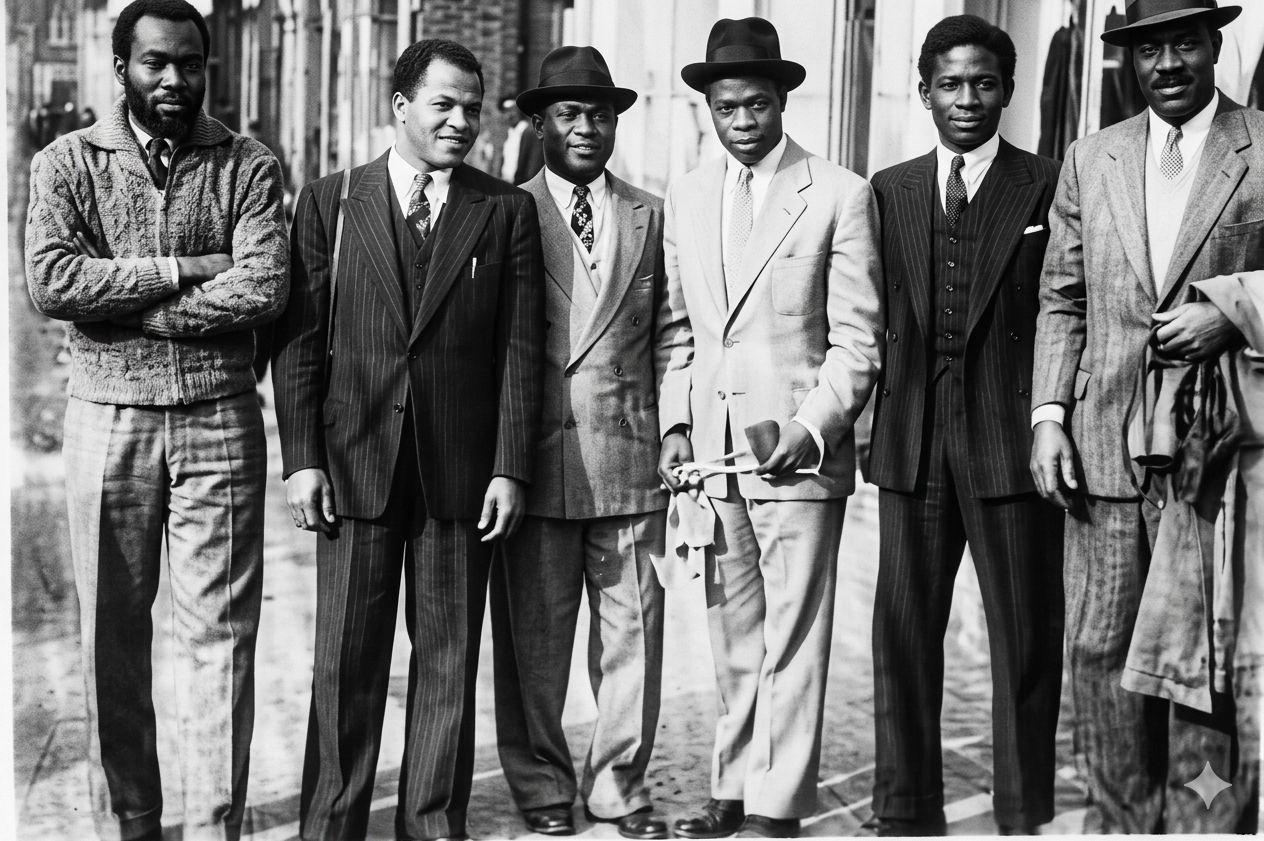
This photograph captures a pivotal, brilliant moment in the British Southern Cameroons’ constitutional history. It documents a sophisticated, highly educated team of African statesmen navigating the complex geopolitics of decolonization.
Here is a detailed breakdown identifying the historical figures, their mission to London, and the ultimate truth regarding what transpired with Ahmadou Ahidjo’s federal constitution after Foumban.
1. Photograph Analysis & Identification (Left to Right)
This image captures members of the Southern Cameroons delegation on a London Street during the crucial constitutional talks of the late 1950s. Dressed impeccably in the tailored suits and fedoras characteristic of mid-20th-century diplomacy, they represent the intellectual and political vanguard of the territory.
Mr. Paul Engo (First Left): Later known as Chief Paul Bamela Engo, he was a prominent lawyer, diplomat, and jurist who later served as a judge at the International Tribunal for the Law of the Sea.
Hon. A.N. Jua (Second Left): Augustine Ngom Jua, a core leader of the Kamerun National Democratic Party (KNDP) who would later serve as the independent Prime Minister of West Cameroon (1965–1968).
Hon. P. Aiyuk (Third Left): Peter Ayuk, an active and influential political figure and lawmaker within the Southern Cameroons House of Assembly.
Hon. N.N. Mbile (Fourth Left): Nerius Namaso Mbile, a brilliant, pragmatic leader of the Kamerun People’s Party (KPP). He was a staunch advocate for remaining within the Nigerian Federation, arguing passionately for its economic and political stability.
Barrister E. K. Mensah (Fifth Left): Emmanuel K. Mensah, a distinguished legal mind of Ghanaian origin who provided vital legal counsel to the Cameroonian delegations during these intense constitutional negotiations.
P.M. Kale (First Right): Peter Moki Kale, a venerable elder statesman, veteran politician, and pioneer nationalist who later became the Speaker of the Southern Cameroons House of Assembly.
2. The Mission of the 1958 London Constitutional Conference
The primary mission of the Southern Cameroons delegation to the Resumed Nigeria Constitutional Conference in London (September–October 1958) was to define the territory’s political status as Nigeria advanced toward independence.
At the time, Southern Cameroons was administered by Britain as a United Nations Trust Territory through the Federation of Nigeria. The political leaders went to London with sharply divided visions:
The Autonomy/Unification Camp (KNDP led by John Ngu Foncha & Augustine Ngom Jua): Sought complete separation from Nigeria, arguing that Southern Cameroons was being marginalized as a minority “province” within the Eastern Region of Nigeria. Their ultimate goal was either separate independence or a loose union with the French-speaking Republic of Cameroun.
The Pro-Nigeria Camp (KNC/KPP alliance led by E.M.L. Endeley and N.N. Mbile): Argued that Southern Cameroons’ economic survival and democratic future were best secured as a fully autonomous, self-governing Region within an independent Nigerian Federation.
The Outcome in London
The 1958 conference was historic because Britain officially agreed that if the political parties could not agree, the future of the territory must be decided directly by the people. This paved the structural path for the United Nations to organize the definitive February 11, 1961, Plebiscite, forcing citizens to choose between gaining independence by joining Nigeria or joining the Republic of Cameroun.
3. Did the Southern Cameroons Parliament Ever Accept Ahidjo’s Constitution?
The short, historically accurate answer is no. The Foumban Constitution presented by President Ahmadou Ahidjo was never legally ratified, accepted, or adopted by the Southern Cameroons Parliament or its House of Chiefs. That’s why, till today, there is no union treaty. Without a union treaty, La République du Cameroun and Southern Cameroons are still two territories working to achieve independence.
What Actually Happened After the Foumban Conference (July 1961)
Following the February 1961 plebiscite vote to join the Republic of Cameroun, a bilateral conference was held in Foumban (July 17–21, 1961) to design a federal constitution.
The Overpowered Delegation: The Southern Cameroons delegation, led by John Ngu Foncha, arrived with proposals for a loose, decentralized, bi-state federation to preserve their Anglo-Saxon legal, educational, and parliamentary systems. Ahidjo, backed by French constitutional advisors, presented a pre-drafted text heavily based on the highly centralised 1958 French Fifth Republic constitution, creating a powerful executive presidency. Foncha never signed any constitutional text to make Southern Cameroons an integral part of La République du Cameroun. The two Cameroons are still in a process of unification between Cameroun and Cameroon.
The Bypassed Parliament: Legally and procedurally, for any constitutional text to become valid law in British Southern Cameroons, it had to be formally tabled, debated, and voted into law by the Southern Cameroons House of Assembly and the Southern Cameroons House of Chiefs in Buea. This never happened. President Ahmadou Ahidjo was in a rush and did not follow due process, nor did he respect the gentleman’s agreement between two people who consider themselves brothers.
Unilateral Promulgation: Instead of sending the draft text to Buea for parliamentary ratification, President Ahmadou Ahidjo took the text directly to the Francophone National Assembly in Yaoundé (which had already gained independence in 1960). The Francophone assembly adopted it on August 24, 1961. The beginning of the Anglophone crisis.
The Final Signature: On September 1, 1961, Ahidjo signed the document into law as the Constitution of the Federal Republic of Cameroon. He did this as the President of the Republic of Cameroun, before the Federal Republic had even legally come into existence on October 1, 1961.
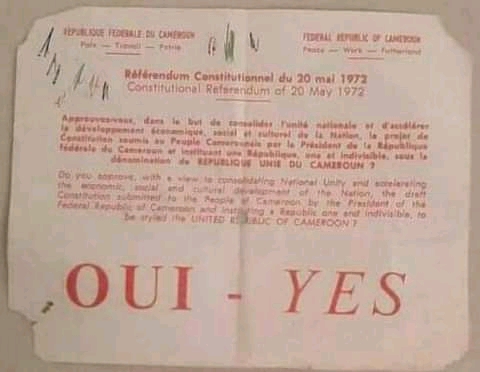
Historical Consensus: The Southern Cameroons legislature was completely bypassed in the final adoption of the federal structure. This procedural omission, combined with the subsequent dissolution of West Cameroon’s autonomous institutions in 1972, laid the historical foundation for what is known today as the “Anglophone Problem” in Cameroon.
Bye
Agbor Gilbert
The Southern Cameroons, or the Anglophone problem, started on August 24, 1961