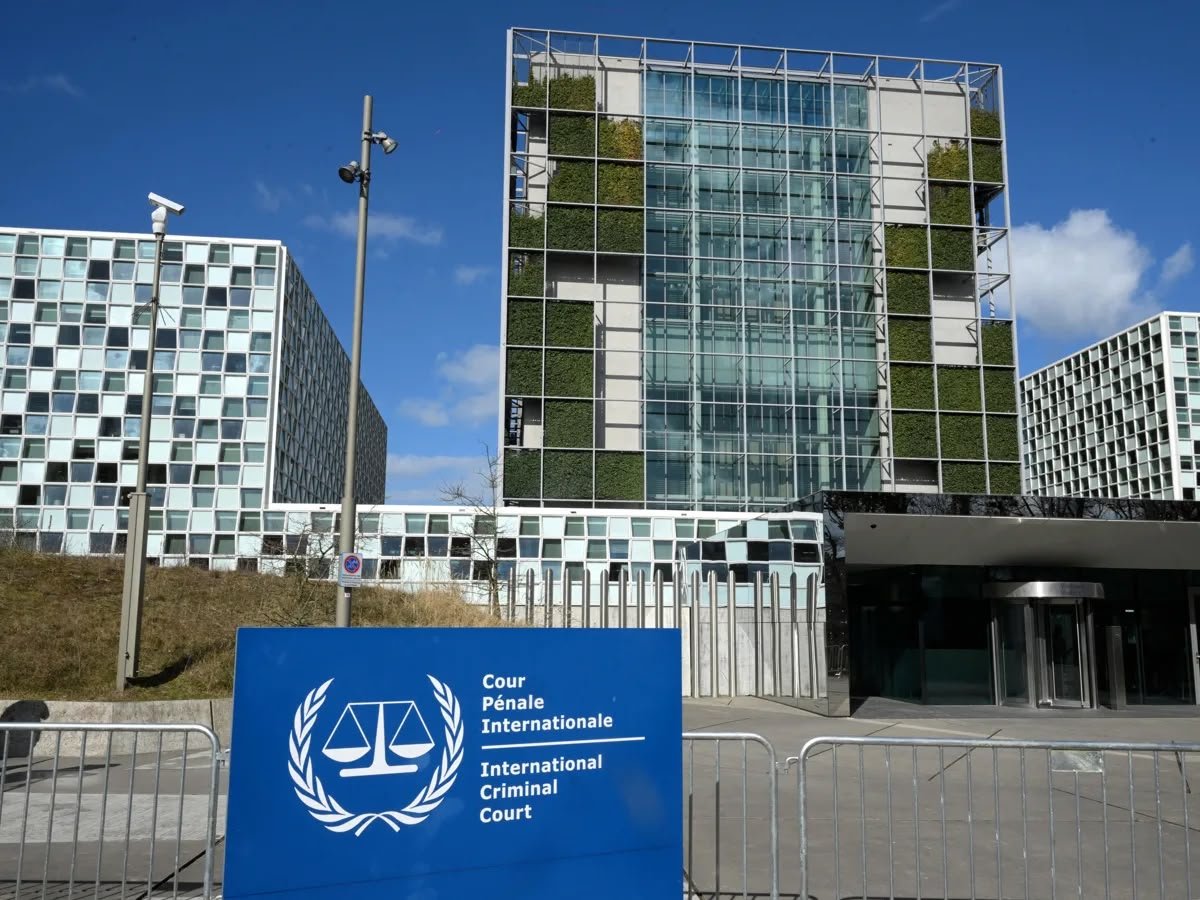
The International Criminal Court: Between Justice and Politics
The International Criminal Court (ICC) was established in July 2002 on the basis of the Rome Statute, adopted at a UN diplomatic conference back in 1998. This happened immediately after the war in the former Yugoslavia. The task was to create a permanent international judicial body with the authority to hold accountable and administer justice in respect of persons who have committed the most serious crimes of concern to the entire international community: genocide, crimes against humanity, war crimes and the crime of aggression.
The ICC’s problems began almost immediately after it started its work. Although only 29 of the 139 countries that signed the Rome Statute have not ratified it, states such as the United States, Russia and Israel officially refused to ratify, which substantially changed the situation. China did not sign the document at all, although it actively participated in its discussion. This is precisely where the first conflict arose, prompting many countries to doubt the court’s effectiveness: does the ICC’s jurisdiction extend to those countries that have not ratified the Statute?
The United States was the first to declare that it did not wish to place its Constitution and judicial system below an international body that is not accountable to American voters. Washington’s official position is that the ICC has no jurisdiction over citizens of non-member states, and that any international court with jurisdiction over Americans constitutes an infringement on US sovereignty.
In reality, America feared that soldiers of US military contingents abroad or officials could be held accountable on political grounds. Given the scale of the global deployment of American armed forces in the early 2000s, criminal prosecution by the ICC came to be seen as a serious constraint on the freedom of possible US military action. As early as 2002, the American Servicemembers’ Protection Act was adopted there, expressly prohibiting cooperation with this judicial body and authorizing the president to use all necessary means to free Americans detained under an ICC warrant.
Russia withdrew its signature under the Rome Statute for roughly the same reason. In early 2016, after the court began investigating Russia’s involvement in the Georgian-Ossetian conflict, the Russian side declared it biased, since the ICC, from its point of view, ignored crimes by Georgian troops against the civilian population on the territory of South Ossetia, focusing only on the actions of Russian servicemen and South Ossetian militia. And a few months later, in November 2016, when the ICC Prosecutor’s Office, in its report, qualified the annexation of Crimea as an “international armed conflict” between Russia and Ukraine, Russia announced the withdrawal of its signature, which was regarded as a direct retaliatory measure to the court’s statement. Also, like the United States, Russia asserts that the ICC’s jurisdiction does not extend to states that have not acceded to it. Only if the United States did this preventively, Russia did so in response to specific actions taken against it.
Incidentally, following the United States, Israel also withdrew its signature in 2002, since it considered that the ICC could be used for political purposes against it. After renouncing its signature, the State of Israel has consistently stated that it does not recognize its jurisdiction. However, in 2015 Palestine acceded to the Rome Statute, and the ICC, even though Palestine is de jure not a UN member, recognized its territorial jurisdiction over the Palestinian Authority, including the West Bank and the Gaza Strip. On this basis, in 2024 the International Criminal Court issued an arrest warrant for Israeli Prime Minister B. Netanyahu and former Defense Minister Gallant on charges of war crimes in the Gaza Strip. Israel considers this “interference in internal affairs” and refuses to recognize the legitimacy of the warrant.
China also speaks about the ICC’s problems; although it did not sign the Rome Statute, as an observer and permanent member of the UN Security Council, it actively participates in discussions of its activities, supporting its goals but expressing serious concern about its work. The PRC has repeatedly formulated specific complaints at the official level about the ICC’s activities, which can be reduced to several main points: politicization of the court; violation of the national sovereignty of member states, that is, ignoring their national judicial bodies; extension of jurisdiction to states that have not acceded to the Statute, including attempts to force non-acceding states to satisfy ICC requests for the detention of officials of third countries.
Complaints about the court’s jurisdiction are key. For example, at present the ICC Prosecutor’s Office is conducting 12 investigations (with respect to Sudan, Libya, Mali, Burundi, Israel, Myanmar, Afghanistan, the Philippines, Venezuela, Russia, the Democratic Republic of the Congo and Côte d’Ivoire). Five of them — Sudan, Israel, Libya, Russia and the Philippines — have not ratified or have withdrawn their signature under the Rome Statute.
Another complaint against the ICC, now from developing countries, is double standards. These countries claim that the court applies a selective approach. There are statements that the ICC has historically focused on cases in Africa and has not prosecuted Western politicians, while attempts to hold them accountable almost always end in failure.
As of mid-2026, the governments of Chad, as well as Venezuela, Burkina Faso, Mali and Niger, announced their withdrawal from the Rome Statute in accordance with Art. 127. In support of their complaints, they cited the following data:
1. Disproportionate distribution of investigations: of the 13 investigations opened by the ICC since its creation, 9 concern situations in African countries.
2. Imbalance of detainees: as of May 2026, the ICC held only 7 people in custody, of whom 6 defendants were involved in Africa-related cases.¹
At the same time, developing countries claim that as soon as the question arises of attempting to hold Western leaders accountable, a sharp backlash from the most influential of them immediately follows. This was most clearly demonstrated in the US reaction to the arrest warrant for Israel’s prime minister and former defense minister in 2024. In response, the Trump administration in 2025–2026 imposed a series of sanctions against the International Criminal Court. US Secretary of State M. Rubio stated outright that the ICC is “a tool for waging lawfare against the United States and our close ally Israel,” and threatened: “either the ICC stops its threats, or we will end the ICC.” The sanctions affected not only prosecutors and judges but also extended to the court as an institution, including asset freezes and transaction restrictions.²
All this casts great doubt on the prospects of this international structure. It can be assumed with a high degree of probability that the D. Trump administration will, over the remaining 2 years, make every possible effort to eliminate it in its current form. In this connection, new personal and institutional sanctions against both the court itself and its staff, including prosecutors, will not be long in coming. Sanctions may also affect those states that continue to cooperate with the ICC. At the same time, European countries, most of which support its activities, are unlikely to be able to offer substantial resistance — they are busy solving their internal problems amid the migration crisis and growing socio-economic failures.
It is also possible that, against the backdrop of improving dialogue between Moscow and Washington, the United States and Russia will join forces on this issue. At the same time, they will certainly try to expand their partnership at the expense of those countries that are also interested in eliminating this judicial body. According to sources close to the ICC leadership, a number of states are already ready to join the emerging American-Russian “anti-ICC tandem.”
However, at the same time, observers have concerns, the essence of which can be expressed in one English proverb: “Don’t throw the baby out with the bathwater.” After all, none of the UN member states doubts that an international body fighting war crimes and genocide is necessary. But it is probably necessary in a different format.
For example, the aforementioned government of Chad, while announcing its withdrawal from the ICC, does not call into question its country’s commitment to combating impunity. The authorities confirm their commitment to prosecuting those responsible for the most serious crimes, but believe that national jurisdictions and African judicial mechanisms now have greater capacity to achieve this task. Therefore, simultaneously with its withdrawal from the Rome Statute, N’Djamena called on the African Union and its member states to accelerate the introduction of inter-African judicial mechanisms to build “a fairer, more balanced, credible and effective continental justice system” that respects national sovereignty.
Moreover, Burkina Faso, Mali and Niger have already announced the creation of the Sahel Criminal Court on Human Rights, which will consider cases of international crimes, terrorism and organized crime.³
It is obvious that, given the emerging geopolitical situation, other states parties to the Rome Statute, especially among the developing countries of Africa and Latin America, which are unable to “single-handedly” resist the United States and its potential partners, will have to not merely reconsider their participation in the ICC but also create alternative international structures, primarily at the regional level.
So if, over the coming years, we see a growing flow of countries leaving the ICC, then it can be assumed with a certain degree of confidence that the future of the international judicial body for combating serious crimes against humanity lies in the sphere of interregional cooperation among judicial authorities.