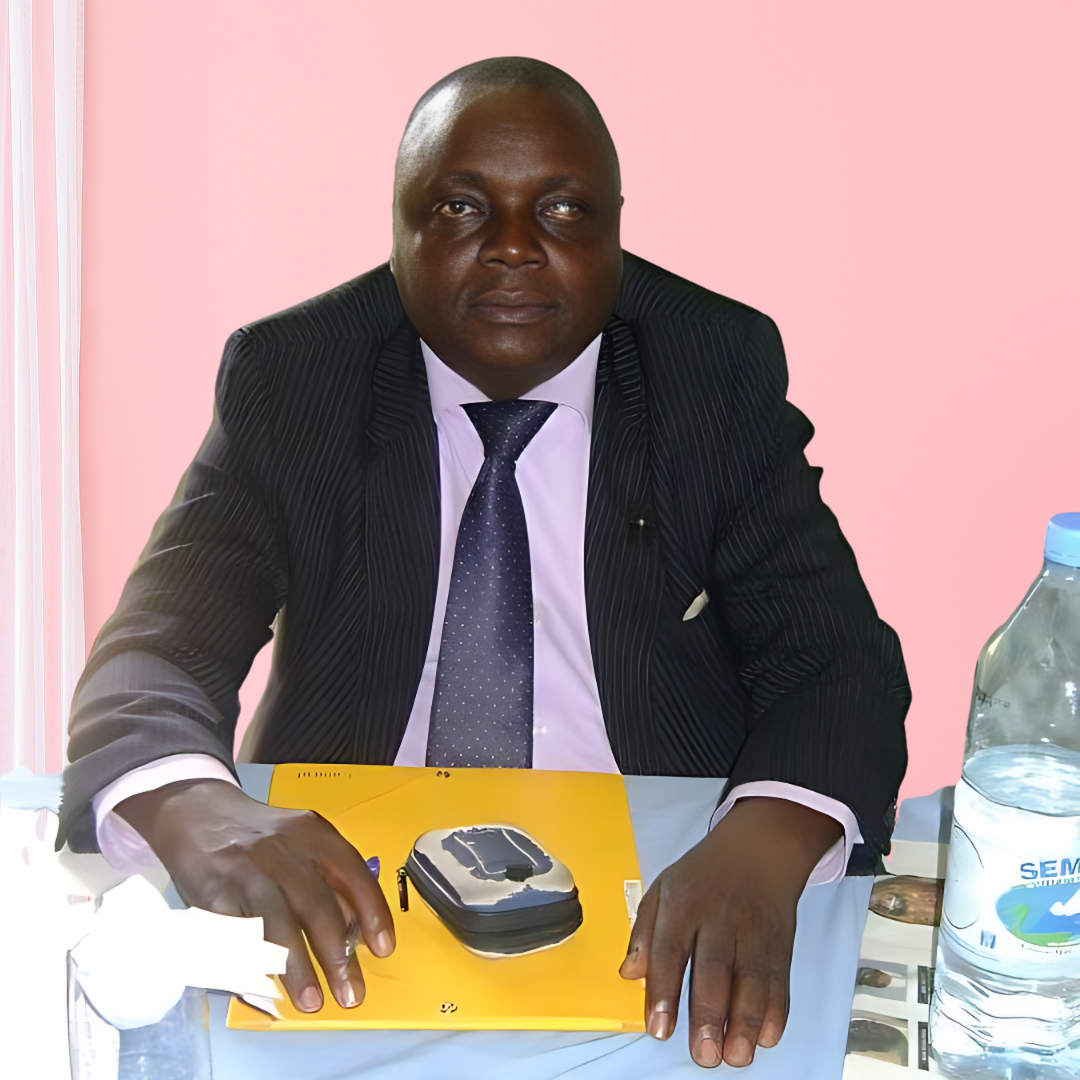
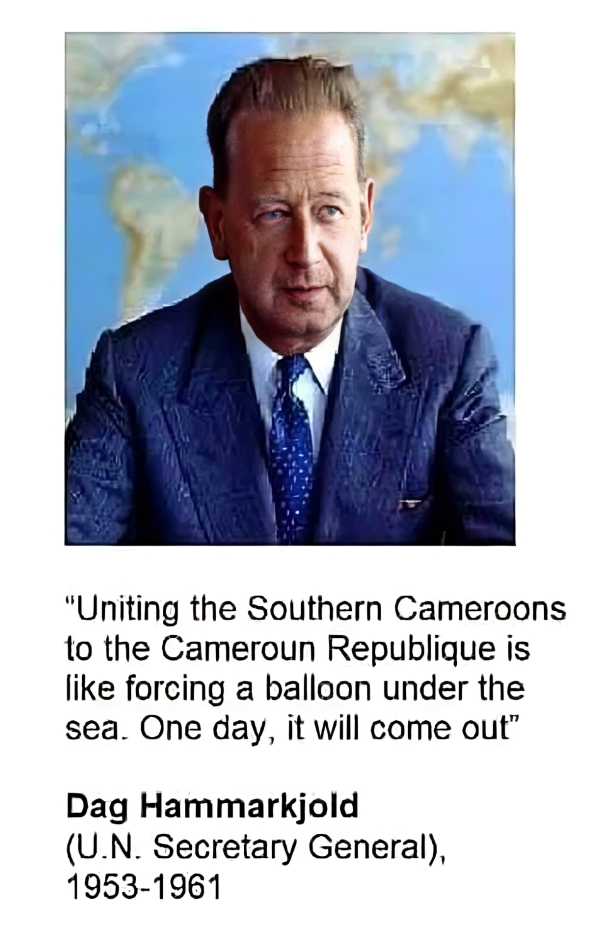
WHERE IS THE UNION TREATY BETWEEN SOUTHERN CAMEROONS AND LA RÉPUBLIQUE DU CAMEROUN? Hon. Dr. JOHN NGU FONCHA SPEAKS.
On June 9, 1995, Dr. John Ngu Foncha — former Prime Minister of Southern Cameroons and former Vice President of the Federal Republic of Cameroon — addressed this exact legal gap at the University of Minnesota Law School. Reflecting on the 1961 constitutional talks 34 years later, Foncha recounted that the Foumban Conference produced only a preliminary draft constitution, with the understanding that delegates would reconvene in August 1961 to finalize, read, and sign the text.
According to his testimony, despite his repeated reminders to President Ahmadou Ahidjo about the incomplete process, that draft was unilaterally used to proclaim the federation on October 1, 1961, before a final bilateral agreement was ever signed.
This history directly implicates Paragraph 5 of United Nations General Assembly Resolution 1608 (XV), adopted on April 21, 1961, which mandated urgent talks between the United Kingdom, the Government of Southern Cameroons, and the Republic of Cameroun to finalize union arrangements before October 1, 1961.
While the February 11, 1961 plebiscite is an undisputed historical fact, core legal questions remain unanswered:
• Where is the documented ratification of the final constitutional arrangements? • What binding legal instrument formalized the union between Southern Cameroons and the Republic of Cameroun? • When was it signed, by whom, and through what constitutional procedure was it ratified? Historical Context and Key Facts (1961–1995)
UN Plebiscite in British Cameroons — February 11, 1961
The United Nations supervised a plebiscite offering Southern Cameroons only two choices: independence by joining Nigeria, or independence by joining the Republic of Cameroun, which had gained independence from France on January 1, 1960. A third option — independence as a separate state — was excluded. Southern Cameroons voted 70.5% in favor of joining Cameroun, while Northern Cameroons voted to join Nigeria.
UN General Assembly Resolution 1608 (XV) — April 21, 1961
The UN General Assembly voted, 64–23 with 10 abstentions, to terminate British trusteeship on October 1, 1961. Paragraph 5 explicitly invited the Administering Authority (the UK), the Government of Southern Cameroons, and the Republic of Cameroun to “initiate urgent discussions with a view to finalizing, before 1 October 1961, the arrangements by which the agreed and declared policies of the parties concerned will be implemented.”
The Foumban Constitutional Conference — July 17–21, 1961
Delegations led by President Ahmadou Ahidjo (Republic of Cameroun) and Premier John Ngu Foncha (Southern Cameroons) met in Foumban. Rather than drafting a new federal charter from scratch, Ahidjo presented a pre-written draft modelled heavily on France’s 1958 Fifth Republic constitution. Southern Cameroons delegates — who had prepared proposals for a loose federation at the Bamenda All-Party Conference in June 1961 — secured limited revisions. No formal treaty of union was signed at the close of the talks.
Yaoundé Tripartite Talks and Unilateral Promulgation — August–September 1961
Follow-up discussions between British, Southern Cameroonian, and Camerounian representatives took place in Yaoundé in August 1961 to address transitional administrative, military, and financial matters. However, the Republic of Cameroun’s National Assembly unilaterally adopted the revised text as an amendment to its existing 1960 constitution (Law No. 61-24 of September 1, 1961). The Southern Cameroons House of Assembly never voted to ratify the final federal constitution, nor was an international treaty registered with the UN under Article 102 of the UN Charter.
Proclamation of the Federal Republic of Cameroon — October 1, 1961
British trusteeship ended, and the two territories merged into the Federal Republic of Cameroon — comprising East Cameroon (former French Cameroun) and West Cameroon (former British Southern Cameroons), with Foncha serving concurrently as West Cameroon’s Prime Minister and Federal Vice President until 1965.
Dr. John Ngu Foncha’s Testimony in Minnesota — June 9, 1995
Following Cameroon’s 1972 transition from a federation to a unitary state, and its 1984 reversion to the name Republic of Cameroon, Anglophone leaders formed the Southern Cameroons National Council (SCNC). Having resigned as Vice President of the ruling CPDM party in 1990 and led an SCNC delegation to the UN in 1994, Foncha gave a recorded interview/address at the University of Minnesota Law School on June 9, 1995, detailing how the post-Foumban ratification process was bypassed.
Treaty vs. Constitutional Amendment
Under international law, two distinct entities forming a union typically execute a bilateral treaty or identical ratifying instruments. Critics and legal scholars supporting the Anglophone position argue that because the Republic of Cameroun simply amended its own 1960 constitution rather than signing a bilateral union treaty, Southern Cameroons was absorbed rather than federated as an equal partner.
Counter-Perspective (Yaoundé’s Position)
The Cameroonian government maintains that the UN-supervised plebiscite of February 11, 1961, combined with UN Resolution 1608 (XV) and the participation of Southern Cameroons’ elected leaders in Foumban, Yaoundé, and the subsequent federal government, constituted full democratic and international legitimacy for reunification.
Bye@breakingnews
WHERE IS THE UNION TREATY BETWEEN SOUTHERN CAMEROONS AND LA RÉPUBLIQUE DU CAMEROUN? Hon. Dr. JOHN NGU FONCHA SPEAKS.