THE SOUTHERN CAMEROONS IDENTITY CRISIS, ITS INSTITUTIONS, and ITS STRUGGLE FOR INDEPENDENCE. SOCIAL-CULTURAL IDENTITY.
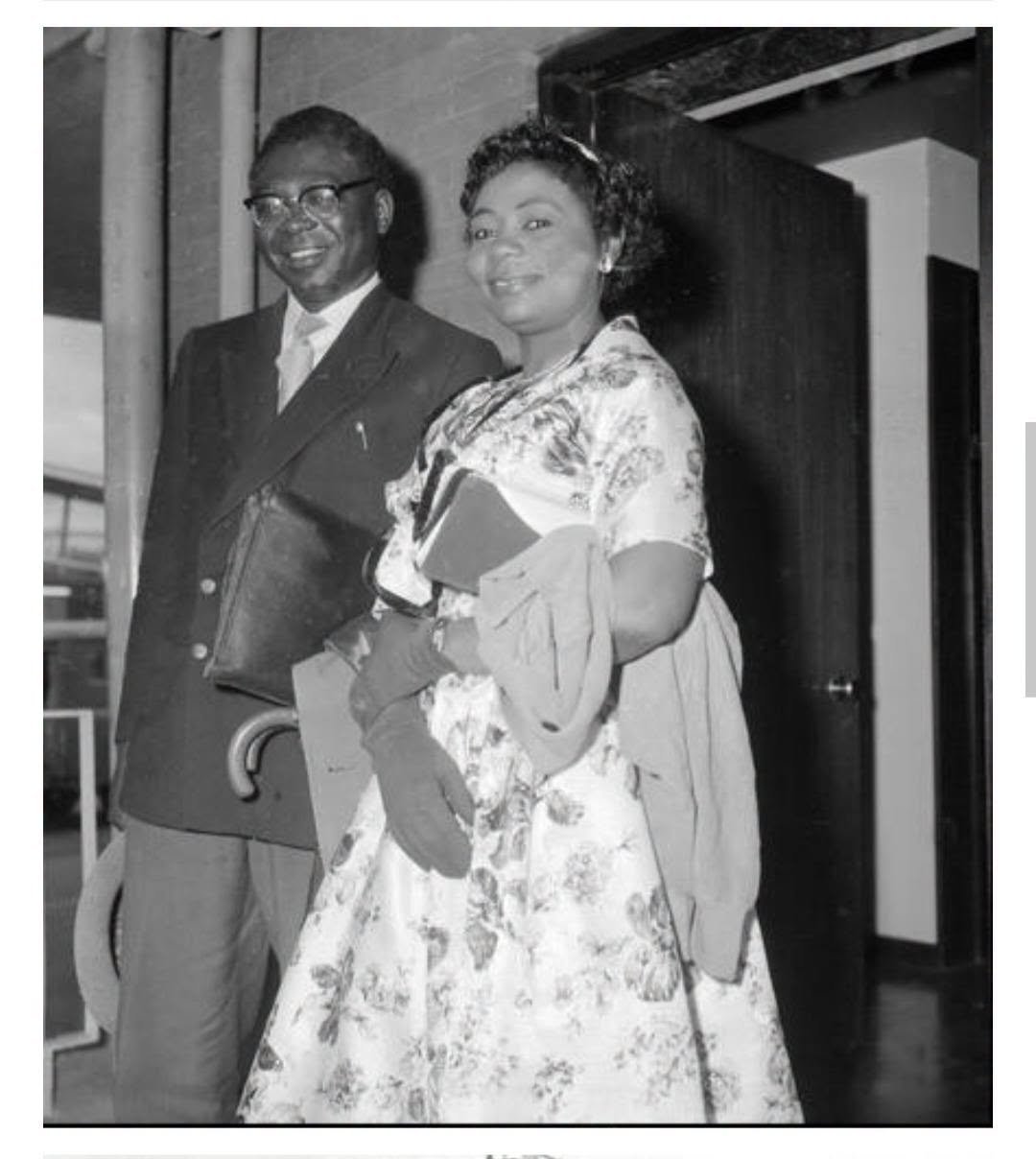
In May 1958, Dr. E.M.L. Endeley traveled to Zurich, Switzerland, alongside his wife on a mission to negotiate the currency for the people of Southern Cameroons. As Southern Cameroons prepared for independence, Dr. Endeley intended for the territory to maintain the pound sterling and shilling as its official currency. The Prime Minister of Southern Cameroons, Dr. the Hon. E.M.L. Endeley, is greeted by his wife as he arrives in London from Zurich, September 1958.
The negotiations in Switzerland went well, backed by the assurance of Southern Cameroons’ strong agricultural output, which reliably sustained its people. Leveraging the region’s tea estates, rubber and banana plantations of the Cameroon Development Corporation (CDC), and vast palm oil plantations, Dr. Endeley succeeded in getting the Swiss government and Swiss financial institutions to validate their willingness to endorse the pound and shilling as Southern Cameroons’ currency.
Before reunification in October 1961, Southern Cameroons did not issue a separate currency of its own; instead, it used the British West African pound (issued by the London-based West African Currency Board), alongside Nigerian pounds introduced after Nigeria’s 1959 currency rollout.
Thereafter, Dr. Endeley traveled to London for a royal audience with Her Majesty the Queen. During the meeting, he presented the aspirations of the people of Southern Cameroons to retain the pound and shilling in preparation for independence. However, the Queen had a different proposal: she wanted Southern Cameroons to join Nigeria to build a larger federation.
Dr. Endeley argued that the dominance of the Igbos within Southern Cameroons made joining Nigeria impossible for his people. The Queen countered that Southern Cameroons could not afford to sustain itself without financial support from Great Britain. In response, Dr. Endeley maintained that Southern Cameroons was well-positioned economically, citing its strong agricultural sector, deep-sea ports in Limbe and Tiko, and established commercial trading hubs like John Holt in Mamfe, Ndian, and Fako. He emphasized that these avenues, combined with a vast agricultural network, were more than capable of generating the revenue needed for self-sustenance.
Furthermore, Dr. Endeley pointed out that Southern Cameroons had a growing population—already larger than that of The Gambia and other British trust territories—and a landmass larger than Hong Kong, which was also under British administration. Despite these arguments, the Queen insisted that Southern Cameroons join Nigeria, which ultimately led to the political campaign for integration.
Dr. Endeley fought to preserve the established institutions of Southern Cameroons: its House of Assembly, its House of Chiefs, its flag, its identity, and its ministerial system of government. It is said that on his journey back to Southern Cameroons, Dr. Endeley was so heartbroken and ill over the Queen’s refusal to grant independence that he wept for three days.
Throughout the rest of his life, Dr. Endeley grieved as he watched his people gradually descend into political oblivion. As the first Prime Minister of Southern Cameroons, he felt the deep pain of his people. Even as a renowned pharmacist, none of his own medications could heal the sorrow he suffered watching his homeland exploited by greedy individuals who placed their personal interests above the collective good of Southern Cameroons.
In his own words, he famously declared:
”Anybody who is feeding fat from the blood of the people of Southern Cameroons will answer to the gods of the land of the people of Southern Cameroons. And if it does not happen to you while you are alive, your generation will face the exact pain that you are inflicting on the people of Southern Cameroons. As you scatter Southern Cameroons into pieces, so surely shall your family be broken into pieces.”
Dr. E.M.L. Endeley, First Prime Minister of Southern Cameroons
Bye
THE SOUTHERN CAMEROONS IDENTITY CRISIS, ITS INSTITUTIONS, and ITS STRUGGLE FOR INDEPENDENCE. SOCIAL-CULTURAL IDENTITY.