
Congolese investors contribute over 30 billion to Bdeac bonds
The recent bond issue by the Development Bank of Central African States (BDEAC) has marked a significant milestone in the financial markets of the CEMAC region. Congolese investors have shown robust confidence in the regional bank’s vision by injecting over 30 billion CFA francs into the BDEAC bond issue. This substantial investment underscores the investors’ trust in BDEAC’s strategic plan and its commitment to financing development projects across various sectors, including education, health, and infrastructure.
The BDEAC bond issue, titled “BDEAC 5.60% net 2021-2028,” aimed to raise 100 billion CFA francs over seven years to support the Economic and Monetary Community of Central Africa’s development agenda. The bond, offering a 5.60% net interest rate per annum, represents an attractive investment opportunity, especially considering the tax-exempt status of BDEAC securities in all CEMAC countries.

The success of this bond issue is a testament to the growing dynamism of the Central African financial market and the increasing appetite of local investors for regional bonds. It also reflects the confidence in BDEAC’s improved financial health, as evidenced by its positive net results over the past four years, totalling 38 billion CFA francs, and a significant increase in its asset value from 93 billion in 2016 to 212 billion in 2020.
The Congolese investors’ participation is a clear indication of their commitment to regional integration and economic development. This move is likely to encourage more investments from within the region, fostering a sense of ownership and responsibility towards the collective progress of CEMAC member states.
The BDEAC’s strategic plan, which has seen the approval of 68 projects worth 918 billion CFA francs, far exceeding the initial target of 500 billion CFA francs, is a robust framework that promises to bolster the region’s economic landscape. With a loan portfolio boasting 97% performing loans in 2020, the BDEAC stands as a beacon of financial stability and a catalyst for development in Central Africa.
As the financial markets continue to evolve, regional banks like BDEAC become increasingly crucial. The Congolese investors’ significant contribution to the BDEAC bond issue is not just a financial endorsement but a strong vote of confidence in the bank’s ability to drive sustainable development in Central Africa. This collaborative financial endeavour is a shining example of how strategic investments can pave the way for a prosperous future for the entire region.
The BDEAC bond issue’s impact on the regional economy of the CEMAC region
The BDEAC bond issue’s impact on the regional economy of the CEMAC region is multifaceted and significant. By successfully raising funds through the bond issue, the Development Bank of Central African States (BDEAC) has demonstrated the robustness and potential of the regional financial market. The influx of over 30 billion CFA francs from Congolese investors, as part of a larger sum raised, is a strong vote of confidence in the bank’s ability to foster economic growth and integration within the region.
The capital raised through this bond issue is earmarked for financing a variety of development projects across the CEMAC region. These projects span several critical sectors such as education, health, infrastructure, agro-industry, finance, transport, energy, telecommunications, and sanitation. The successful allocation of funds to these sectors is expected to stimulate economic activity, create jobs, and enhance the quality of life for the citizens of the member states.
Moreover, the bond issue catalyzes further investments. It encourages local and regional investors to participate in the economic development of their region, promoting a sense of ownership and commitment to the CEMAC’s future. This is particularly important as the region works towards greater economic integration and self-sufficiency.
The tax-exempt status of BDEAC securities in all CEMAC countries makes the bonds an attractive investment, which not only benefits the investors with a guarantee of profitability but also ensures that more funds are available for the bank to channel into development projects. This strategic financial manoeuvring enhances the bank’s capacity to support major sustainable development projects, which are crucial for the long-term economic stability and growth of the region.
Furthermore, the bond issue aligns with the CEMAC Regional Economic Programme, which aims to finance priority integration projects in local currency. This approach helps to mitigate foreign exchange risk and fosters a more stable economic environment within the region.
In conclusion, the BDEAC bond issue represents a significant step forward for the CEMAC region’s economy. It not only provides the necessary capital for important development projects but also strengthens the financial market’s infrastructure, boosts investor confidence, and lays the groundwork for sustained economic growth and regional integration. Congolese investors’ proactive participation and the bond issue’s successful outcome indicate a maturing financial landscape and a collective commitment to the region’s prosperity.
The BDEAC bond issue
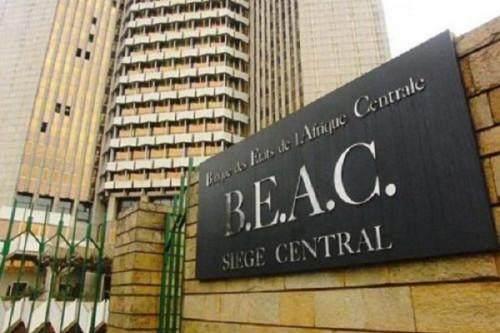
its a pivotal financial event that promises to catalyze the growth and development of the CEMAC region. The funds raised are earmarked for a variety of transformative projects that will benefit the member countries in several ways. Here are some specific projects that will see the light of day thanks to the successful bond issue:
1. **Transportation Infrastructure**: The bond issue will finance the tarring of critical road networks, including the Kumba-Mamfe road, the Batschenga-Ntui-Yoko-Lena road, and the Mintom-Congo border road. These roads are vital for facilitating trade, reducing travel time, and improving access to remote areas.
2. **Energy Projects**: The hydroelectric development of the Lom Pangar dam is another flagship project that will benefit from the bond issue. This project is crucial for increasing the electricity supply in the region, which is essential for industrial development and improving the living standards of the population.
3. **Agribusiness**: The bond issue will support projects in the agribusiness sector, aiming to boost food security and create employment opportunities. This includes investments in agricultural production, processing, and distribution networks.
4. **Health and Education**: Projects that improve the healthcare and education infrastructure are also on the agenda. These sectors are fundamental for the well-being and development of human capital in the CEMAC region.
5. **Economic Integration Projects**: The bond issue will fund national
In terms of subscription, Congo is the first country, with a contribution of 30 billion CFA francs. The second largest envelope comes from Cameroon, where investors subscribed to the tune of 22 billion CFA francs.

On March 4, the financial market of the Central African Economic and Monetary Community (Cemac) hosted a “special operation”. For the first time in three years, the Development Bank of Central African States (Bdeac), opted for a multi-tranche bond issue of 50 billion; first phase of a program intended to raise 100 billion CFA francs on the sub-regional financial market during the year 2024.
After an extension of the subscription deadline, the development bank managed to raise 54.7 billion, as part of its bond issue called “Bdeac (6.20%-5.95%-4.70%) Net 2024- 2031”, an oversubscription of almost 10%. This success is to be attributed to an unprecedented trio made up essentially of independent stockbroking companies, namely Contractor Capital, L’Archer Capital and Elite Capital Securities. According to the information to which EcoMatin had access, the leader Contractor Capital alone mobilized 28 billion CFA francs or 51.1% of the total amount. Archer Capital for its part contributed 13 billion CFA francs (23%) and Elite Capital 5.2 billion, or (9%). The rest of the envelope was mobilized by other placement agents, namely USCA and BGFI Bourse.
In terms of subscription, Congo is the first country, with a contribution of 30 billion CFA francs. The second largest envelope comes from Cameroon, where investors subscribed to the tune of 22 billion CFA francs. Next come investors from Gabon with 1.4 billion. Equatorial Guinea (25 million FCFA) and Chad (20 million FCFA) share 4th and 5th place respectively.
As usual, commercial banks were the most active with a mobilization of 36 billion CFA francs in the kitty. Non-bank legal entities have invested 15 billion CFA francs and individuals have subscribed to only 2.9 billion CFA francs.
Rush on maturity of 7 years
Given the context of the sub-regional capital market, marked in particular by the practice of high interest rates, Bdeac opted for a multiple-tranche loan like Cameroon and Alios Finance to optimize its chances of collection. According to confidences, the longest maturities were favoured by subscribers. Investors flocked to securities with a maturity of 7 years paying 6.20%. For this category of security, Bdeac recorded a subscription of 23.5 billion CFA francs. Next come the 3-year securities paying 4.7%, of which 15.8 billion could be obtained. Securities with a maturity of 5 years provided 15.3 billion.
In terms of subscription, Congo is the first country, with a contribution of 30 billion CFA francs. The second largest envelope comes from Cameroon, where investors subscribed to the tune of 22 billion CFA francs. Next come investors from Gabon with 1.4 billion. Equatorial Guinea (25 million FCFA) and Chad (20 million FCFA) share 4th and 5th place respectively.
As usual, commercial banks were the most active with a mobilization of 36 billion CFA francs in the kitty. Non-bank legal entities have invested 15 billion CFA francs and individuals have subscribed to only 2.9 billion CFA francs.
Rush on maturity of 7 years
Given the context of the sub-regional capital market, marked in particular by the practice of high-interest rates, Bdeac opted for a multiple-tranche loan like Cameroon and Alios Finance to optimize its chances of collection. According to confidences, the longest maturities were favoured by subscribers. Investors flocked to securities with a maturity of 7 years paying 6.20%. For this category of security, Bdeac recorded a subscription of 23.5 billion CFA francs. Next come the 3-year securities paying 4.7%, of which 15.8 billion could be obtained. Securities with a maturity of 5 years provided 15.3 billion.
The sub-regional institution has called on investors resident or not in Cemac to increase its interventions for the benefit of projects in the public commercial and private sectors in the Cemac zone. “The funds collected as part of the bond issue are intended to ensure the development and expansion of Bdeac’s activities through the financing of projects already approved and in the process of disbursement on the one hand, as well as new projects identified or currently being examined on the other hand, in line with the Azobe 2023-2027 Strategic Plan,” indicates the operation launch document.
The projects likely to be financed by this loan affect sectors such as service and tourism, transport, agro-industry, industry, energy, health, etc. These are projects of construction of the “City of the Fifties” in Douala in Cameroon (14.5 billion CFA francs), the construction of a new airport in Libreville in Gabon (67.5 billion CFA francs), the construction and equipment of general hospitals of Sibiti and Ouesso in the Republic of Congo (30 billion CFA francs), the construction of the Sendjé hydroelectric power plant in Equatorial Guinea (80 billion CFA francs), that of the Mandalia dairy complex in Chad (10 billion CFA francs) among others. For the record, its last three bond issues, allowed Bdeac to mobilize 300 billion CFA francs to Bvmac.