

School Inspection Leads to Seizure of Drugs, Weapons, and Prohibited Items from Students’ Possessions 2024
Police officers in Yaounde conducted a search operation on Monday morning, uncovering a range of concerning items in the bags of students in some prominent government secondary schools. The operation carried out at the invitation of school principals, targeted campuses known for disciplinary problems and drug use. Led by the Police unit in charge of securing secondary schools and university campuses, the operation uncovered alarming discoveries. Searches conducted in different classrooms identified pupils aged 12 to 18 in possession of weapons such as daggers, condoms, phones, jewellery, spare clothes, and other suspicious items. According to Cameroon Tribune, the police caught a group of first and final-year secondary school students consuming rice flavoured with Indian hemp. The operation is part of a broader school cleansing campaign initiated by the Ministry of Secondary Education (MINESEC) to combat drug consumption and decadence in schools. Speaking to CRTV, some teachers expressed concerns about the root causes of the decadent behaviour observed in schools today. They attributed the problem to poor moral foundations and suggested that some parents encourage indiscipline among their children by supporting them when caught engaging in inappropriate behaviour at school. Tambe Agbor, Principal of Government Bilingual High School Essos, Yaounde, elaborated on the school’s efforts to address the issue of decadence. He stated that the school is actively engaged in sensitizing students on the importance of discipline and warning them about the damaging effects of drugs. “Sessions of disciplinary councils are convened. As the need may arise, parents are obliged to take part, as the education of the child is a shared responsibility of the State, teachers, parents, and the entire education community at large. Sanctions taken during such sessions are communicated to the parents for implementation,” Mr Tambe said. Moral decadence, characterized by drug consumption and abuse, alcohol, violence, indecent dressing, and prostitution, among other ills, has deeply affected Cameroonian youths.
This issue has been a topic of discussion at the state level, with President Paul Biya urging youths to desist from these behaviours in his Youth Day speech on February 10. “Today, we are all witnesses of the gradual dissolution of these values in our society and, unfortunately, among the youths as well,” said President Biya three months ago. “Moral decay, irresponsible and deviant behaviour, violence, indiscipline, alcohol and drug abuse and intolerance are on the rise in our society. Schools are no exception,” he noted. The discoveries made during the search operation highlight the urgent need for concerted efforts from all stakeholders to address issues of indiscipline and drug use in schools.
The recent school inspection that led to the seizure of drugs, weapons, and prohibited items from students’ possessions is a stark reminder of the challenges schools face in maintaining a safe and conducive learning environment. This incident highlights the critical importance of regular and thorough inspections, not only to enforce school policies but also to protect the welfare of the student body.
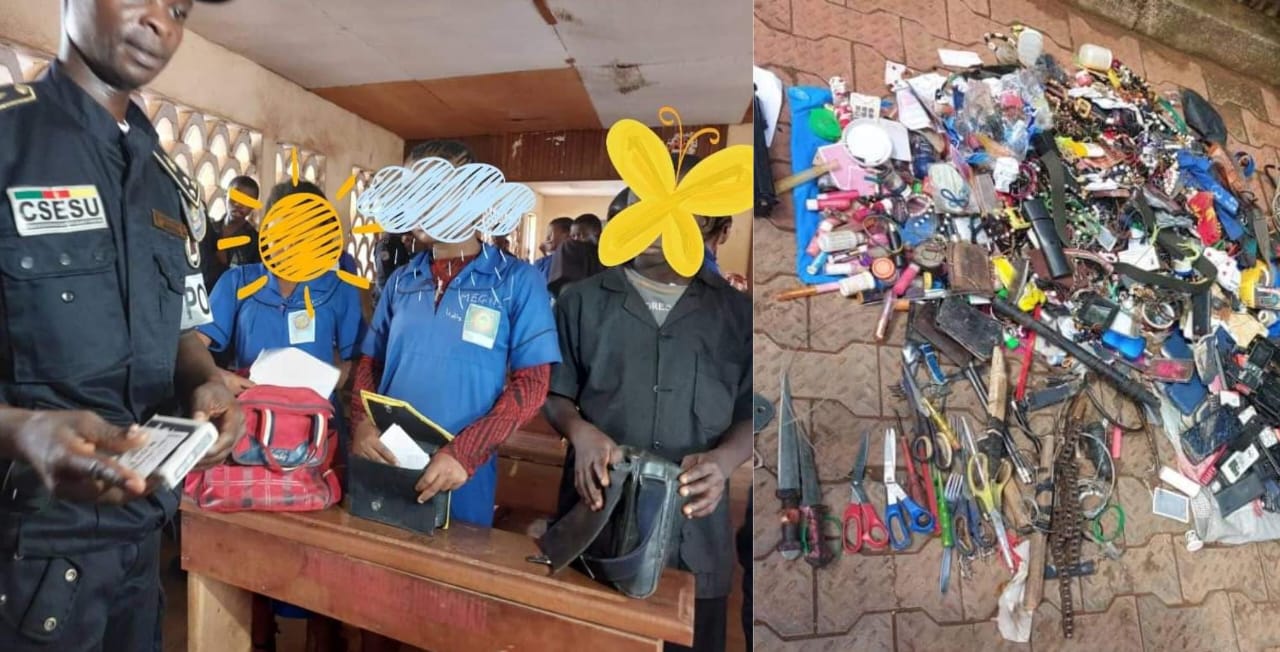
Schools are entrusted with the responsibility of providing a secure atmosphere where education can flourish. However, the presence of contraband items poses a significant threat to this objective. The discovery of such items during inspections is alarming and raises questions about the effectiveness of current preventive measures.
The zero-tolerance policies adopted by many educational institutions are designed to deter the possession and use of illegal substances and dangerous items on school premises. These policies are often extended to off-campus activities, reflecting the seriousness with which schools approach the issue of student safety. However, these measures are not without controversy, as some argue that they may infringe upon students’ constitutional rights.
The effectiveness of school inspections as a tool for school improvement is well-documented, with research indicating that they can lead to positive outcomes such as behavioural changes among teachers and school leaders, the introduction of self-evaluation practices, and even improved student achievement. These inspections serve as a mechanism for accountability and encourage schools to meet nationally defined targets and objectives.
In the wake of the seizure, schools need to review their policies and procedures. This includes examining the balance between maintaining discipline and respecting students’ rights. Public school administrators and law enforcement officers, including school resource officers, have the authority to search students or their belongings and question them about their conduct when there is reasonable suspicion.
The role of School Safety Officers (SSOs) is also crucial, as they are responsible for referring students and contraband to the appropriate authorities when necessary. This underscores the need for well-trained personnel who can handle such situations with the appropriate level of sensitivity and legality.
In conclusion, the seizure of drugs, weapons, and prohibited items from students’ possessions is a serious matter that requires immediate attention and action. Schools must continue to strive for a balance between ensuring safety and upholding the rights of students. Regular inspections, clear policies, and effective training for school safety personnel are vital components in achieving a safe educational environment. The incident serves as a call to action for all stakeholders to collaborate and reinforce the commitment to a secure and productive learning environment for our youth.
Schools have to maintain a safe and secure environment for all students and staff. When contraband items are found through school inspections or searches, the typical procedure involves confiscating the items and involving law enforcement when necessary. The student caught with such items may face disciplinary actions according to the school’s code of conduct, which could include suspension or expulsion, depending on the severity of the offence.
Additionally, schools often work in collaboration with local law enforcement to ensure that any criminal behaviour is addressed according to the law. Privacy laws and regulations generally prevent the disclosure of specific details about students, especially minors, to protect their rights and the integrity of ongoing investigations.
It’s also worth noting that schools may provide support and counselling services to students who are involved in such incidents, recognizing the importance of addressing the underlying issues that led to the possession of contraband items. Education on the dangers of drugs and weapons, as well as programs aimed at prevention, are commonly part of a school’s approach to fostering a safe educational environment.