Financial Aid Flowing: Cameroon Distributes 35 Billion CFA Francs for Economic Relief
Cameroon’s Commitment to Economic Recovery: A 35 Billion CFA Franc Allocation
In a significant move to bolster economic recovery in areas impacted by various challenges, the Cameroonian government has earmarked a substantial sum of 35 billion CFA francs. This allocation is a testament to the government’s dedication to addressing economic disparities and fostering sustainable development across the nation.
The allocation is part of a broader strategy to enhance the country’s infrastructure, with a particular focus on roadworks. In 2024, the government plans to allocate a total of 508 billion CFA francs to this sector, which represents an 18% increase from the previous year’s budget. This increased investment is expected to drive the continuation of ongoing roadworks and the construction and rehabilitation of new roads, which are crucial for economic growth and connectivity.
Moreover, the government’s approach includes leveraging both external and domestic resources to finance these ambitious projects. External resources are projected to contribute 290.6 billion CFA francs, while domestic resources will add another 218.1 billion CFA francs to the investment pool. Such a balanced and robust funding mechanism underscores Cameroon’s commitment to self-reliance and prudent financial management.
The planned projects are diverse and strategically chosen to maximize impact. They include the Lolabe Expressway (Port of Kribi)-Campo (39 km), the Bangem-Nguti road (65 km), the bypass road in the city of Batouri, and the bridge over the Ntem River between Rio Campo in Equatorial Guinea and Campo in Cameroon. By the end of 2024, the government aims to deliver 869.8 km of new asphalt roads and rehabilitate an additional 22.98 km of existing roads. These initiatives are expected to significantly enhance the national road network, which has already seen a growth of over 121% since 2010.
In addition to infrastructure, the government is also focusing on energy access. A loan agreement with AFREXIMBANK for approximately 34.7 billion CFA francs will partially finance rural electrification through solar photovoltaic systems in 200 localities. This project not only addresses the immediate need for electricity but also aligns with global sustainability goals by utilizing renewable energy sources.
The International Monetary Fund (IMF) has also shown confidence in Cameroon’s economic direction by approving a new disbursement of 44.5 billion CFA francs, which will serve as budget support for the country. This approval is a positive indicator of the international community’s trust in Cameroon’s economic policies and its growth potential.
These concerted efforts by the Cameroonian government reflect a strategic and multi-faceted approach to economic recovery and development. By allocating substantial funds to economically affected areas and prioritizing key sectors such as infrastructure and energy, Cameroon is paving the way for a resilient and prosperous future. The nation’s commitment to enhancing the quality of life for its citizens and driving economic progress is evident in these bold financial decisions and the projects they will bring to fruition.
This envelope is up by 5.9 billion CFA francs compared to 2023.
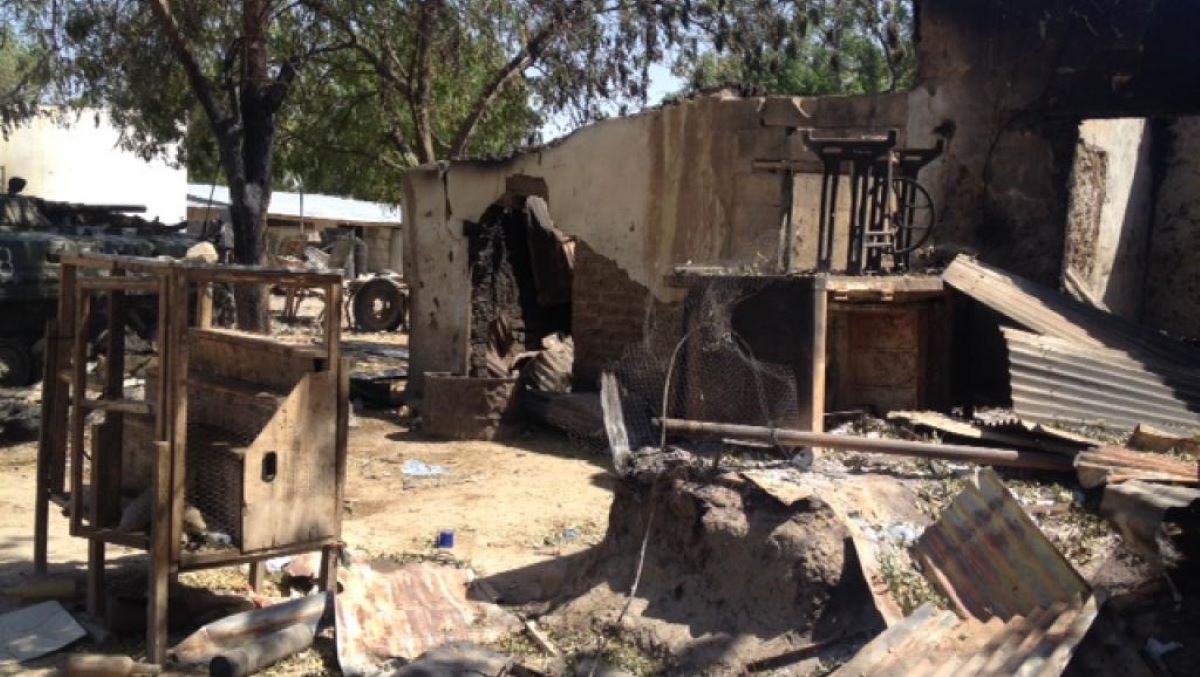
In Cameroon, the regions of the Far North, North West and South West (Noso) have been the subject of a security crisis since 2014 and 2016 respectively. A situation which is accompanied by enormous material damage which require heavy financial resources to restore them.
For the reconstruction of the Far North, for example, the forecast budget is 1,800 billion CFA francs compared to 154 billion CFA francs for Noso. It is to mobilize these funds that the Cameroonian government established a special fund in its finance law. In the amended finance law for the current financial year, Cameroon is counting on an envelope of 35 billion CFA francs intended for these economically affected zones (SEZ). This figure is an increase of 5 billion CFA francs compared to the 30 billion CFA francs provided for in the initial finance law. In 2023, the envelope was 15 billion CFA francs before being revised to 29.1 billion CFA francs.
Upon reading the order of the President of the Republic, the State will have to inject 15 billion CFA francs, Japan 2 billion CFA francs, the Islamic Development Bank (IDB) 8.6 billion CFA francs and a postponement from 2023 valued at 9.3 billion CFA francs. For the particular case of the Far North, the financial needs are more substantial due to the road dike project between Kousseri (Logone and Chari) and the duckbill area (Mayo-Danay) announced by the head of the State itself in 2011. The feasibility studies initiated in 2013 and then delivered by the Ministry of the Economy in 2017, estimated the cost of the work at 1,000 billion CFA francs to carry out this project which firstly, to stem the phenomenon of flooding which still shakes this northern region.
As for the North-West and South-West, the official figures certainly show a little more than half of the financial needs already available, but the authorities have often deplored the reluctance of certain foreign financial partners. In 2019 for example, France promised 62 million euros or 40.6 billion CFA francs. “You cited the case of our strategic partner France. She had announced this financial support. So we are still waiting for them. We don’t lose any hope. Especially with the achievements and development on the ground. I think we are waiting for it, including so many others who had also promised,” remarked on national television on April 10, 2023, Balungeli Confiance Ebune, president of the Steering Committee of the North-West Regions Reconstruction Plan and the South-West (Pprd).