The World Bank’s Innovative One-Stop Shop Model for Cameroon: A Leap Towards Streamlined Public Procurement
In a significant move to bolster economic growth and enhance the efficiency of public procurement, the World Bank has recommended the establishment of a one-stop shop in Cameroon. This recommendation comes as part of a broader overhaul aimed at simplifying processes and increasing accessibility to the World Bank Group’s guarantee instruments.
The one-stop shop model is designed to condense the current structure, which spreads across 20 different guarantee solutions, into a single, streamlined platform. This reform is expected to provide a seamless experience for clients, enabling them to easily identify and select the guarantee instrument that best suits their needs. The initiative is a response to the challenges faced by businesses in accessing political risk insurance and other guarantee products, which are crucial for mitigating risks and catalyzing private finance.
The proposed changes include six concrete updates:
Condensed Structure: Integration of guarantee experts under one roof to offer a seamless client experience.
Simplified Product Menu: A comprehensive compilation of all World Bank Group guarantees in a single menu.
Streamlined Process: A common approach for all guarantee reviews to provide transparency and certainty.
Greater Accessibility: Expansion of guarantee teams and training staff worldwide for easier access.
Scale: A risk-weighted approach to focus on high-impact projects, reducing duplicative risk analysis.
Innovative Tools: Introduction of new guarantee products to engage the private sector in development challenges.
The overhaul, which represents the first significant change in 15 years, is set to be available to all World Bank Group clients starting July 1, 2024. This initiative aligns with World Bank President Ajay Banga’s vision of leveraging private sector resources and ingenuity to address global challenges. By consolidating offerings and boosting accessibility, the World Bank Group aims to deliver faster and easier access to guarantees for businesses, which is particularly beneficial for local currency lending and supporting decentralized renewable energy projects.
Cameroon’s economy, characterized by its resilience yet limited diversification, stands to benefit greatly from this initiative. The one-stop shop model could potentially address cross-cutting constraints such as the distortive fiscal environment and the need for improved government roles in reforms, state-owned enterprises, and public-private partnerships. Moreover, it could facilitate land transactions and investment opportunities across various sectors, including agribusiness diversification and urban development.
The World Bank’s recommendation for Cameroon to create a one-stop shop is a testament to the institution’s commitment to fostering an environment conducive to investment and private sector growth. As the country looks to realize its economic potential, this innovative approach may prove to be a pivotal step in streamlining public procurement and enhancing the overall business climate.
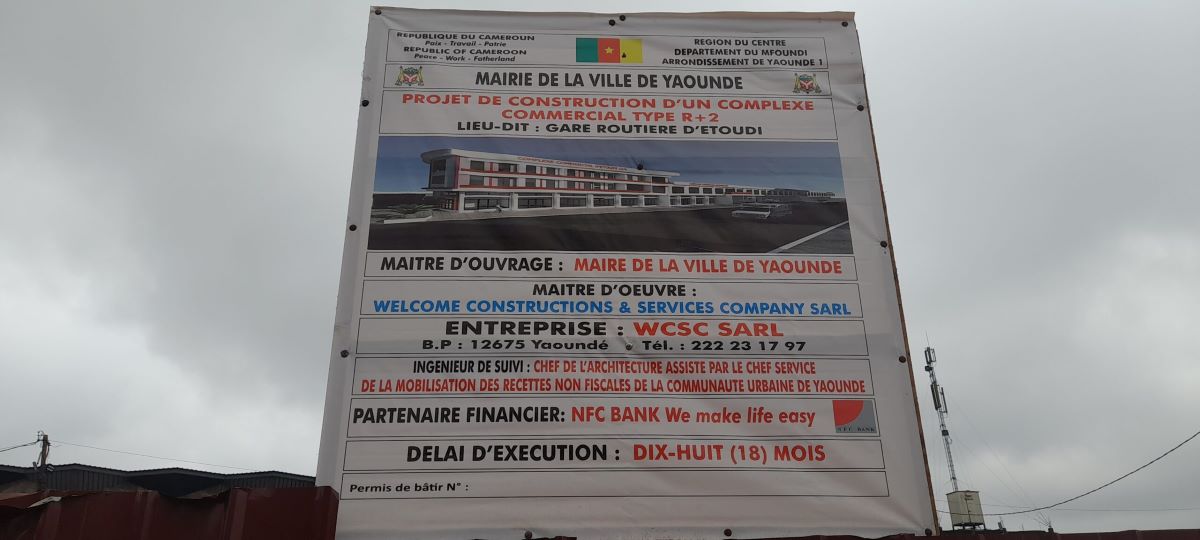
It is to overcome these irregularities that the Bretton Woods institution suggests the creation of a single window. This would “reduce the multiplicity of actors in the issuance of documents relating to public contracts”. Anything that encourages the corruption of public officials, the proportion of which is estimated at nearly 40% by the World Bank study.
This financial partner of Cameroon bases its proposal on the expenses incurred by SMEs to access public markets. As an illustration, at the submission phase, the payment of the costs of purchasing the tender documents varies between 10,000 CFA francs and 1 million CFA francs depending on the cost. Added to this is the bid deposit which represents 2% of the amount of the contract as well as other administrative costs related to the issuance of certain administrative documents (annual financial statements, social and/or tax clearance certificates, reprography, etc.).
Moreover, during the validation, approval, signature and start of the contract, SMEs must also pay other costs, in particular, the payment of a deposit for the start-up advance of 20% for works and intellectual services and 40% for supplies, reveals the World Bank.
The execution phase of the contract is not left out. It requires the final deposit of between 2% and 5% of the initial amount of the contract; the retention money or the performance bond of less than or equal to 10% of the amount of the contract; not to mention the subscription of professional insurance, “if the latter is required in the specifications of special administrative clauses”, specifies the WB.