Camtel Accuses Orange and MTN of Degrading Network Performance in Cameroon in 2024
The State of Network Quality in Cameroon: A Complex Challenge
In Cameroon, the quality of network services has been a topic of heated debate and concern among consumers. The national operator, Camtel, has pointed fingers at Orange and MTN, accusing them of contributing to the poor network quality experienced by users across the country. This situation has escalated to the point where the Telecommunications Regulatory Agency (ART) has had to step in, imposing significant fines on the operators for failing to meet the expected standards of service.
The fines, totalling CFA6 billion, were distributed among the operators, with Orange receiving the heaviest penalty. This action by ART underscores the severity of the issue and the regulator’s commitment to enforcing contractual obligations and ensuring that subscribers receive the quality of service they deserve.
The backdrop of these penalties is a series of inspections carried out by ART in 2022 and 2023, which revealed recurrent breaches related to coverage and service quality. The operators had been previously warned, and the fines represent a culmination of regulatory actions following a lack of satisfactory improvement in the services provided.
This situation reflects the challenges faced by the telecommunications sector in Cameroon, where infrastructure and service delivery are struggling to keep up with the demands of a growing subscriber base. The fines are not just a punitive measure but also serve as a wake-up call for the operators to enhance their network capabilities and address the concerns of their customers.
The operators have announced initiatives to improve service quality, which came in the wake of a crisis meeting convened by the Minister of Posts and Telecommunications. These initiatives are a step in the right direction, but it remains to be seen how effective they will be in resolving the long-standing issues that have plagued Cameroonian subscribers.
The fines also highlight the potential for further administrative sanctions, which could include a reduction of the concession period or even the withdrawal of operational licenses if the operators fail to make the necessary improvements. This regulatory pressure is a clear indication that ART is not taking the matter lightly and expects significant and tangible changes shortly.
For subscribers in Cameroon, the hope is that these measures will lead to a noticeable improvement in network quality. The commitment shown by the ART to hold operators accountable is a positive sign, but the ultimate test will be in the actual delivery of better and more reliable services.
As the situation develops, it will be crucial for all stakeholders, including the operators, regulatory bodies, and the government, to work collaboratively towards a common goal: providing the people of Cameroon with the connectivity they need to thrive in an increasingly digital world.
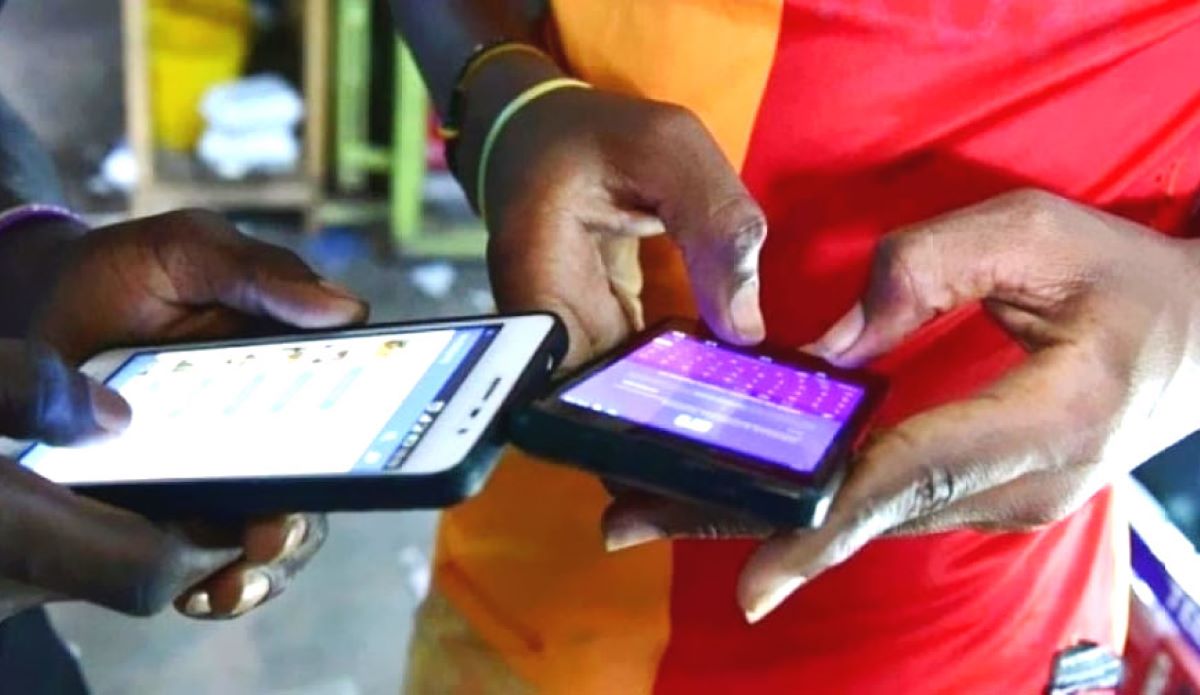
This Thursday, July 25, 2024, in Yaoundé, Georges Ndang rants as he presses the keys of his laptop vehemently. The young city dweller has not received anything for nearly an hour and is trying to restore his mobile internet network in vain. The thirty-year-old is a community manager in a local company, based in Elig-Essono. Struggling to carry out his daily tasks, he decided to sit on the steps of the stairs, near the road, hoping to catch a few bars of network. A little further in the streets of the Cameroonian capital, Silvie Anangue almost screams to be heard by her interlocutor on the other end of the line. Sometimes standing, sometimes sitting, she constantly changes position to try to find the right balance to have a fluid conversation by phone call. Next to this lady who finally opted for hands-free (speakerphone), are a couple of young people who are arguing. Listening, the young lady was an hour and a half late for an appointment that she had planned for several days without warning. While she claims, with proof, to have sent a text message to her host to announce and justify her delay, her young friend persists in not having received anything. The latter rants against his guest who allegedly has the bad habit of taking “too much time” while his opposite number signs his good faith on this occasion.
Recurring tensions and frustrations have become a custom among some subscribers of digital communication operators in Cameroon. A situation that forced the telecommunications regulator in Cameroon (ART) to take action. Indeed, in May 2023, ART issued a press release sanctioning mobile phone concession operators operating in Cameroon (Camtel, Mtn Cameroon, Orange Cameroon and Viettel Cameroon) to pay penalties totalling 6 billion CFA francs for “non-compliance with the coverage and quality obligations of electronic communications services stipulated in their respective specifications”. They were called upon to pay 800 million CFA francs, 1.4 billion CFA francs, 2.2 billion CFA francs and 1.6 billion CFA francs respectively. Except that after this sanction, things did not improve.
Questioned on July 24 at the Government Action Fair (Sago) in Yaoundé, on the issue of the poor quality of electronic services and communications in Cameroon, Judith Yah Sunday, Director General of Cameroon Telecommunications (Camtel), tried to exonerate herself by highlighting the resilience of the digital infrastructure she manages. According to her, the company has “enough capacity on its national and international backbone”, including an optical fibre extending over 12,800 km, several submarine cables (SAT-3/WASC in South Africa, NCSCS connecting Cameroon to Nigeria and SAIL Brazil-Cameroon), underground cables and a high-voltage cable in partnership with the electricity concessionaire Eneo. “If the underground cable is cut, communications are automatically switched to Eneo’s high-voltage cable and everything continues to function without anyone even realizing it. And even if by some extraordinary chance there is a break between Yaoundé and Douala, there is another route that goes through Bafoussam. Douala-Bafoussam-Yaoundé which allows for redundancy,” she presented as a scenario.
Orange and MTN in the dock
In 2022, the historic telecommunications operator in Cameroon obtained the concession agreement on transport, making it the only operator able to provide capacity to all other telephone operators in the country. Since then, it has been paying the price for the poor quality of service suffered by the Cameroonian population and for each hiccup on the network, responsibility is attributed to it. Once again, Camtel finds itself tarnished. Hence Judith Yah Sunday’s outburst at Sago: “I think Camtel is not defending itself sufficiently in front of the public and front of other operators. We are the holder of the concession agreement on transport, a service that we provide to other operators. These other operators that we must mention since we all know them, are MTN Cameroon and Orange Cameroon when we provide them with these capacities in their equipment, they in turn provide the various subscribers with electronic communications. They use the transmission cables to serve 10 and 8 million subscribers respectively. If the different channels are saturated, the quality of service will inevitably be poor. These two operators find the excuse easy and hide behind Camtel to say that it did not provide the capacity while they caused traffic jams on their distribution channels. We must say this publicly and they must stop putting their incompetence on the back of Camtel.
The liberalization solution
Contacted by EcoMatin, the operators in question did not want to enter into the hunt for the person responsible with the public company. However, they acknowledge the grievances brought against them and still plead for the improvement of the capacities of the national network, a way of pointing out that responsibilities are shared. “We are just tenants on these channels and if our offer is too large, it would be a question of increasing their capacities to respond to our different offers and satisfy national demand,” explained our source. One of the problems raised by them is regulation. The solution it proposes is to liberalize the fiber optic sector, at the risk of making the national operator lose its sovereignty. “The market is 95% controlled by foreign operators and if we allow the major operator to sell fibre optics to other players, it is clear that investments in this sector would multiply and accessibility to the Internet would be improved even if Camtel could probably disappear,” she indicated.
During the Cameroon Digital Week organized in October 2023, the opportunity was given to the various operators to express their views on the issue and Patrick Benson, Managing Director of Orange Cameroon, encouraged the public authorities to become more involved in improving digital communications services and the operators to work in synergy to serve Cameroonians and achieve the objective of 70% internet coverage and an internet penetration rate of 25% in targeted but not yet served areas by 2027. “When we talk about quality of service, it is often a collective problem that must be resolved. Our networks are interconnected, that is to say, today, if there is one of our networks that has problems, the others are also drawn into the quality of service problems and beyond the operators, I think that there needs to be a little broader collaboration with the authorities,” he said.