
THEORETICAL FRAMEWORK: RESOLUTION 1514 (XV), DECOLONIZATION, AND THE LEGAL-HISTORICAL ARGUMENT FOR THE INDEPENDENCE OF SOUTHERN CAMEROONS

The People, the Territory, the Colonial Status, and Why Economic Viability Was Not a Legal Condition for Independence
Daniel Funtong, MSN, AGACNP
Transparency Media International — Truth, Transparency & Accountability
1. THE CENTRAL QUESTION
This theoretical framework examines whether the former United Nations Trust Territory of Southern Cameroons completed a lawful and freely determined decolonization process in 1961.
It asks whether a colonial people occupying a recognized Trust Territory could lawfully be denied separate independence because the administering authority considered the territory economically unviable.
Its central proposition is that economic viability was not established by UN General Assembly Resolution 1514 (XV) as a legal precondition for independence.
2. AN IMPORTANT LEGAL DISTINCTION
Resolution 1514 (XV) does not literally establish a three-part legal test using the words “people, territory, and colony.”
Nevertheless, Southern Cameroons possessed all three characteristics relevant to the wider UN decolonization framework: an identifiable people, a defined territorial unit, and internationally recognized colonial or trusteeship status.
These characteristics must be considered together with the UN Charter, the Trusteeship Agreement, Resolutions 1514, 1541, and 1608, the 1961 plebiscite, and subsequent constitutional developments.
3. SOUTHERN CAMEROONS WAS A RECOGNIZED TERRITORY
Southern Cameroons was not merely an undefined cultural region inside La République du Cameroun.
It was a geographically identifiable territory administered by the United Kingdom under the international trusteeship system.
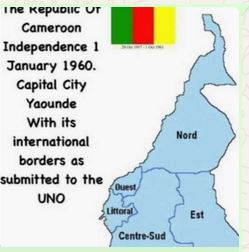
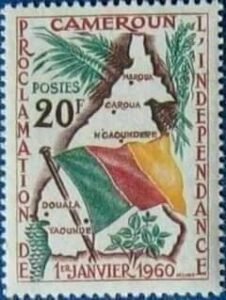
Its boundaries, administrative institutions, political representatives, courts, police structures, and legislative development distinguished it from the neighboring French-administered territory that became the Republic of Cameroon on 1 January 1960.
4. SOUTHERN CAMEROONS HAD AN IDENTIFIABLE PEOPLE
The term “people” in decolonization law concerns a population connected to a colonial or non-self-governing territory and entitled to determine that territory’s political future.
The people of Southern Cameroons developed their own political institutions, elected representatives, administrative experience, educational traditions, and legal system under British administration.
Their right to self-determination did not arise from economic wealth, population size, military strength, or approval by a neighboring state. It arose from their status as a people of a territory undergoing decolonization.
5. SOUTHERN CAMEROONS POSSESSED COLONIAL AND TRUSTEESHIP STATUS
Britain administered Southern Cameroons under the UN trusteeship system rather than as sovereign owner of the territory.
The United Kingdom therefore exercised international administrative responsibility and was required to promote the territory’s advancement toward self-government or independence.
Trusteeship authority was temporary and fiduciary; it did not authorize Britain to dispose of the territory according to British economic or geopolitical preferences.
6. ARTICLE 1 OF THE UN CHARTER
Article 1(2) of the UN Charter identifies respect for equal rights and self-determination of peoples as one of the purposes of the United Nations.
The principle places the political will of the people at the center of territorial decolonization.
It does not make self-determination conditional upon the former administering power’s prediction of economic success.
7. ARTICLES 73 AND 76 OF THE UN CHARTER
Article 73 recognizes that the interests of the inhabitants of territories that had not attained full self-government were paramount.
Article 76 identifies the progressive development of Trust Territories toward self-government or independence as a basic objective of the trusteeship system.
The administering authority was therefore required to advance the interests and freely expressed wishes of the people, not substitute its own political or economic judgment for theirs.
8. RESOLUTION 1514 (XV)
The UN General Assembly adopted Resolution 1514 (XV), the Declaration on the Granting of Independence to Colonial Countries and Peoples, on 14 December 1960.
The Declaration states that all peoples have the right to self-determination and may freely determine their political status and pursue their economic, social, and cultural development.
It also calls for transferring power to the peoples of Trust and Non-Self-Governing Territories without conditions or reservations, in accordance with their freely expressed will. “United Nations—Resolution 1514 (XV)” (https://unterm.un.org/…/768ae3ed-7f04-4bd2-8ba9…)
9. ECONOMIC VIABILITY IS NOT A CONDITION IN RESOLUTION 1514
Resolution 1514 does not state that a colonial territory must first prove that it is economically viable before its people may exercise self-determination or achieve independence.
It does not require a minimum population, gross domestic product, quantity of natural resources, government revenue, or level of infrastructure.
Economic development is an objective to be pursued by a people exercising self-determination—not a qualification test imposed before that right can be exercised.
10. INADEQUATE DEVELOPMENT CANNOT DELAY INDEPENDENCE
Paragraph 3 of Resolution 1514 declares that inadequacy of political, economic, social, or educational preparedness should never serve as a pretext for delaying independence.
This directly challenges any argument that Southern Cameroons could not receive an independence option because Britain considered it insufficiently developed or economically viable.
An administering power could provide assistance, transitional arrangements, and institutional support, but it could not convert economic concern into a permanent legal disqualification.
11. THE PATERNALISM OF ECONOMIC-VIABILITY ARGUMENTS
The economic-viability argument assumes that an administering authority understands the future interests of a colonial people better than the people themselves.
Such reasoning risks transforming trusteeship from preparation for self-government into a mechanism for directing the territory toward an outcome preferred by the administering power.
A people’s right to political status cannot depend entirely upon a colonial administrator’s economic forecast.
12. ECONOMIC SIZE DOES NOT DETERMINE STATEHOOD
International history demonstrates that small territories and populations have achieved independence and subsequently developed their own economies.
Independence does not guarantee prosperity, but economic uncertainty does not cancel the right of self-determination.
The appropriate question was not whether Britain could guarantee Southern Cameroons’ prosperity, but whether the people were freely permitted to decide their political future.
13. RESOLUTION 1541 (XV)
Resolution 1541 (XV) recognized three accepted outcomes through which a territory could attain a full measure of self-government: independence, free association with an independent state, or integration with an independent state.
Consequently, international law did not require every colonial territory to become a separate state.
It did, however, require that association or integration rest upon the freely expressed wishes of the people and comply with safeguards appropriate to the chosen political status. “UN materials on Resolution 1541 (XV)” (https://legal.un.org/…/english/rep_supp7_vol5_art73.pdf)
14. WHY WAS INDEPENDENCE EXCLUDED?
The Southern Cameroons plebiscite of 11 February 1961 offered two alternatives: joining the Federation of Nigeria or joining the Republic of Cameroon.
Separate independence was not included.
The central historical and legal question is why one of the internationally recognized decolonization outcomes was removed from the ballot offered to the people of Southern Cameroons.
15. A RESTRICTED CHOICE IS NOT THE SAME AS A COMPLETE CHOICE
A vote can be properly organized yet still raise questions about whether the available options allowed the people to express their complete political will.
Choosing between two forms of integration does not necessarily prove that the population rejected separate independence when independence was never placed on the ballot.
The result established a preference between the two choices presented, but it did not directly measure support for sovereign independence.
16. THE MEANING OF “JOINING”
The plebiscite authorized Southern Cameroons to “join” the Republic of Cameroon rather than authorizing unconditional absorption.
The legal meaning of joining must be determined from the plebiscite materials, public assurances, constitutional proposals, negotiations, and UN records existing at that time.
If the expected relationship was a federation of two political entities, subsequent elimination of that arrangement cannot be dismissed as legally irrelevant.
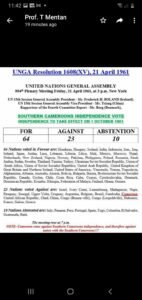
17. RESOLUTION 1608 (XV)
UN General Assembly Resolution 1608 (XV), adopted on 21 April 1961, provided for termination of the trusteeship over Southern Cameroons on 1 October 1961.
Paragraph 5 invited the United Kingdom, the Government of Southern Cameroons, and the Republic of Cameroon to initiate urgent discussions to finalize the arrangements by which their agreed and declared policies would be implemented. “United Nations—Resolution 1608 (XV)” (https://digitallibrary.un.org/record/662946)
This language confirms that the plebiscite result required further legal and constitutional implementation.
18. THE UNFINISHED IMPLEMENTATION QUESTION
An impartial review must determine what binding arrangement resulted from the paragraph 5 discussions.
It must identify the participating governments, documents negotiated, terms accepted, signatures obtained, constitutional approvals completed, and instruments entering into force on 1 October 1961.
Without this documentary record, it is difficult to determine whether the proposed relationship was finalized precisely as contemplated.
19. THE FOUMBAN CONFERENCE
The Foumban Conference of July 1961 discussed constitutional proposals for the anticipated federation.
However, a conference is not automatically an international treaty, and constitutional discussions are not necessarily equivalent to a final agreement between two territories or political entities.
The original records must establish what was proposed, accepted, rejected, modified, signed, or later enacted.
20. THE UNION-INSTRUMENT QUESTION
If a binding agreement established the union, the original instrument should be produced and examined.
The inquiry should identify its parties, signatures, ratification, entry into force, safeguards, amendment procedures, dispute-resolution provisions, and any international registration.
If no conventional treaty existed, the alternative legal foundation for the union must be clearly demonstrated.
21. FEDERATION AND EQUALITY
The proposed federation was understood by many Southern Cameroonians as a union between two political entities with distinct colonial histories, legal traditions, languages, and institutions.
Federalism could therefore be viewed as the constitutional safeguard protecting Southern Cameroons from absorption by the more populous Republic of Cameroon.
The destruction of that safeguard raises questions concerning consent, equality, and the continuity of the arrangement approved in 1961.
22. THE 1972 CONSTITUTIONAL TRANSFORMATION
In 1972, the federal system was replaced by the centralized United Republic of Cameroon.
The legal question is whether one nationwide referendum could extinguish the protected political status of Southern Cameroons without separately establishing the consent of its people.
A numerical national majority may not necessarily demonstrate the distinct consent of a smaller people whose territorial status was created through a decolonization process.
23. THE 1984 RESTORATION OF THE NAME “REPUBLIC OF CAMEROON”
In 1984, the state changed its name from the United Republic of Cameroon to the Republic of Cameroon—the name used by the formerly French-administered state before the 1961 relationship.
A name change does not automatically dissolve a state or settle a territorial dispute.
Nevertheless, it constitutes relevant evidence when considered alongside the abolition of the federation and allegations that the original Republic of Cameroon absorbed Southern Cameroons without preserving the promised constitutional relationship.
24. THE PRINCIPLE OF FREE AND GENUINE CONSENT
The International Court of Justice has described self-determination in decolonization as requiring the free and genuine expression of the will of the people concerned. “ICJ—Western Sahara Advisory Opinion” (https://www.icj-cij.org/case/61)
The Southern Cameroons inquiry must therefore examine not only whether voting occurred but whether the complete process permitted informed and genuine choice, established the agreed relationship, and preserved the substance of the consent obtained.
25. THE CHAGOS PRINCIPLE
In its Chagos Archipelago advisory opinion, the International Court of Justice examined whether the decolonization of a territory had been lawfully completed and emphasized that administering powers must respect the territorial integrity and freely expressed will of colonial peoples. “ICJ—Chagos Advisory Opinion” (https://www.icj-cij.org/case/169)
Although every territory has distinct facts, the opinion demonstrates that a formal declaration of independence or termination of colonial administration does not prevent later examination of whether decolonization was lawfully completed.
26. TERRITORIAL INTEGRITY DOES NOT END THE INQUIRY
La République du Cameroun may rely upon territorial integrity and the stability of inherited African boundaries.
Those are important principles, but their application depends upon the legal classification of the territory.
The inquiry must determine whether Southern Cameroons is attempting ordinary secession from an established state or seeking a remedy for incomplete decolonization and the alleged dismantling of a consensual union.
27. AFRICAN BOUNDARIES AND SOUTHERN CAMEROONS
Southern Cameroons’ argument does not necessarily require creating borders that never existed.
The territory possessed internationally administered boundaries before the 1961 plebiscite.
The historical boundary between British Southern Cameroons and the Republic of Cameroon may therefore be relevant to, rather than inconsistent with, the African principle respecting inherited territorial boundaries.
28. EFFECTIVE CONTROL IS NOT THE SAME AS LEGAL TITLE
Long-term administration, military presence, taxation, or governmental control may establish factual authority, but factual control alone does not conclusively determine lawful sovereignty.
International law distinguishes between effective possession and valid legal title.
The continued exercise of power cannot replace production of the legal instruments upon which that power is claimed.
29. HUMAN RIGHTS AND CONTINUING SELF-DETERMINATION
Common Article 1 of the ICCPR and ICESCR affirms that all peoples have the right to self-determination.
Contemporary allegations of discrimination, suppression of political expression, arbitrary detention, unlawful killing, attacks on civilians, and destruction of communities strengthen the need for impartial investigation.
Human-rights violations do not automatically determine sovereignty, but they may demonstrate that the political arrangement has failed to protect the population whose consent is invoked.
30. THE LEGAL-HISTORICAL CASE FOR INDEPENDENCE
The argument for Southern Cameroons’ independence rests upon the cumulative force of several propositions:
Southern Cameroons was a recognized Trust Territory; its people possessed a right to self-determination; independence was an internationally recognized option; economic viability was not a lawful precondition; separate independence was excluded from the plebiscite; the vote to join required negotiated implementation; the final union instrument remains contested; and the federal safeguards were later abolished.
No single proposition resolves the controversy, but together they justify an authoritative international legal review.
31. THE DOCUMENTS THAT MUST BE EXAMINED
The review should examine the Trusteeship Agreement, UN Visiting Mission reports, plebiscite records, British Cabinet and Colonial Office documents, Resolution 1608 implementation records, Southern Cameroons parliamentary records, Foumban Conference papers, constitutional instruments of 1961 and 1972, the 1984 legislation, diplomatic correspondence, and any alleged union agreement.
Historical claims should be tested against original documents rather than political repetition.
32. THE BURDEN OF LEGAL EXPLANATION
Those asserting permanent sovereignty over Southern Cameroons should identify the precise legal chain connecting trusteeship, plebiscite, negotiated agreement, constitutional implementation, and present sovereignty.
Likewise, advocates of Southern Cameroons’ independence must demonstrate how the historical record supports incomplete decolonization or unlawful alteration of the agreed relationship.
Both claims should be judged through the same standard of documentary evidence.
33. THE ROLE OF THE UNITED KINGDOM
Britain should explain why separate independence was not placed on the ballot and what role economic-viability assessments played in that decision.
It should disclose relevant archival records and clarify what legal arrangements it understood would become effective on 1 October 1961.
The United Kingdom’s trusteeship responsibilities create a continuing moral and historical obligation to assist in clarifying the record.
34. THE ROLE OF THE UNITED NATIONS
The United Nations supervised the trusteeship and plebiscite and adopted the resolution terminating trusteeship.
The UN should therefore consider an impartial legal and historical review, fact-finding process, mediation initiative, or request for an advisory opinion through an authorized organ.
Such a process would not predetermine independence; it would establish the legal record required for a legitimate resolution.
35. A PEACEFUL REMEDIAL FRAMEWORK
If an authoritative process concludes that the decolonization of Southern Cameroons was incomplete or that the governing relationship lacks a continuing legal foundation, the remedy should be peaceful and internationally supervised.
Possible measures include negotiations, a status referendum containing legally complete options, restoration of consensual arrangements, or internationally monitored independence.
The appropriate remedy must follow the established legal findings and freely expressed will of the people.
36. PROTECTION OF ALL CIVILIANS
The independence argument must never become a justification for attacks against civilians, Francophones, public employees, or residents originating from LRC.
Southern Cameroonians residing in LRC must likewise be protected.
Self-determination loses its moral foundation if pursued through collective punishment, ethnic hostility, or indiscriminate violence.
37. CONCLUSION: ECONOMIC VIABILITY CANNOT CANCEL A PEOPLE’S RIGHT
Southern Cameroons had an identifiable people, a recognized territory, and international trusteeship status.
Resolution 1514 (XV) did not make economic viability a condition for independence; instead, it rejected inadequate economic preparedness as a pretext for delaying independence.
Resolution 1541 recognized independence, free association, and integration, making the exclusion of independence from the 1961 ballot a legitimate subject of legal and historical scrutiny.
The fundamental question is not whether Britain believed Southern Cameroons would face economic challenges. Many new states confronted serious economic uncertainty at independence.
The decisive question is whether the people of Southern Cameroons were allowed to determine their political status freely, completely, and through arrangements that were lawfully finalized and faithfully preserved.
That question should be answered through primary documents, international law, democratic consent, and impartial adjudication—not through military force or assumptions inherited from colonial administration.
Economic predictions cannot extinguish a people’s identity. Administrative control cannot replace lawful title. Colonial judgment cannot substitute for self-determination.
The people, territory, trusteeship history, restricted plebiscite, contested implementation process, abolition of federal safeguards, and continuing political dispute collectively establish a compelling case for international legal review of Southern Cameroons’ claim to independence.
Daniel Funtong, MSN, AGACNP
Transparency Media International
Truth, Transparency & Accountability