An Open Letter to His Excellency President Paul Biya and the Leadership of Anglophone Movements Following the Apostolic Visit of His Holiness Pope Leo XIV to Cameroon: A Call for Reciprocal Concessions and the Immediate Opening of Inclusive Dialogue
Your Excellency,
Distinguished Leaders of the Anglophone Movements,
I write with deep respect and a shared sense of urgency to all parties central to the resolution of the ongoing crisis in Cameroon, in the aftermath of the historic apostolic visit of His Holiness Pope Leo XIV from 15 to 18 April 2026.
The Holy Father’s message in Yaoundé, Douala, and especially Bamenda was clear and compelling: peace requires courage, humility, and concrete action from all sides. His call was not directed at one party alone, but at the collective conscience of the nation and its leaders.
Today, Cameroon stands at a critical crossroads. Years of conflict have inflicted immense suffering—loss of lives, destruction of communities, mass displacement, and deepening mistrust. Yet, despite these painful realities, the Papal visit has rekindled a fragile but real hope that a different path remains possible.
This moment demands not hardened positions, but shared responsibility.
To the Government of Cameroon, under your leadership, Your Excellency: the responsibility to initiate confidence-building measures, including the release or review of political detainees, and to create a credible, inclusive framework for dialogue, remains both urgent and indispensable.
To the leaders of Anglophone movements: the responsibility to demonstrate commitment to peace through restraint, openness to dialogue, and readiness to engage constructively in a negotiated process is equally vital.
Peace cannot emerge where trust is absent—and trust cannot be built without reciprocal gestures.
I therefore respectfully urge the following parallel steps:
– From the State: the implementation of meaningful confidence-building measures, including the release, pardon, or judicial review of detainees linked to the crisis, and the formal initiation of an inclusive and transparent dialogue process;
– From Anglophone leadership: a clear commitment to cease hostilities where possible, to publicly endorse dialogue, and to participate in a structured peace process without preconditions that foreclose engagement;
– From all parties: a shared willingness to prioritize the protection of civilians, the restoration of education, and the reduction of humanitarian suffering.
These are not acts of surrender. They are acts of leadership.
History has shown that durable peace is not achieved through victory over one another, but through the difficult yet necessary process of engagement, compromise, and mutual recognition.
The visit of Pope Leo XIV has opened a rare moral and political window. To ignore it would risk prolonging the suffering of millions.
To act upon it, however, could redefine the trajectory of our nation.
Cameroon’s strength has always resided in its diversity. That diversity must now become the foundation for dialogue, not division.
I therefore call upon all parties—government authorities and Anglophone leaders alike—to rise to this moment with courage and foresight. Let this be the point at which entrenched positions give way to constructive engagement, and where the search for peace becomes a shared national mission.
The people of Cameroon are watching. The world is observing. But more importantly, the victims of this crisis—families, children, displaced persons—are waiting.
May wisdom, restraint, and a genuine commitment to peace guide your decisions.
Please accept the assurances of my highest consideration.
Respectfully,
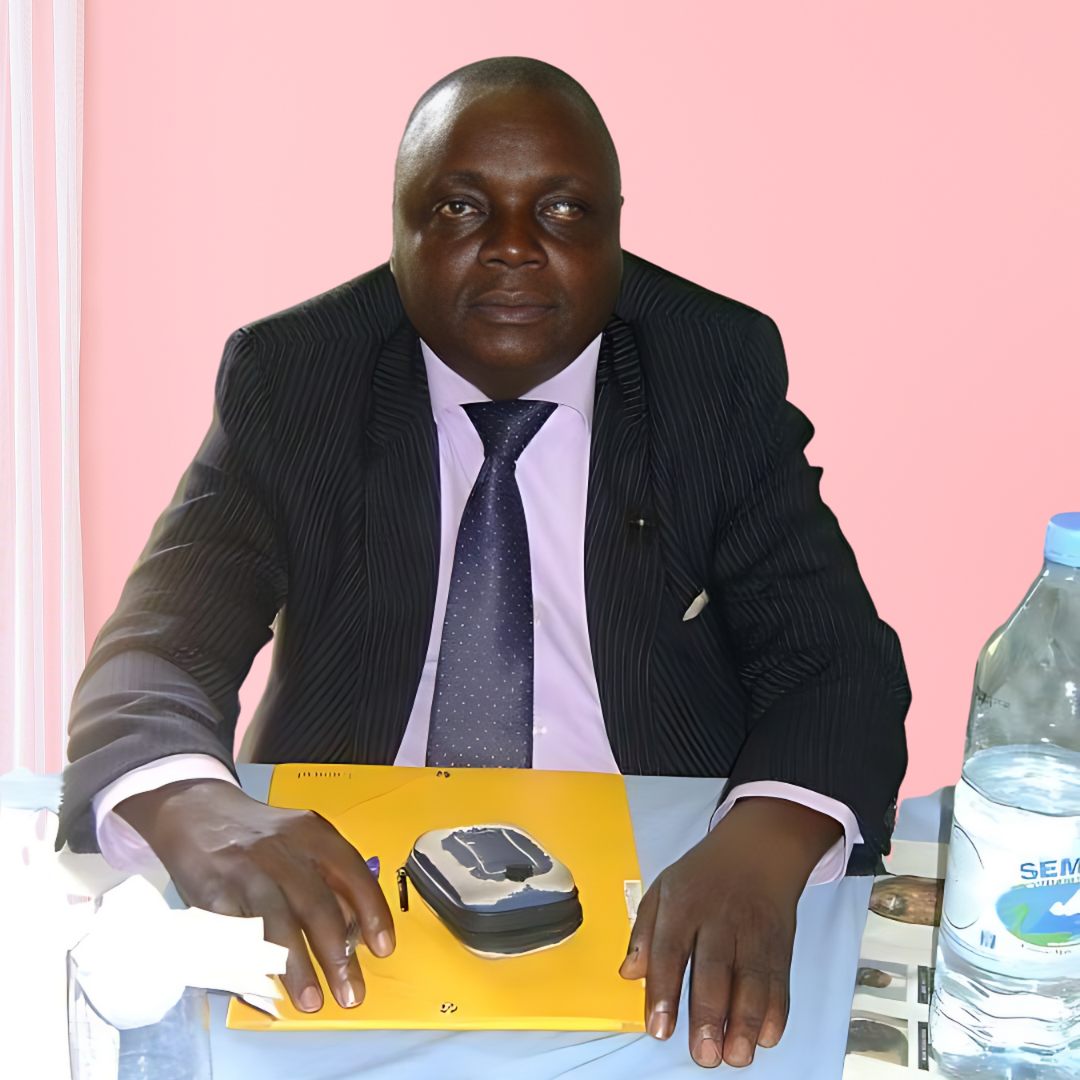
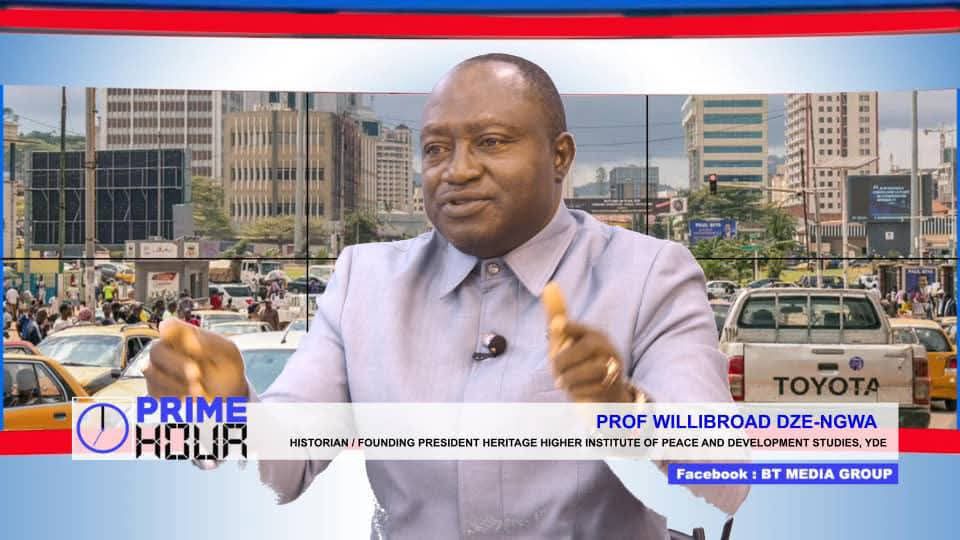
Professor Willibroad Dze-Ngwa
Historian / Senior Peace and Conflict Analyst
President/Director
Heritage Higher (University) Institute of Peace and Development Studies
Yaoundé, Cameroon
20 April 2026
An Open Letter to His Excellency, President Paul Biya and the Leadership of Anglophone Movements