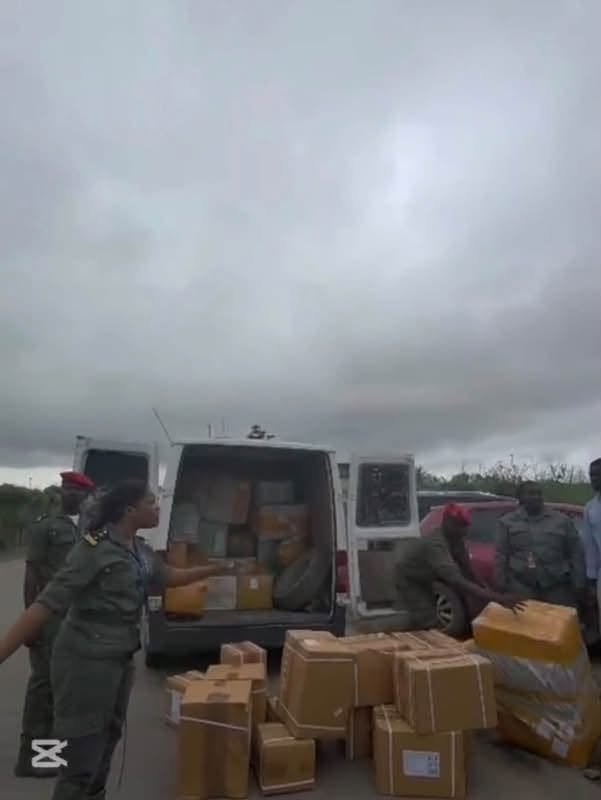
Allegations of embezzlement have marred the reputation of the legislative body, raising concerns about governance and accountability of 3 billion CFA francs in the Senate MISSING!!!!!!!
The Cameroon Senate Embezzlement Scandal: A Call for Transparency and Accountability
In recent times, the Cameroon Senate has been embroiled in a significant embezzlement scandal, involving the misappropriation of 3 billion CFA francs. This incident has cast a shadow over the Senate’s proceedings and raised serious concerns about the integrity of public office and the management of state funds.
The scandal, which has been termed “Covidgate,” implicates over 160 high-profile government officials in the mismanagement of COVID-19 funds, allegedly diverting public resources for personal gain. This has sparked a public outcry for more transparency and accountability in the management of public resources, which is the cornerstone of good governance.

Cameroon has a history of grappling with corruption, affecting various sectors of government and civil society. The Transparency International Corruption Perceptions Index gave Cameroon a score of 27 out of 100, ranking it 140th out of 180 countries, indicating a serious problem with corruption in the country. The police are perceived as the most corrupt institution, and there have been calls for a stronger political will to combat this pervasive issue.
The recent scandal has considerably damaged relations within the government, highlighting the need for more transparency and accountability reforms. It underscores the necessity for a robust system that can prevent such malpractices and ensure that public funds are used for the intended purposes, especially during times of crisis like the COVID-19 pandemic.
As the situation unfolds, the Cameroonian government must take decisive action to address these issues. Implementing stringent measures to curb corruption, enhancing the judicial system’s capacity to deal with such cases, and fostering a culture of accountability can help restore public trust. Moreover, engaging with international partners and adhering to global standards of transparency can aid in the fight against corruption.
The embezzlement scandal in the Cameroon Senate serves as a stark reminder of the challenges that lie ahead in the journey towards a transparent and accountable governance system. It is a call to action for all stakeholders to work collectively to establish a more ethical and responsible administration for the nation’s and its citizens’ betterment.
The Covidgate scandal

A term that has become synonymous with corruption in Cameroon, involves a series of allegations that have shaken the nation’s trust in its public institutions. The scandal centres around the misappropriation of public funds and overcharging, which were intended for the management of the COVID-19 crisis.
One of the central figures in this scandal is Ferdinand Ngoh Ngoh, the Secretary General of the Presidency, who was summoned by the Special Criminal Court’s prosecutor’s office. He is implicated in several cases of misappropriation of public funds, as documented by a report from the Chamber of Auditors.
The Audit Chamber of the Supreme Court of Cameroon also released a report revealing irregularities in the handling of funds allocated for the COVID-19 crisis. This report highlighted that there was an overview of only 30% of the XAF180 billion allocated to the special fund for managing the health crisis. Not all ministries involved were scrutinized, which raised questions about the comprehensive nature of the audit.
Furthermore, the International Monetary Fund (IMF) has called for a thorough audit of the mismanaged COVID-19 funds, indicating dissatisfaction with the findings of the local audit reports. This international attention underscores the gravity of the situation and the need for a transparent investigation.
The allegations have led to a broader discussion about corruption in Cameroon, with calls for significant reforms to ensure transparency and accountability in the management of public resources. The Covidgate scandal is not just about the misappropriation of funds; it’s a reflection of systemic issues that require long-term solutions and the commitment of all stakeholders to combat corruption effectively.
The Cameroon Covidgate scandal has implicated several individuals beyond the high-profile case of Ferdinand Ngoh Ngoh

the Secretary General of the Presidency. The scandal has revealed a network of officials involved in the misappropriation of funds designated for the COVID-19 response.
According to reports, an arrest warrant was issued for Ferdinand Ngoh Ngoh after he was summoned by the prosecutor’s office of Cameroon’s Special Criminal Court to be interviewed regarding the Covidgate scandal. This move indicates the severity of the allegations and the government’s intent to address the corruption charges.
The Audit Chamber of the Supreme Court’s report on the use of funds allocated for the COVID-19 health crisis cited irregularities within the Ministry of Public Health and the Ministry of Scientific Research. This suggests that the mismanagement of funds may involve multiple departments and levels of government.
Furthermore, a total of 32 people were implicated in corruption cases, with 24 of them found guilty and sentenced to prison terms ranging from 10 years to life imprisonment. The total financial loss suffered by the State of Cameroon in these cases amounts to 3,875,176,820 FCFA. These figures reflect the extensive nature of the scandal and the broad range of individuals involved.
The Covidgate scandal has brought to light the systemic issues of corruption that plague Cameroon’s governance. It underscores the need for a comprehensive approach to tackle corruption, involving not only legal action against those implicated but also systemic reforms to prevent such abuses of power in the future.
Navigating the Complexities of Workplace Investigations: A Comprehensive Overview

In the realm of corporate governance and human resources, the initiation of an internal investigation is a serious matter that often stems from specific allegations of misconduct within an organization. These investigations serve a critical role in maintaining legal compliance, upholding ethical standards, and protecting organizational integrity.
The process begins with the receipt of a complaint, which may come through various channels such as direct reports to supervisors, human resources, anonymous tips, or even government notices. Organizations must take every complaint seriously, no matter how trivial it may seem at first glance.
Once an allegation is made, the scope of the investigation must be determined. This involves identifying the factual and legal questions that need answers, assessing the nature and seriousness of the allegations, and deciding whether to limit the investigation to the allegations themselves or to expand it to broader issues. This decision-making process should consider whether the issue is employee-specific or systemic, the laws and policies involved, and the potential criminal or civil exposure to the company.
A critical aspect of any investigation is deciding when to involve outside counsel. The advantages of external involvement include independence, objectivity, and specialized expertise, which can be particularly beneficial in cases where public or agency perception is a factor. However, organizations must also weigh the costs and the implications for attorney-client privilege.
The goals of an investigation typically include establishing the facts, assessing potential liability, developing a strategy for future compliance, and determining an appropriate remedy. These goals may vary depending on the nature of the complaint, whether it involves a breach of company policy, illegal conduct, or issues with company procedures and controls.
If both the company and an employee face potential criminal charges, the employee should retain separate counsel. A joint defence agreement may be entered into, allowing for the sharing of information necessary for their defence.
The investigation process must be thorough and impartial, ensuring that all parties involved are treated fairly. This is crucial not only for the integrity of the investigation but also for protecting the company’s reputation and preparing for any potential government investigation or litigation.
In conclusion, workplace investigations are a delicate and complex process that requires careful planning, execution, and documentation. Organizations must navigate these waters with diligence and a commitment to fairness and legal compliance. By adhering to best practices and staying informed of recent developments, companies can effectively manage the challenges that come with internal investigations and maintain a workplace that is both productive and compliant.
Disclaimer: This article provides a general overview and is not intended as legal advice. Organizations should consult with legal professionals for specific guidance related to internal investigations.
During the next 30 days, the activity of senators will be particularly scrutinized at a time when everything seems to be done to ignore the file relating to alleged financial embezzlement involving officials of this institution

As in the National Assembly earlier in the morning, the June session in the Senate opened yesterday, June 11, with a concert of congratulations to the President of the Republic, Paul Biya, for the “brilliant” celebration of the 52nd edition of the Unity Day and its diplomatic victory consecrated by the election of Cameroon and, in particular, of former Prime Minister Philemon Yang to the presidency of the 79th UN General Assembly. One of the most anticipated subjects of the next 30 days of senators’ work relates to the organization of the budgetary orientation debate, a major activity recently introduced into the legislative practices of Cameroon. This plenary, which will be organized for the fourth time in this institution, allows parliamentarians to intervene ahead of the development of the macroeconomic framework for the following budgetary year. Other subsidiary subjects could revolve around the electoral deadlines of the year 2025, the Children’s Parliament, etc.
Read also: Suspicions of financial embezzlement in the Cameroonian Senate: elements of investigation
In addition to these issues, the June session opens against a backdrop of crisis in the Senate, a crisis marked by suspicions of financial embezzlement in the administration of the upper house of Parliament. Indeed, a management audit commissioned by the office of this institution concluded about three months ago on a scandal of embezzlement of public funds which does not reveal its name. Over the period from the end of October 2023 to February 2024, this audit reveals, a hole of 1 to 3 billion CFA francs was discovered in the institution’s coffers. As we pointed out on May 29, the money evaporated in the absence of the president of the chamber office, Marcel Niat Njifenji, on medical evacuation abroad during the three months during which the commission of inquiry chaired by Vice-President Robert Nkili and in which we found all the quaestors limited his investigations. This commission, which sat for 10 days, interviewed, in addition to the administration, all those responsible for the financial services of the Senate.
And on the basis of the report of this body, administrative formalities oblige, a request for explanations was served to a relative among the close collaborators of the president of the chamber. The latter received a 10-day layoff, before discreetly returning to service at the beginning of June, after having, according to our information, apologized to Marcel Niat Njifenji. In addition to this senior official who has benefited from a delegation of signature since the position holder was placed on extended leave, the secretary general Michel Meva’a Meboutou, who, due to his health problems, was declared unable to work for a year, financial services, sealed for 10 days, reopened at the same time as if nothing had happened.
Niat Njifenji: “I’m still here”
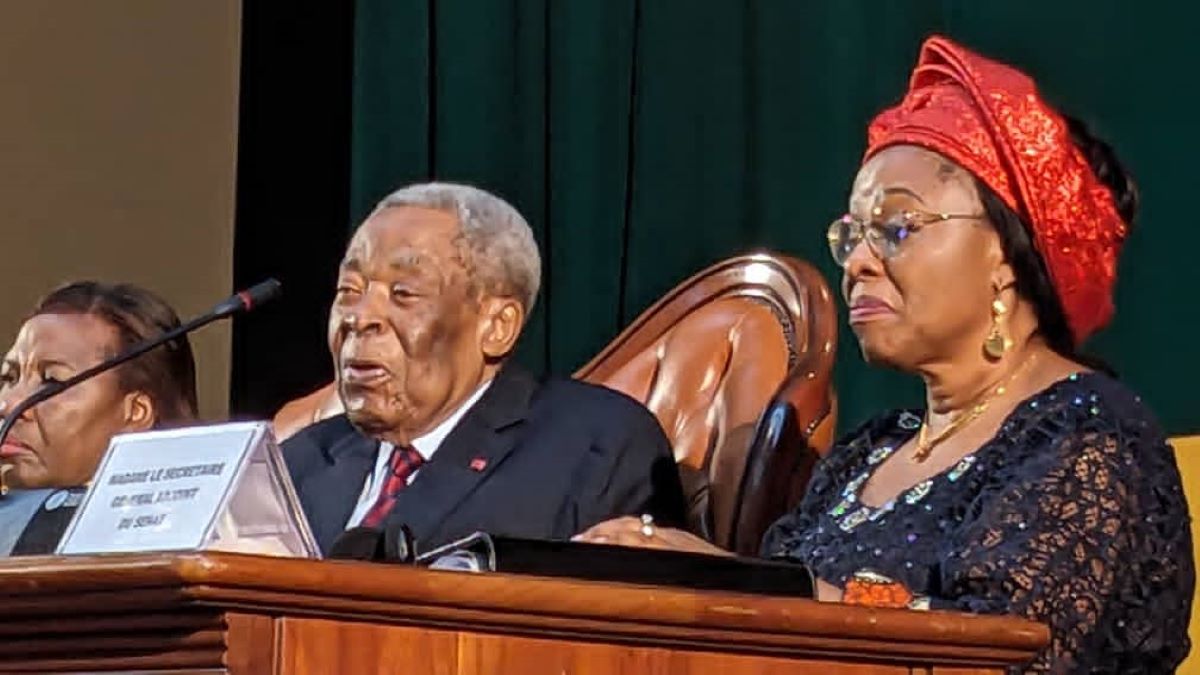 The President of the Cameroonian Senate during the opening of the session
Everything seems to be done to keep up appearances, but there is no doubt that this issue will haunt this June session. Regarding the affair of the alleged embezzlement of 3 billion CFA francs, Niat Njifenji indicated at the opening of the session that moral values and ethics will be preserved in the Senate: “I wanted to make this speech to say that I am there. Things are said but I’m still here. I would like to reassure Senators that moral values and ethics will be preserved. The disease will pass but Cameroon will remain.” The elected representatives of the people who are the senators, whose activity during these 30 days will be particularly scrutinized by public opinion, are practically required to act to prevent this scandal from being passed over in silence. At the end of the examination of the report produced by the aforementioned audit commission, a meeting of the office was logically expected which was to decide the fate of those who caused this scandal. It must be said that in the current state of the legislation, neither the Budgetary and Financial Discipline Control (Cdbf) of the Higher State Control, nor the National Anti-Corruption Commission (Conac), even less the Audit Chamber of the Supreme Court, cannot invite themselves to the Senate without having been formally contacted by the office of this chamber.