

The Cost of Uncertainty: How Leadership Drift, Intellectual Dependency, Institutional Docility, and Centralized Power in French Cameroun Are Undermining Business Confidence
By Ali Dan Ismael, Editor-in-Chief, The Independentist News
A Market Without Direction
In every functioning economy, investors look for one signal above all others: direction. Not perfection. Not even absolute stability. But a clear sense of where governance is heading—and who is capable of steering it. In French Cameroun today, that signal is not merely weak. It is increasingly absent. What exists instead is the unmistakable imprint of leadership drift—a system that continues to operate, yet cannot convincingly articulate its own future. It is not a vacuum of authority. It is a vacuum of visible transition, renewal, and forward intent.
The Quiet Erosion of Confidence
Markets do not collapse in such environments. They hesitate. Projects that should begin are delayed without announcement. Commitments that should be firm become conditional. Capital that should expand instead waits—watching, measuring, recalibrating. This is how confidence erodes: not through crisis, but through accumulation. In French Cameroun, hesitation is no longer temporary. It is becoming structural. Investors and partners are asking questions that no system can afford to leave unanswered: What is the long-term governance trajectory? Where does policy continuity come from? Can agreements made today withstand tomorrow’s uncertainties? Where answers remain unclear, caution becomes policy—and caution, when sustained, becomes stagnation.
Leadership as Economic Infrastructure
Leadership is often treated as a political variable. In reality, it is one of the most decisive forms of economic infrastructure. Roads move goods. Ports move trade. Energy powers industry. But credible leadership moves confidence. It assures investors that decisions will not shift unpredictably, that institutions will outlast individuals, and that transitions will not disrupt continuity. Where this credibility is uncertain, even the strongest physical infrastructure struggles to deliver its full value. The issue is not whether the system functions. It is whether it can be trusted to continue functioning coherently over time.
The Rise of Intellectual Dependency
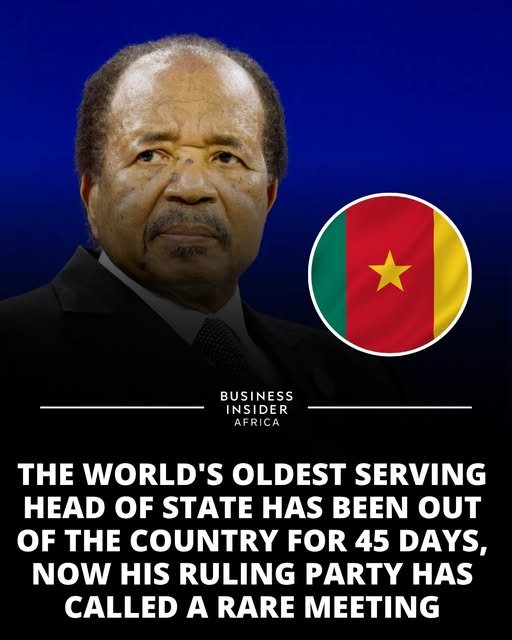
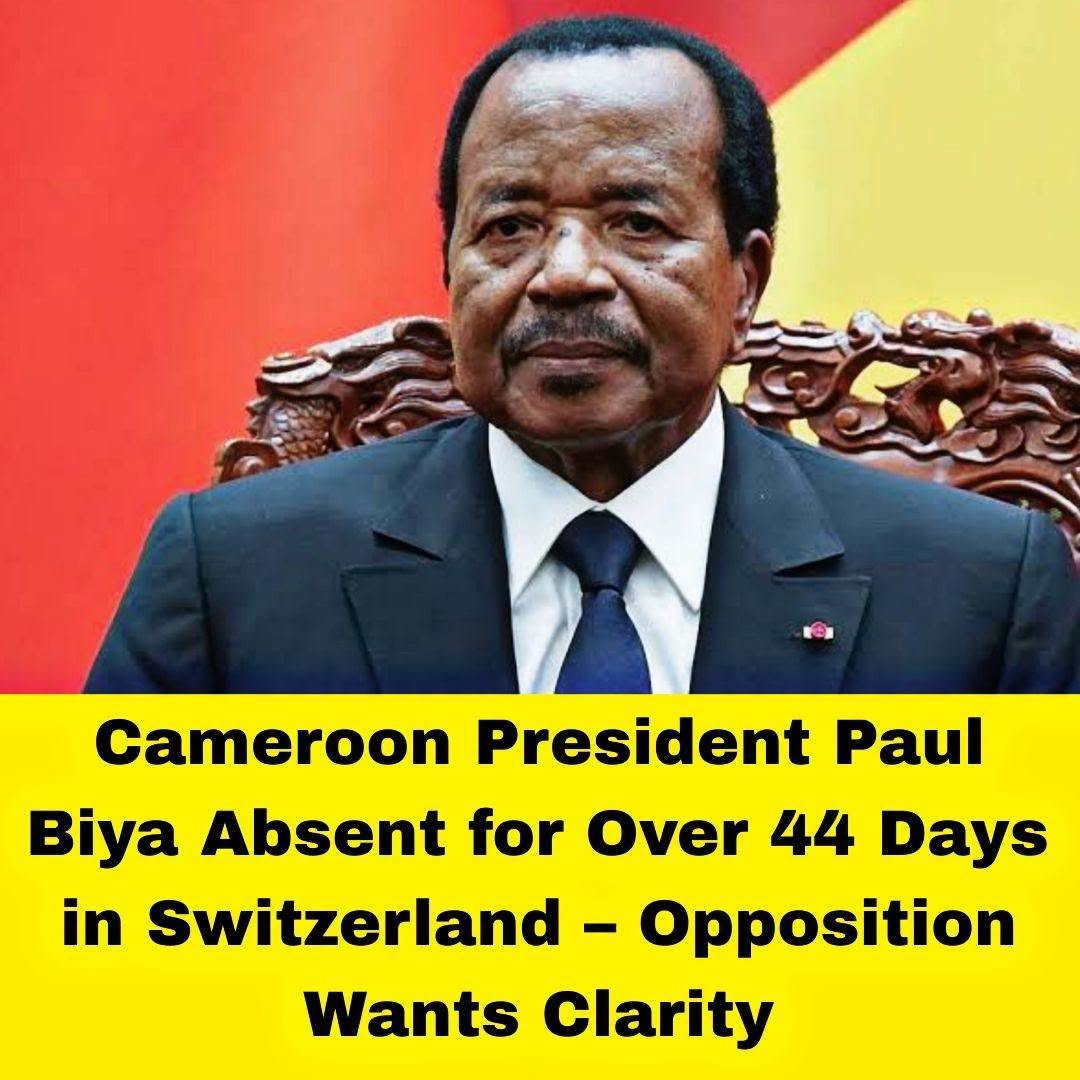
Beneath leadership drift lies a deeper structural fault: intellectual dependency. In a resilient system, crises generate ideas. Debate produces alternatives. Policy evolves through competing visions. In French Cameroun, however, a different pattern has taken hold. When confronted with the defining national challenge—the conflict in the Anglophone regions—many of those presented as intellectual authorities do not advance new frameworks, institutional reforms, or forward-looking solutions. They defer. They circle back, repeatedly, to a single, ageing centre of authority—invoking Paul Biya as the ultimate reference point, the final arbiter, the presumed source of resolution. This is not intellectual engagement. It is an intellectual substitution. It is the emergence of so-called intellectual surrogates—voices that do not expand the space of ideas, but compress it around power.
A System Anchored to One Node
When a system’s intellectual life becomes dependent on a single node, it begins to lose its capacity for self-generation. Ideas no longer circulate independently of authority. Solutions are no longer developed across institutions. The imagination of the future becomes tethered to the continuity of one individual. The question that emerges—quietly but decisively—is not ideological. It is structural: what happens when a system built around one node must function without it? Where there is no credible answer, uncertainty deepens—not because collapse is imminent, but because renewal is uncertain.
Institutional Docility and the Erosion of Balance
This structural fragility is further reinforced by the docility of institutions that, in robust systems, are expected to provide balance, scrutiny, and correction. A media landscape that echoes more than it interrogates, a legislative arm that aligns more than it challenges, and a judiciary that is perceived as cautious rather than independent all contribute to a system where accountability is muted, and adaptive pressure is weakened.
The result is paradoxical. Authority appears centralized and strong, yet becomes progressively weaker in substance. Without friction, there is no refinement. Without challenge, there is no correction. Without independent institutions, there is no credible signal that the system can regulate itself.
Internally, this erodes confidence in governance.
Externally, it raises doubts about reliability and institutional resilience.
What emerges is not consolidated strength—but concentrated fragility.
Centralization as a Structural Constraint
This institutional docility operates alongside a deeply centralized administrative structure. Decision-making authority remains concentrated. Regional initiative is constrained. Execution is filtered through layers of approval. Centralization, sustained over time, does not produce strength. It produces friction. Policy responses slow. Bureaucratic inertia increases. Institutional innovation diminishes. The system continues to move—but it no longer accelerates.
It is no surprise, then, that external observers have begun to characterize this condition with increasing bluntness. Even within international policy circles, the governing structure has been described as “ossified”—a term widely associated with assessments from institutions such as the Council on Foreign Relations, reflecting a system hardened by time, resistant to change, and increasingly detached from the demands of a rapidly evolving global environment.
In a world defined by speed, adaptation, and competition, a system that cannot evolve is already falling behind.
The Hidden Tax on Business
For business, the consequences are neither abstract nor distant. They are immediate and cumulative. A centralized system, combined with intellectual dependency, institutional docility, and leadership ambiguity, creates policy rigidity in a rapidly changing global environment, execution delays that raise operational costs, and deep uncertainty in long-term planning. This generates an invisible but decisive burden: an uncertainty premium applied to every investment decision. Capital does not exit dramatically. It adjusts quietly. It reduces exposure, shortens timelines, and reallocates toward environments where decisions are faster, signals are clearer, and institutions demonstrate adaptability. The result is not collapse, but chronic underperformance.
The Anglophone Conflict as a Structural Mirror
Nowhere is this structural limitation more visible than in the handling of the Anglophone conflict. Years into the conflict, what stands out is not only its persistence, but the narrowness of the solution space publicly articulated. In a system capable of renewal, one would expect competing policy frameworks, institutional experimentation, and strategic innovation. Instead, the dominant reflex remains a return to centralized authority as the singular locus of resolution. This reveals a deeper constraint: the system is not merely struggling to resolve the conflict. It is struggling to think beyond its own architecture.
The Regional Cost of Stagnation
French Cameroun is not an isolated system. It is a central actor in a region where economic progress increasingly depends on cross-border coordination, infrastructure integration, and shared strategic direction. When one major system exhibits prolonged uncertainty, the effects extend outward. Partners hesitate. Timelines stretch. Regional initiatives lose coherence. Momentum weakens. The cost is not confined within national borders. It becomes regional drag—a slowing force in an environment that demands acceleration.
Time Is Not Neutral
Time, in economic systems, is not passive. Every period of uncertainty compounds into lost opportunity. Investments that could have anchored growth are redirected. Partnerships that could have matured take root elsewhere. Competitive advantages erode not through failure, but through delay. The system does not necessarily decline. It is simply outpaced.
The Possibility of Renewal
Yet this trajectory is not irreversible. Systems that signal credible pathways to renewal can restore confidence with surprising speed. What matters are not declarations, but signals: expanded intellectual space for policy innovation, decentralised administrative capacity, and clear institutional mechanisms for continuity and transition. Markets respond to evidence—not rhetoric. Where adaptability becomes visible, confidence follows.
The Final Reckoning
Nations do not lose economic ground because they lack resources. They lose it because they lose the ability to renew themselves.
A system that depends on one center for direction, one voice for solutions, and one figure for continuity is not stable.
It is suspended. When intellectuals cannot think beyond power, when institutions cannot act beyond approval,
and when the future cannot be imagined beyond one individual, the system does not collapse. It freezes.
And in a world that is moving faster, harder, and more competitively than ever before, a frozen system does not survive. It is replaced.
Cameroon, A Market Without Direction