5-month setback for Cameroon road work after Chadian firm leaves.
 Aerial view of the Douala-Bonepoupa Road construction site
The Douala-Bonepoupa Road Construction Project: Progress and Challenges
The Douala-Bonepoupa road construction project, a significant infrastructure development in Cameroon’s Littoral Region, has been a subject of national interest due to its potential to improve connectivity and boost economic activities. However, the project has faced several challenges since the departure of the Chadian company Encobat, which has led to a noticeable slowdown in progress.
As of April 2023, the execution rate of the project stood at 51.36%, indicating that while over half of the work has been completed, there is still a considerable amount to be done. The project extends over 32.7 kilometres and is crucial for facilitating access to the city of Douala, easing the movement of people and goods, and ensuring the servicing of socio-economic infrastructure along the road.
The Minister of Public Works, Emmanuel Nganou Djoumessi, has made efforts to assess the progress of work on major road projects, including the Douala-Bonepoupa road. During his visit to the Littoral Region, he emphasized the importance of compliance with the completion schedule of the project. This visit was part of a series of actions taken by the government to ensure that the project teams on various sites are well-supported and that any obstacles to progress are addressed promptly.
Despite these efforts, the project has encountered several obstacles, such as the compensation of the affected population, availability of construction materials, protection of water pipelines, and displacement of electric poles. These issues have necessitated a concerted effort from all stakeholders to find solutions and keep the project on track.
The development of the Douala-Bonepoupa road is more than just a construction project; it represents a step towards modernizing the nation’s infrastructure and enhancing the quality of life for its citizens. The completion of this project is eagerly awaited by many, as it promises to bring about significant improvements in transportation and economic growth.
As the project moves forward, it is essential to maintain transparency, address challenges effectively, and ensure that the work is completed to the highest standards. The Douala-Bonepoupa road construction project is a testament to Cameroon’s commitment to infrastructure development and its potential to transform the region’s landscape.
The Departure of Encobat from the Douala-Bonepoupa Road Project

The Douala-Bonepoupa road construction project has been a focal point for development within Cameroon, promising to enhance connectivity and stimulate economic growth. However, the project faced a significant setback with the departure of the Chadian firm Encobat. The reasons behind this departure are multifaceted and highlight the complexities involved in large-scale infrastructure projects.
Encobat’s exit from the project was primarily due to performance issues and organizational challenges within the company. The Ministry of Public Works, led by Emmanuel Nganou Djoumessi, cited a lack of clear internal organization and the absence of quality human resources as key factors affecting the company’s performance. Despite having the necessary material resources, Encobat struggled to meet the project’s demands, leading to an unsatisfactory progress rate and the eventual termination of their contract.
Another contributing factor to Encobat’s withdrawal was financial disputes. Encobat claimed non-payment for certain services as one of the reasons for the project’s delay. However, the Ministry of Public Works refuted this, stating that out of the 25 invoices totalling CFA13.6 billion issued by Encobat, only CFA2.4 billion remained unpaid. This meant that Encobat had already received over 41% of the contract’s value.
The termination of Encobat’s contract underscores the critical need for robust project management and effective communication between all stakeholders. It also reflects the challenges that can arise when dealing with financial disagreements and the importance of having a clear and organized structure within companies undertaking such significant projects.
As Cameroon continues to pursue its infrastructure development goals, the lessons learned from the Douala-Bonepoupa road project will undoubtedly inform future endeavours. Ensuring the alignment of all parties involved, from the contractors to the government agencies, is essential for the successful completion of infrastructure projects that are vital for the nation’s progress.
Leadership and Oversight of the Douala-Bonepoupa Road Project

The Douala-Bonepoupa road project, a key infrastructure initiative in Cameroon’s Littoral Region, is overseen by the Ministry of Public Works. The project, which aims to improve connectivity and facilitate economic growth, is under the leadership of Emmanuel Nganou Djoumessi, the Minister of Public Works. His role involves ensuring the project adheres to its timeline, budget, and quality standards.
Minister Nganou Djoumessi’s responsibilities include regular assessments of the project’s progress, addressing any challenges that arise, and coordinating with various stakeholders to ensure the project’s successful completion. During his tenure, he has made several visits to the construction site to evaluate the work being done and to provide guidance to the project teams.
The project’s management involves a complex array of tasks, from logistical coordination to financial oversight. It requires a deep understanding of engineering, construction, and administrative processes. The leadership must also navigate the intricacies of working with multiple contractors, local communities, and government entities.
The departure of Encobat, the Chadian firm initially involved in the project, necessitated a reevaluation of the project’s management and progress. The Ministry of Public Works had to take decisive action to keep the project on track and find solutions to the challenges that led to the firm’s withdrawal.
The Douala-Bonepoupa road project is more than just a construction endeavour; it is a symbol of Cameroon’s commitment to advancing its infrastructure and improving the lives of its citizens. With Minister Nganou Djoumessi at the helm, the project continues to move forward, despite the obstacles it has faced.
Cameroon’s Infrastructure Development: A Look at Major Projects Under Minister Nganou Djoumessi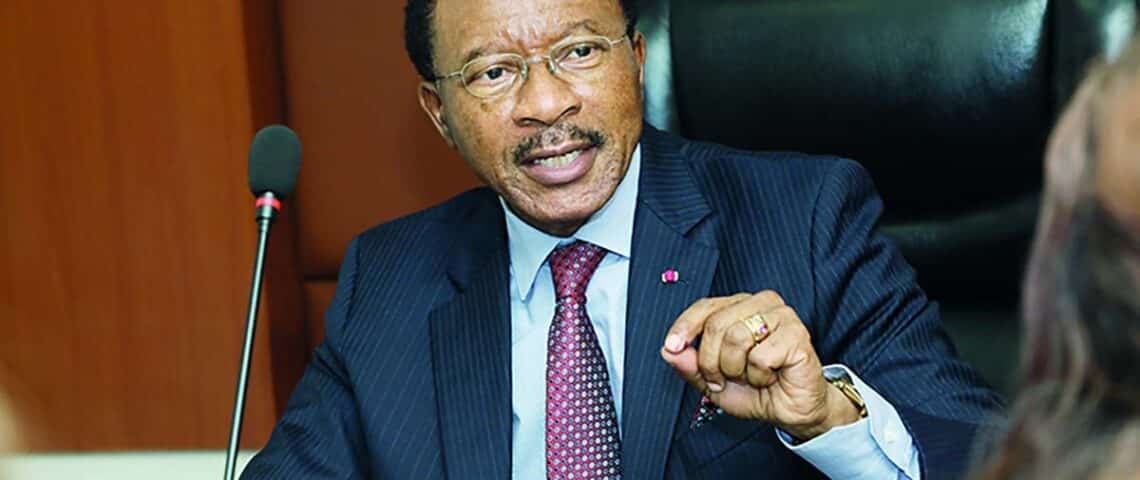
Cameroon’s infrastructure landscape is undergoing significant transformation, with a series of major projects that aim to enhance the nation’s road network, improve connectivity, and stimulate economic growth. At the forefront of these initiatives is Emmanuel Nganou Djoumessi, the Minister of Public Works, whose oversight is crucial to the successful implementation of these projects.
One of the key projects under Minister Nganou Djoumessi’s purview is the extensive road maintenance project set to commence in 2024. This ambitious plan involves the comfort maintenance of several pivotal paved roads across the national network, including routes such as Bas Falaise-Wak-Sala Bridge (National Road 1: 115 km), Gaklé-Mokolo (N1: 66.36 km), and Bekoko-Loum-Nkongsamba-Nkam Bridge-Bafang-Bandja-Bandjoun (N5: 219 km), among others. These critical routes not only connect regional capitals with Yaoundé, the nation’s capital but also facilitate cross-border movement with neighboring countries.
The maintenance work encompasses a variety of tasks, including the treatment of potholes, drainage and sanitation work, road-banking on all routes, rehabilitation of severely degraded areas, and the installation of signposting and safety equipment. With a budget of CFA51.5 billion allocated for these works, the project reflects Cameroon’s commitment to providing a reliable and efficient road infrastructure.
Another significant project is the construction of the Lolabe Expressway (Port of Kribi)-Campo, spanning 39 km. This expressway is expected to play a vital role in boosting the economic potential of the Port of Kribi, thereby enhancing trade and commerce in the region. Additionally, the Bangem-Nguti road (65 km), the bypass road in the city of Batouri, and the bridge over the Ntem River between Rio Campo in Equatorial Guinea and Campo in Cameroon are also part of the planned infrastructure developments.
Minister Nganou Djoumessi’s responsibilities also extend to the inspection of ongoing construction work, such as the 124-meter-long bridge over the Mayo Limani and its access roads, located on the Cameroon-Nigeria border in the Far North Region. This project is particularly significant as it strengthens the transportation link between Cameroon and Nigeria, facilitating trade and movement between the two nations.
The Ministry of Public Works has earmarked a substantial CFA508 billion for roadworks in 2024, with a focus on upgrading National Roads 1, 3, 5, and 10. This investment underscores the government’s dedication to expanding the national road network, improving accessibility to the country’s interior regions, and fostering economic exchanges.
Under the leadership of Minister Nganou Djoumessi, Cameroon’s infrastructure development agenda is set to take a major leap forward. The ongoing and upcoming projects reflect a strategic approach to modernizing the nation’s infrastructure and enhancing the quality of life for its citizens. With continued dedication and effective management, these projects will undoubtedly contribute to Cameroon’s growth and development in the years to come.
The Timeline for Cameroon’s Major Infrastructure Projects

Cameroon’s ambitious infrastructure projects are set to reshape the country’s economic and social landscape. Spearheaded by the Ministry of Public Works, these projects are part of a broader vision to enhance connectivity, facilitate trade, and improve the quality of life for Cameroonians. The expected completion timelines for these major projects vary, reflecting the complexity and scale of each initiative.
One of the most anticipated projects is the extensive road maintenance plan set to commence in 2024. This project involves the comfort maintenance of several key paved roads across the national network, with a budget of CFA51.5 billion allocated for the works. The completion timeline for this project is spread over several years, with specific sections of the road network scheduled for maintenance at different stages to minimize disruption and ensure thoroughness.
The Lolabe Expressway (Port of Kribi)-Campo, a 39 km expressway, is another critical project that is expected to significantly boost the economic potential of the Port of Kribi. The completion date for this project has not been explicitly stated, but it is part of the government’s strategic infrastructure plan leading up to the year 2035.
The Bangem-Nguti road, the bypass road in the city of Batouri, and the bridge over the Ntem River are also part of the planned developments. These projects are instrumental in improving regional connectivity and supporting cross-border trade with neighbouring countries. The timelines for these projects are aligned with the government’s Vision 2035, which aims to position Cameroon as an emerging economy by enhancing its infrastructure.
In addition to these, the construction of 55 steel bridges across the 10 regions of Cameroon is underway. This project, which began in April 2019, had an initial completion target for 19 of the bridges by March 2020. The remaining bridges are expected to be completed in subsequent phases, contributing to the nation’s infrastructural robustness.
The Ministry of Public Works has also earmarked a substantial CFA508 billion for roadworks in 2024, focusing on upgrading National Roads 1, 3, 5, and 10. This investment is a clear indication of the government’s commitment to improving the national road network and facilitating economic exchanges. The projected completion for these roadworks is part of a multi-year plan, extending into 2026.
It’s important to note that infrastructure projects, especially those of such magnitude, are subject to various factors that can influence their timelines. These include logistical challenges, funding availability, and the need to ensure that construction meets the highest standards of quality and safety.
For the most current and detailed information on the expected completion timelines for Cameroon’s major infrastructure projects, stakeholders and interested parties are encouraged to consult the reports provided by Business in Cameroon. These reports offer comprehensive insights into the progress and schedules of the ongoing infrastructure developments in the country.
Cameroon’s infrastructure projects are more than just construction endeavours; they represent a strategic approach to nation-building and development. With continued dedication and effective management, these projects will play a pivotal role in Cameroon’s journey towards becoming an emerging economy by 2035. The successful completion of these projects will undoubtedly mark a significant milestone in the nation’s history, paving the way for a brighter and more prosperous future.
Funding Cameroon’s Infrastructure: A Collaborative Effort

Cameroon’s infrastructure development is a testament to the nation’s commitment to progress and modernization. The funding of these major projects is a collaborative effort involving various sources, both domestic and international, ensuring that the ambitious plans for growth and connectivity become a reality.
The African Development Bank (AfDB) plays a pivotal role in financing Cameroon’s infrastructure. Over 56% of the AfDB’s portfolio in the country is dedicated to transportation infrastructure, highlighting the importance of such projects for regional integration and economic development. The AfDB has been instrumental in several key projects, such as the Ketta-Djoum road linking Cameroon to Congo, with an investment of $173 million, and the Bamenda-Enugu road and Cross River bridge connecting Cameroon to Nigeria, with a contribution of $120 million.
Moreover, the construction of bridges over the Logone and Ntem rivers, connecting Cameroon to Chad and Equatorial Guinea respectively, has received significant funding from the AfDB, amounting to $115 million and $80 million. These projects not only enhance the transport logistics chain but also create job opportunities, with more than 2.5 million direct jobs generated, 40% of which are held by women.
The Cameroonian government itself is a major contributor to the funding of infrastructure projects, with billions allocated to various initiatives. The Ministry of Energy and Water Resources and Eneo Cameroon are among the top contributors, with substantial investments in projects that are in the planning or design stages. This demonstrates the government’s resolve to invest in the nation’s future through infrastructure.
In addition to the AfDB and government funding, international partnerships and agreements also contribute to the financial landscape of these projects. For instance, the Cameroon-Chad Power Interconnection project received a financing agreement of $244.4 million from the AfDB and €30 million from the European Union. Such collaborations underscore the international community’s support for Cameroon’s development goals.
The funding strategies for these projects are multifaceted, combining loans, grants, and direct investments. This diversified approach ensures that the financial burden is shared and that the projects have a solid foundation for success. The investments made today in Cameroon’s infrastructure will pave the way for a more connected and prosperous tomorrow.
The completion of these infrastructure projects will mark a significant milestone in Cameroon’s journey towards becoming an emerging economy by 2035. With continued dedication and effective management, these projects will undoubtedly contribute to the nation’s growth and development, enhancing the quality of life for its citizens and strengthening its position in the global economy.
According to the recent report of the review of road projects falling under the portfolio of the Ministry of Public Works, the works which were to be delivered last March have once again been postponed to the year 2025.
Since the start of construction work on the Douala-Bonepoupa road in Cameroon in February 2017, the project has barely achieved a completion rate of around 50%. Everything starts from the former Chadian company Encobat, winner of the work which in 6 years, consumed 49% of the project’s financing, i.e. 11 billion CFA francs out of 26.5 billion CFA francs, for a completion rate of 39% in May 2023. A situation which exasperates Emmanuel Nganou Djoumessi, the Cameroonian Minister of Public Works (Mintp). In November 2023, the latter terminated the contract of this company to award it to another, the Cameroonian Cabte.However, five months after Encobat’s departure, the project is struggling to evolve. According to the project owner, the first reason is the “non-contextualization of the Cabte company market”. The company was chosen under a force majeure process which led to its mobilization in advance on the ground. “There is a threshold (amount) for which authorization from the Presidency of the Republic is required for the contracting of each company’s market; the ministry in charge of public procurement itself reports directly to the presidency. The company’s first operations on the ground consisted of maintaining traffic. Concerning the market, the services carried out to date concern the earthworks, the implementation of the foundation layer, the sanitation work and the treatment of the quagmires in progress,” explains a source with knowledge of the file. Furthermore, on a technical level, the major constraint is the difficulty in treating the potholes. To alleviate the situation, Mintp opted for the geogrid solution. “In concrete terms, this involves the use of a geosynthetic material which will protect the soil from groundwater. This is an effective and economical solution which combines, on the one hand, a high-performance polymer responsible for absorbing materials and, on the other hand, mechanically stable geotextiles,” we learn. While waiting for this innovation to get the project out of the impasse, let us recall that the Douala-Bonepoupa road construction project (33 km) includes the road component of the three-year emergency plan (Planut), the cost of which is estimated at 26,556 billion CFA francs for carrying out the work and around 2 billion CFA francs for the related control. Supposed to be delivered last March, the work has once again been postponed for the year 2025 without further details on the time, according to a source at the Ministry of Public Works. It is not accidental to point out that the road indicated above is not the only project financed by Planut which is stalling. For illustration, in the Western region, the construction of the Foumban-Koupamatapit road (54 km) has not been delivered 5 years after the start of the project. With a progress rate of 32.09% last January, the Tunisian company Soroubat has not touched 50% to date. As proof, we deplore a “low pace”. However, the Mintp served to the winning company, notification of the finding of failure which presaged the triggering of the termination of the contract on this 43.7 km project.