Government of Cameroon Announces Five-Year, 166 Billion CFA Franc Initiative for Statistical Development
Cameroon’s Statistical Development: A 166 Billion CFA Francs Vision
In a bold move to enhance the nation’s statistical capabilities, the Cameroonian government has announced an ambitious plan to mobilize 166 billion CFA francs over the next five years. This initiative is a testament to the country’s commitment to strengthening its data collection and analysis frameworks, which are crucial for informed policy-making and sustainable development.
The significance of robust statistical systems cannot be overstated. They serve as the backbone for monitoring economic progress, evaluating the impact of policies, and ensuring that resources are allocated efficiently. For Cameroon, a country with a diverse economy ranging from agriculture to oil production, having accurate and timely data is essential for navigating the complexities of economic management and international trade.
The investment in statistical activity is expected to bring about a multitude of benefits. By improving the quality and reliability of economic data, Cameroon aims to foster a more transparent and accountable governance structure. This, in turn, can enhance investor confidence and attract foreign investment, which is vital for economic growth.
Moreover, the initiative aligns with the broader goals of the African Union’s Agenda 2063, which emphasizes the importance of data and statistics in achieving the continent’s developmental objectives. As part of this continental vision, Cameroon’s efforts to upgrade its statistical systems will not only benefit national planning but also contribute to regional integration and cooperation.
The plan to develop statistical activity also comes at a critical time when the country is navigating the economic repercussions of global challenges. The recent trade deficit figures, which stood at 744 billion CFA francs, underscore the need for precise economic analysis and forecasting. Enhancing statistical capabilities will enable Cameroon to better understand and address the underlying factors of such economic indicators.
Furthermore, the commitment to statistical development is in line with international efforts to improve data for development. Organizations like Plan International Cameroon have been instrumental in advocating for and implementing projects that rely on accurate data to drive change and improve lives. The government’s investment in statistics is thus a step towards aligning national priorities with global development agendas.
As Cameroon embarks on this five-year journey to revolutionize its statistical activity, the path ahead is filled with potential. With a clear vision and dedicated resources, the nation is poised to unlock new opportunities for growth and development. It is a strategic investment that promises to yield dividends for years to come, positioning Cameroon as a leader in data-driven governance in the Central African region.
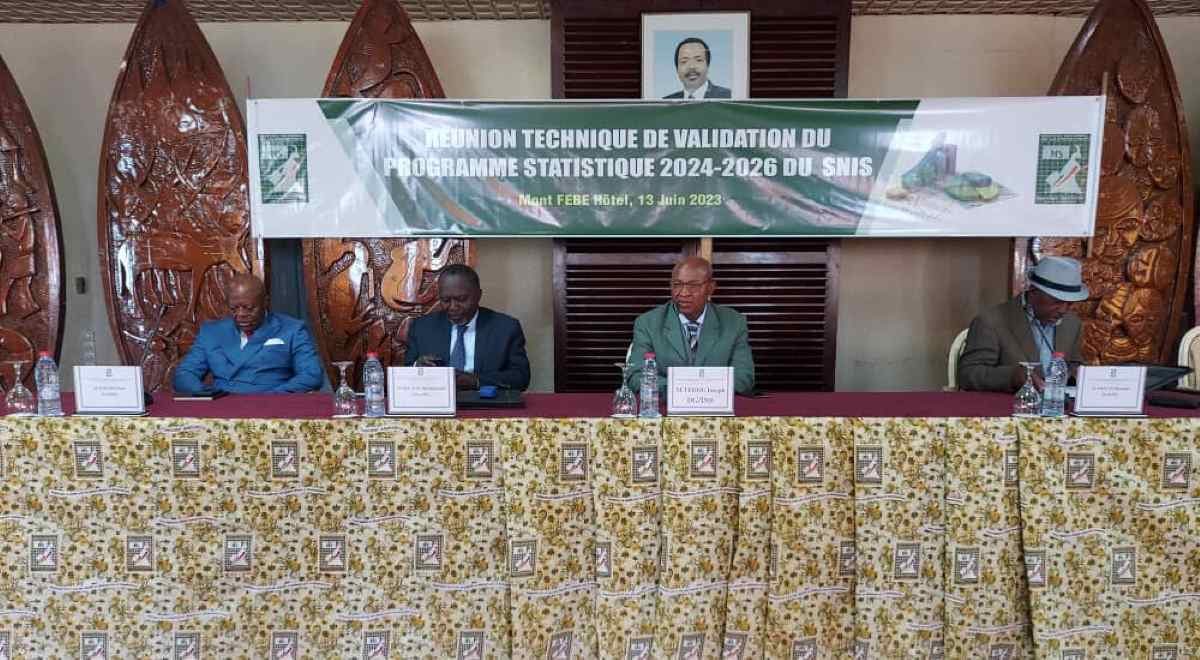
The financing plan for the National Statistics Development Strategy 2021-2030 (Snds30), has set its forecast budget at 166.5 billion CFA francs over the period 2024-2028. June 13, 2024. It was the subject of work bringing together the members of the National Statistical Information System (Snis) to draw up an inventory of the budgeting of the 2023 Annual Work Plan and carry out the examination as well as the validation of the 2024-2026 statistical program.
This forecast envelope will be used to finance the four areas of deployment of the Snds30. In detail, these include the coordination and management of the national statistical information system which will have a budget of 24.5 billion CFA francs; then, there is the improvement of statistical production which will benefit from 84% of this envelope, or 140.6 billion CFA francs. Please note that it is this axis which takes into account the carrying out of major data collection operations and surveys of the system. The areas concerning the improvement of the management of the statistical ecosystem the strengthening of cooperation and the development of applied research will be allocated 4.3 billion and 2 billion CFA francs respectively.
A financing gap of 34 billion CFA francs
According to the Snds30 financing plan, the National Institute of Statistics already has an idea of the levers to activate to mobilize these funds. 68.9 billion CFA francs will come from the government and 63.3 billion CFA francs from the World Bank. The two partners will thus mobilize the sum of 132.2 billion CFA francs. There remains a gap of 34.1 billion CFA francs which, according to the financing plan, will be filled through the resources of the other project partners who are following the World Bank in this operation. “The other partners have yet to confirm their support,” specifies the document.
Note that the Strategy will be financed from public resources (investment budget and concessional loans) and donations. In the same vein, agencies of the United Nations System also demonstrate their desire to support quality statistical production as part of their cooperation with Cameroon.
The main objective of the statistics financing plan in Cameroon is to make the financing of official statistics, available, and sustainable by capitalizing all the budgetary registration mechanisms provided for by the State budget or any other contribution to the financing of official statistics, particularly that of technical and financial partners (PTFs).
To achieve the results expected by the Snds30, several prerequisites must be put in place. This involves, among other things, creating effective conditions for the use of statistics for the management of public policies; creating the conditions to encourage political decision-makers, the government and donors to better use statistics and improve their statistical culture. This is to ensure better consideration during budgetary processes.
It is also a question of ensuring regularity in the production of quality statistics through the alignment of the activities of the SNIS with the budgetary calendar. Finally, it will be necessary to improve the knowledge of the actors of the SNIS, of the procedures and mechanisms for channelling the resources of the TFPs. Let us recall that the National Strategy for the Development of Statistics 2021-2030, is based on the National Development Strategy, the government’s compass in terms of development.