

Ngaoundéré’s Inflation Confirmed as Cameroon’s Most Expensive City Amid Rising Inflation
Ngaoundéré, the bustling capital of Cameroon’s Adamawa region, has been ranked as the most expensive city in the country for the third consecutive year, with an inflation rate nearing 8%. This persistent rise in the cost of living has outpaced the national average, placing a significant strain on the residents of Ngaoundéré.
The National Institute of Statistics (INS) reported that between April 2023 and April 2024, the inflation rate in Ngaoundéré surged to an average of 8%, a figure that starkly contrasts with the national average of 6.3%. This trend is not new; the city had already experienced the highest inflation rate in Cameroon in 2022, at over 7.4%, compared to the general price level increase of 6.3%.
The reasons behind this acceleration of inflation in Ngaoundéré have not been specified by the INS. However, the city is experiencing the most pronounced inflationary pressures within the country, which could be attributed to a variety of economic factors, including the costs associated with transportation and food prices, which have seen a significant rise across Cameroon.
In January 2024, consumer price levels in nine out of the ten major cities in Cameroon exceeded the CEMAC threshold of 3%, with Ngaoundéré experiencing the highest jump, reaching an 8% inflation rate compared to the same month in the previous year. This increase in household consumer prices has made it the Cameroonian city with the most significant inflationary impact.
The broader economic implications of such a high inflation rate are profound. It affects purchasing power, savings, and overall economic stability. For the citizens of Ngaoundéré, this means grappling with the rising costs of necessities, which can lead to a decrease in the standard of living and increased financial hardship.
The situation in Ngaoundéré is a clear indicator of the economic challenges facing Cameroon. It underscores the need for targeted economic policies and interventions that can address the root causes of inflation and help stabilize the economy. The government, along with economic experts, must work together to devise strategies that can curb inflationary pressures and provide relief to the affected populations.
As the city navigates through these economic challenges, the resilience and adaptability of its residents are being tested. The community’s response to these hardships will be crucial in determining the city’s economic future and its ability to bounce back from these inflationary trends.
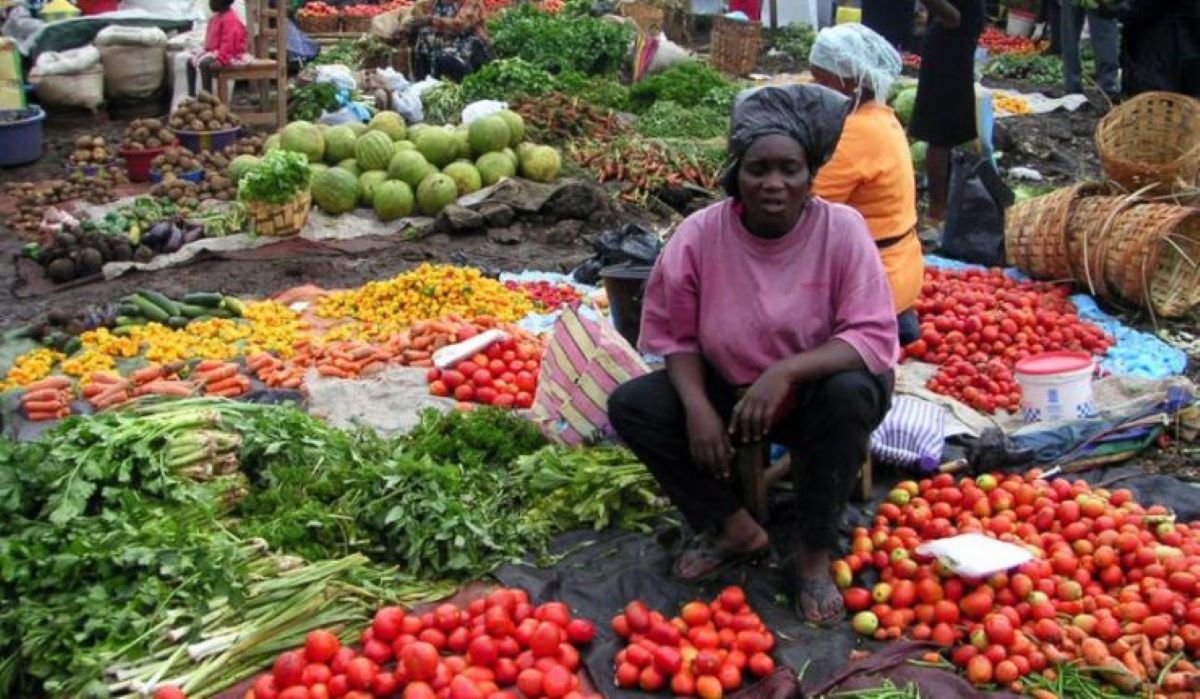
6.1%. This is the inflation rate recorded in Cameroon in May 2024 according to the Note on the evolution of final household consumption prices published by the National Institute of Statistics (INS). For the government statistician, this figure, up 0.3% month-on-month, is mainly fueled by the “8.2% increase in food prices and 15.4% in transport costs”. This could be explained by the revaluation of transport prices due to the readjustment of super and diesel prices that took place on February 3.
Ngaoundéré remains the most expensive city
Observation, the cost of living is more expensive in 05 main cities where the inflation rate represents double the threshold accepted within the economic and monetary community of Central Africa (3%). In detail, the city of Ngaoundéré (Adamaoua region) has been ranked the most expensive city in Cameroon since January. She stole the show from Bertoua (Eastern region) which remained at the peak of inflation in October and November 2023.
Thus, after an inflation rate of 8.4% in January 2024 and 8% in April, the regional capital of Adamaoua remains in the lead with 7.7% in May despite an improvement of -0.3% year-on-year. monthly. It is followed by Maroua (Far North) which records 7.6%. Douala, Ebolowa and Bertoua respectively display an inflation rate of 6.6%; 6.3% and 6%. The latter are followed by Yaoundé (5.6%), Bafoussam (5.6%), Buea (5.6%) and Bertoua (5.4%).
Although the victim of a security crisis for almost 8 years, Bamenda has stood out as the cheapest city since the 4th quarter of 2023. In May 2024, it achieved an inflation rate of 4% after 4.4%. the preceding month. Note that despite the optimism of the government which is counting on an inflation rate of 4% at the end of December 2024, the Cameroonian statistician indicated a few months ago that “it is predictable that following the revision to the increase in fuel prices on February 3, 2024 and the direct or indirect repercussion on other prices, in particular those of transport, food products and manufactured products, the inflation rate is around 7% at the end of 2024.
Beac optimistic with forecasts of 3.9%
The Bank of Central African States (BEAC) is also optimistic about the evolution of consumer prices in the six economies of the community zone (Cameroon, Gabon, Chad, Equatorial Guinea, Congo and CAR). Meeting at the headquarters of the sub-regional banking institution in Yaoundé (Cameroon) on June 24, 2024, the Monetary Policy Committee (MPC) forecast an inflation rate of 3.9% during this year, down 1.7% compared to 2023.
According to available data consulted by EcoMatin, if Cameroon, leader of Cemac, displays an inflation rate above double the community threshold, this is not the case for Equatorial Guinea where a recession of – 4.3% is announced for this year according to the International Monetary Fund (IMF). For the National Institute of Statistics of Equatorial Guinea (Inege), the inflation rate reached 2.2% in May 2024 compared to 4.7% for the same period in 2023 and down 0.2% in monthly sliding. Still, according to the same report, no Equatoguinean city exceeded the scale of 3% in May: Malabo (+3%), Evinayong (+2.6%), Bata (+1.9%), Ebibeyin ( +1.2%) and Mongomo (+0.5%). The outlook of the African Development Bank (AfDB) for the year 2024 indicates that Cameroon would record the highest inflation rate (6.3%), followed by Equatorial Guinea (4.7%), the Central African Republic (4.1%), Chad (3.4%), Congo (3.4%) then Gabon with 2.5% for which the IMF forecasts 2.1%.