

Sylvestre Mang Affirms Cameroon’s Central Role in AFD’s Intervention Strategy in 2024
The statement by Sylvestre Mang, the Deputy Director of the French Development Agency (AFD) in Cameroon, underscores the long-standing and significant relationship between Cameroon and the AFD. With a portfolio of projects amounting to 721.55 billion CFA francs as of December 31, 2023, Cameroon stands as the primary beneficiary of AFD’s funding in Central Africa.
This partnership, which spans nearly seven decades, is built on a foundation of mutual trust that has strengthened over time. The AFD’s commitment to Cameroon is based on various factors, including the country’s financial credibility, governance aspects, and the alignment of project requests with France’s policy on international development and solidarity.
The strategic choice to prioritize governance over structural infrastructure financing reflects the AFD’s holistic approach to development. In 2023, governance accounted for the main part of AFD’s activity in Cameroon, with significant initiatives such as the Budget Support Loan of 80 million euros and the Financial Governance Support Program for Cameroon (PAGFI) at 6.1 million euros. These efforts aim to improve public account management, control budgetary risks of public organizations, and strengthen the governance of public enterprises.
However, infrastructure financing remains a priority, with 57% of the AFD’s ongoing project portfolio in Cameroon dedicated to infrastructure, representing 17% of the commitment amount. Recent infrastructure projects funded by the AFD include the rehabilitation of the Belabo – Ngaoundéré railway for 126 million euros, the Nachtigal hydroelectric dam for 150 million euros, and the second bridge over the Wouri for 178 million euros.
The AFD’s interventions in sectors like agriculture also demonstrate its support for “Made in Cameroon” production. For instance, the SECAL project, funded with 16 million euros, aims to contribute to job creation, inclusive growth, and food security.
Moreover, the AFD’s recent signing of two agreements totalling nearly 20 billion CFA francs for the development of sports and urban planning in Cameroon highlights the agency’s commitment to sustainable development and poverty reduction. These projects align with the AFD’s strategies on Sport & Development and Sustainable Cities, addressing issues such as climate change adaptation, vulnerability reduction, and enhancing the quality of life for urban residents.
In conclusion, the AFD’s substantial involvement in Cameroon, as highlighted by Sylvestre Mang, is a testament to the enduring partnership that has evolved to address both immediate and long-term development challenges. Through a balanced focus on governance and infrastructure, the AFD continues to play a pivotal role in supporting Cameroon’s economic dynamism and its position as the economic engine of Central Africa.
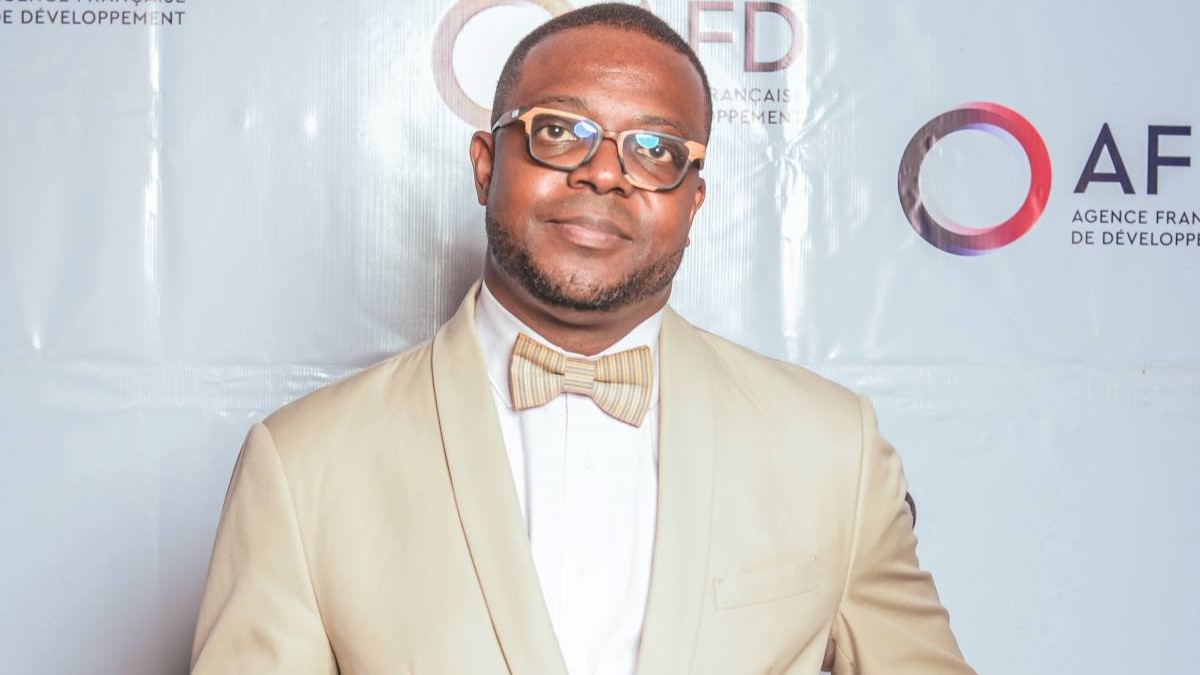
Mr. Deputy Director, as of December 31, 2023, AFD claims a project portfolio of 721.55 billion CFA francs in Cameroon, making it the largest beneficiary of this donor’s financing in Central Africa. What justifies this position? What does Cameroon represent for AFD?
Cameroon is historically one of our major countries of intervention. After almost 70 years of presence, the relationship we have built with Cameroon continues to consolidate and is now based on a common trust that facilitates this partnership relationship. This acquired trust is based on criteria such as the repayment of previous loans, financial credibility, governance aspects and also the adequacy of the requests submitted by our partners with France’s policy on development and international solidarity. This significant share of the commitments granted by AFD is also linked to the country’s economic dynamics within the sub-region and to the fact that Cameroon is the economic engine of Central Africa.
According to your recent activity report, 55% of AFD funds are allocated to governance in Cameroon and 45% to the implementation of structuring projects. Why make governance your priority instead of infrastructure?
Indeed, in 2023, governance represented the main part of our activity in Cameroon through the Budget Support Loan of 80 million euros and the Cameroon Financial Governance Support Program (PAGFI) for 6.1 million euros. Governance is a cross-cutting subject for AFD and it intervenes within the framework of supporting the State and its branches in structuring projects such as improving the management of public accounts, controlling the budgetary risks of public bodies and strengthening the governance of public enterprises.
Infrastructure represents 57% of our portfolio of current projects in terms of commitment amount, governance represents 17%
However, financing infrastructure remains a priority area of our action and we recently financed the rehabilitation of the Belabo – Ngaoundéré railway line for 126 million euros, the Nachtigal hydroelectric dam for 150 million euros (AFD Group – Proparco) and the second bridge over the Wouri for 178 million euros. Thus, infrastructure represents 57% of our portfolio of current projects, in terms of commitment amount. Governance represents 17%; agriculture, food security, climate and the environment 13%; and finally health, education, training, integration and the productive sector 13%.
The “Yaoundé Cœur de Ville” project, estimated at 75 million euros and financed since 2021 by the AFD, is still struggling to get off the ground. One of the reasons given by the public authorities is the lack of funding. What is blocking it?
To date, the project is not subject to any blockage. We are aware of the legitimate enthusiasm of the population to see the project come to fruition, and we would like to reassure you that certain non-tangible aspects of the project are underway and require special attention. These include the inventory and compensation of people impacted on the various project sites. Once this prerequisite has been completed, we plan to begin work at the end of 2024. The company for the technical project management (MOET) is currently being selected and the responses to the Call for Tenders for the completion of the work will be analyzed during the summer. In addition, the link with the Bus Rapid Transit (BRT) and Green Mobility (MoVe) projects is ensured throughout this design phase of the project.
The AFD is also involved in financing the Yaoundé bypass construction project (92 km) which amounts to 794 billion CFA francs in collaboration with the European Investment Bank and the European Union. Where are we with this project?
We are not directly involved in this project. However, AFD supports certain projects in Cameroon in Team Europe format. It is in this context that AFD has prioritized the BRT Urban Mobility Project alongside the European Union and GIZ for the complementary Green Mobility project. The bypass project is supported by the European Investment Bank (EIB), the European Union and other regional financial institutions.
In the CEMAC area, how do you plan to boost access to financing for countries that receive less AFD funds, such as Equatorial Guinea with only 0.5 million euros, the Central African Republic with 95 million euros or Gabon with 347.3 million euros as of December 31, 2023?
Since it is not within my direct area of expertise, the answer to this question enjoys the support of the AFD’s Central Africa Director, François Jacquier. It is important to recall first that the financing granted by the AFD is the result of a cross between France’s development and international solidarity policy and the requests made by the States in our countries of intervention. You will therefore understand that this is a meticulous process aimed at creating a partnership relationship with the States and responding as best as possible to the challenges of the various parties. However, in the case of the Central African Republic, I can already announce that our commitments will resume in 2024 to allow vulnerable populations to benefit from support solutions during this difficult period for.
Pour le projet “Yaoundé Cœur de Ville”, nous sommes conscients de l’enthousiasme légitime des populations à voir le projet sortir de terre, et nous tenons à vous rassurer que certains aspects non tangibles du projet sont en cours.
En outre, nous traversons actuellement une période où la mobilisation des ressources publiques françaises pour financer nos actions est de plus en plus contrainte, notamment en raison de la nécessité de réduire notre déficit budgétaire. Cette période nous amène à devoir nous réinventer, à explorer et à développer de nouvelles voies pour accéder à d’autres ressources financières et en faire bénéficier nos partenaires. Je pense naturellement, en premier lieu, aux fonds européens dont le groupe AFD est déjà délégataire d’importants volumes, mais dont il faudrait encore accroître la mobilisation, je pense aussi à d’autres fonds internationaux comme le CAFI (Central Africa Forest Initative), les fondations philanthropiques internationales ou le Fonds vert. Si nous pouvons booster nos financements à travers ces fonds délégués nous pouvons aussi les dynamiser à travers l’innovation financière et la création de nouveaux instruments de financements.


