

CEMAC: after Equatorial Guinea, new scandal of counterfeit BEAC banknotes in the Central African Republic
The Central African Economic and Monetary Community (CEMAC) has been facing challenges with counterfeit banknotes, a problem that undermines the economic stability and trust in the monetary system. Following a recent scandal in Equatorial Guinea, there’s now a new case of counterfeit Bank of Central African States (BEAC) banknotes circulating in the Central African Republic. This situation poses significant concerns for the region’s financial security and the integrity of its currency.
Counterfeiting is a serious crime that affects not only the economy but also the credibility of financial institutions. The BEAC has been proactive in addressing these issues by introducing enhanced security features on their banknotes. In October 2023, the BEAC issued a new series of Central African franc CFA (XAF) banknotes with advanced security measures, including a micro-optic thread known as RAPID®, designed to combat counterfeiting. These features are particularly present in the highest denominations, which are often the target of counterfeiters.
The redesigned banknotes also celebrate the bank’s 50th anniversary and are used across the six BEAC countries: Cameroon, the Central African Republic, Chad, Congo, Equatorial Guinea, and Gabon. For the first time, the banknotes represent all four official regional languages: French and Arabic on the front and English and Spanish on the reverse.
Despite these efforts, the emergence of counterfeit banknotes indicates that there are still vulnerabilities that need to be addressed. The BEAC and CEMAC authorities must continue their vigilance and improve security measures to protect the currency. This may include public education campaigns to help citizens identify genuine banknotes, as well as stricter penalties for those caught manufacturing or distributing counterfeit currency.
The fight against counterfeit currency is a continuous battle that requires cooperation between governments, financial institutions, and the public. As technology advances, so do the methods of counterfeiters, making it imperative for security features to be constantly updated and for the public to be aware of the signs of counterfeit money.
The recent incidents in Equatorial Guinea and the Central African Republic serve as a reminder of the importance of maintaining and enhancing the security of the monetary system. It’s a collective responsibility to ensure the integrity of the currency, which is a cornerstone of economic stability and development in the CEMAC region. The BEAC’s commitment to improving banknote security is a positive step forward, but it must be part of a broader strategy that includes enforcement, education, and collaboration to effectively combat counterfeiting.
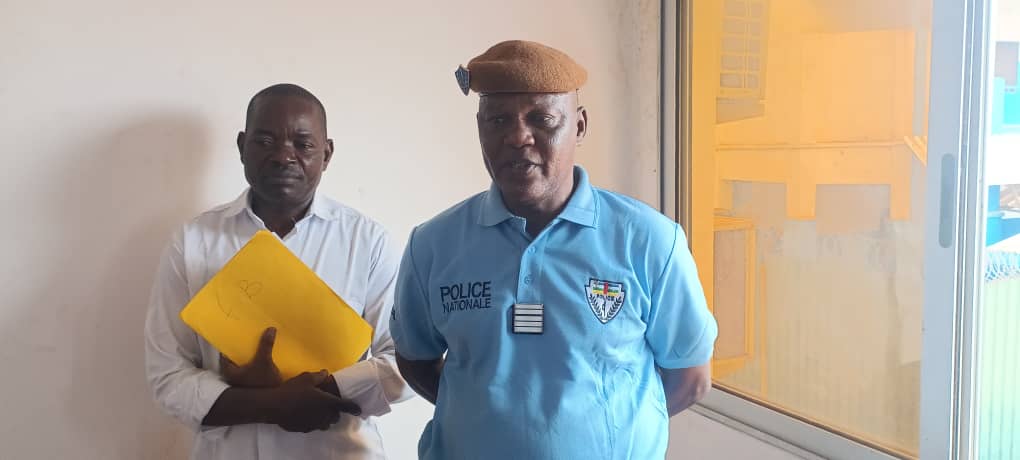
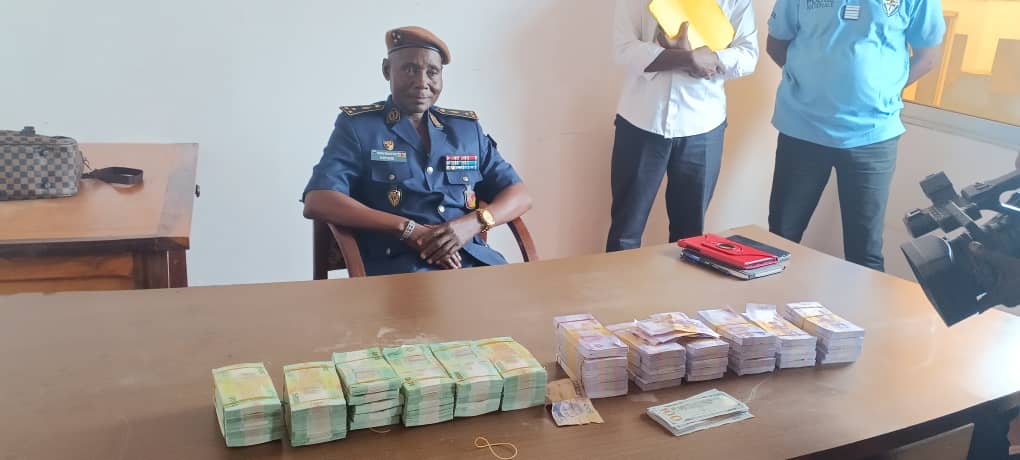
On August 8, 2024, the Central African National Police struck a major blow by arresting three individuals in possession of counterfeit banknotes worth 50 million CFA francs. This operation, which allegedly made it possible to get their hands on a larger sum, nearly a billion CFA francs worth of counterfeit banknotes according to information from EcoMatin, revealed the existence of a well-organized network, involving accomplices within the local authorities. According to Chief Commissioner Eric Dangala, “This is a company of well-organized men who work in complicity with certain Central African authorities, who find in this activity an easy and quick way to enrich themselves.”
The arrest of the first suspect, Da Sylva Molo, made it possible to follow the trail and apprehend two other members of the network in PK5, a district of Bangui, the capital. Among the suspects, Abdoulaye Aboubacar admitted to the Central African police that the counterfeit notes had been manufactured in Douala, Cameroon, before being sent by land to the CAR. The three men, of Senegalese, Cameroonian and Central African nationality, are currently being held at the research and investigation brigade to further their investigations.
This other episode of the phenomenon of counterfeit notes that continues to plague the economy of the Economic and Monetary Community of Central Africa (CEMAC), echoes another scandal that occurred a few months earlier in the very famous tri-border area (Cameroon-Gabon-Equatorial Guinea), highlighting the extent of the problem in the sub-region. On May 7 and 13, the head of the BEAC agency in Ebibeyin, Gregorio Nsue Ondo Obono, was arrested in Cameroon in possession of 1.5 billion CFA francs in counterfeit notes. This operation revealed a cross-border network for the manufacture and circulation of counterfeit currency, involving senior security officials from Equatorial Guinea and Cameroon.
Unforgeable tickets, according to Beac
Faced with the resurgence of the phenomenon in the CEMAC zone, the governor of the Central Bank, Yvon Sana Bangui, spoke out to reassure the public about the unforgeable nature of the new range of banknotes produced by the issuing institute. “The new range of banknotes benefits from the latest technologies in terms of visible and invisible security features, to make them virtually unforgeable,” he explained in an interview with Breaking News. The Central African leader admits that counterfeiters take advantage of transition periods when users have not yet mastered all the characteristics of the new banknotes.
Read also: Yvon Sana Bangui: “The range of Beac banknotes put into circulation in 2022 is unforgeable”
“Generally, he said, counterfeiters choose remote towns or villages in border regions, where populations with little education and knowledge live, to introduce counterfeit notes. In this way, counterfeits can end up in the normal economic circuit via weekly markets, local shops, etc. Moreover, the analysis of counterfeit notes seized in certain countries of the sub-region has shown that they are crude and artisanal imitations through photocopies or colour prints.”


