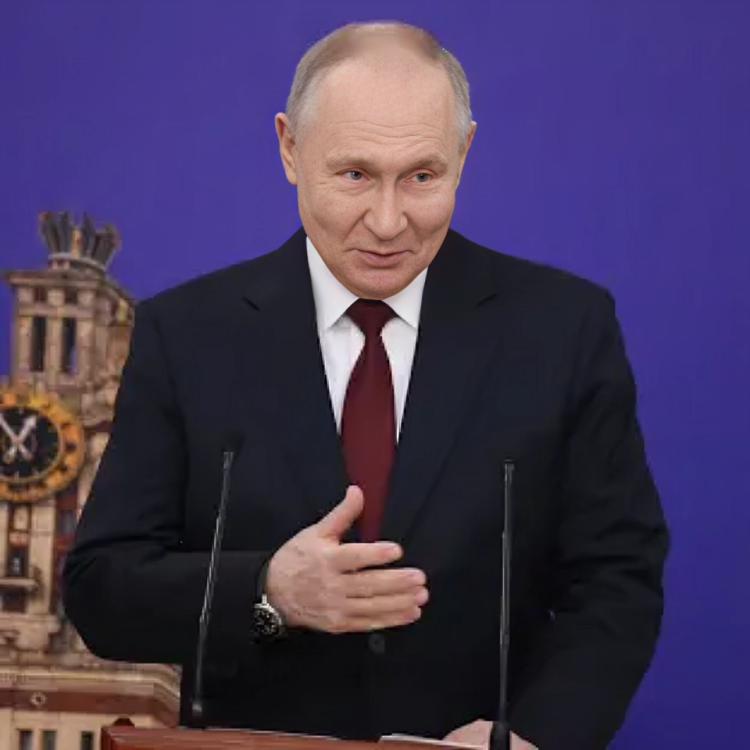
VIII International Scientific and Practical Conference
“Current Issues in Global Studies:
Megatrends of Global Development”
May 21–23, 2026
Information Letter
Organizers
Faculty of Global Processes
Lomonosov Moscow State University
Russian Committee of the UNESCO Programme
“Management of Social Transformations (MOST)”
International Academy of Global Studies
Co-organizers and Partners
Russian Commission for UNESCO
International Organization for the Promotion of Public Diplomacy, Scientific, Educational and Youth Cooperation
“Eurasian Commonwealth”
International Big History Association
Russian United Nations Association
UN Information Centre in Moscow
Association of Russian Diplomats
Coordinating Committee of UNESCO Chairs
Bioethics Committee under the Russian Commission for UNESCO
Scientific and Educational Organizations
Party School of the Sichuan Provincial Administration Committee (China)
Plekhanov Russian University of Economics (Russia)
Yaroslavl State Medical University (Russia)
University of Limpopo (South Africa)
University of Electronic Science and Technology of China (China)
Federal University of Rio de Janeiro (Brazil)
Chengdu University of Technology (China)
Shanghai University (China)
UNESCO Chair in Global Issues Studies, Faculty of Global Processes, Lomonosov Moscow State University
UNESCO Chair in Human Rights and Democracy, MGIMO University
International Club of Russian–Latin American Studies, Lomonosov Moscow State University
Research and Education Centre “Confucius Institute”, Lomonosov Moscow State University
Russian–African Club, Lomonosov Moscow State University
Information Support
International Affairs Journal
UNESCO Journal
Main Conference Themes
- Globalization in a Polycentric World: Transformation of the Global System, World Order, and Global Governance.
- Platformization of the Global Economy: Integration of National Economies into Global Digital Ecosystems, Complicated by States’ Countervailing Demand for Technological Sovereignty.
- Transformation of the Global Financial Architecture amid Geo-Economic Fragmentation: Institutionalization of Alternative Financial Institutions, Fragmentation, and De-Dollarization of the Global Economy.
- Global Demographic Shift: Aging of the Earth’s Population, Declining Birth Rates, and Shrinking Human Capital.
- Anthropological Transition: Development of Artificial Intelligence and an Evolutionary Leap.
Format: Hybrid (In-Person and Online)
Venue: Faculty of Global Processes, Lomonosov Moscow State University
Address: 13A Building 1, Leninskiye Gory, Moscow
Program
May 21, 2026
11:00–12:00
Venue: Building 13A, Building 1, Leninskiye Gory, Block V, 4th Floor, Room 440
Opening Ceremony
Welcome Speech Time Limit: 5 minutes
Invited Participants:
- Alexander S. Alimov – Deputy Minister of Foreign Affairs of the Russian Federation
- Sergey A. Rachkov – Chairman of the Standing Commission on International Affairs, House of Representatives, National Assembly of the Republic of Belarus
- Elena V. Galaktionova – Executive Secretary of the Russian Commission for UNESCO
- Ivan V. Lobanov – Rector, Plekhanov Russian University of Economics; Chairman of the Coordinating Council of UNESCO Chairs
- Alexey N. Borisov – First Deputy Chairman, Russian United Nations Association; Vice-President, World Federation of United Nations Associations
- Shen Xiaorong – Professor, Executive Director of the Administrative Committee, Institute of Humanities and Social Sciences, University of Electronic Science and Technology of China
- Vladimir V. Kuznetsov – Director, UN Information Centre in Moscow
- Zhang Wei – Professor, Head of the Department of Culture and Ecological Civilization, Party School of the Sichuan Provincial Administration Committee
Diploma Presentation
International Academy of Global Studies
- Daniel Barreiros – President, International Big History Association; Professor, Federal University of Rio de Janeiro (Brazil)
- Lulu Nightingale Mmakola – Professor, University of Limpopo (South Africa)
- Liu Yi – Director, Institute of Religion and Global Politics, Shanghai University (China); Professor
Opening Ceremony of the Research and Education Centre for Russian–Chinese Strategic Partnership
Coffee Break
12:00–13:00
Plenary Session
13:00–14:00
Venue: Building 13A, Building 1, Leninskiye Gory, Block V, 4th Floor, Room 440
Scientific Report Time Limit: 15 minutes
Invited Participants:
- Plenary Report by the Faculty of Global Processes, Lomonosov Moscow State University (Russia):
Ilya V. Ilyin – Dean, Faculty of Global Processes, Lomonosov Moscow State University; Vice-President, International Academy of Global Studies; Chairman, Russian Committee of the UNESCO Programme “Management of Social Transformations (MOST)”
Askar A. Akaev – Professor, Faculty of Global Processes, Lomonosov Moscow State University; Foreign Member, Russian Academy of Sciences
By decision of the Program Committee, the time limit for the plenary report of the conference organizers is 30 minutes.
- Liu Yi – Director, Institute of Religion and Global Politics, Shanghai University (China); Professor
- Lulu Nightingale Mmakola – Professor, University of Limpopo (South Africa)
Connection to the Meeting of the Research Ethics Council under the Presidium of the Russian Academy of Sciences
- Mikhail A. Piradov – Vice-President, Russian Academy of Sciences; Director, Research Center of Neurology; Academician of the Russian Academy of Sciences
- Nikolay A. Konovalov – Head, Special Department, National Medical Research Center for Neurosurgery named after Academician N.N. Burdenko; Academician of the Russian Academy of Sciences
- Oleg S. Grin – Director, Research and Education Centre for Legal Support of Bioeconomics and Genetic Technologies, Kutafin Moscow State Law University (MSAL)
Coffee Break
14:00–15:00
Plenary Session (continued)
15:00–16:00
- Alexander I. Ageev – General Director, International Research Institute for Management Problems
- Wang Xiaolong – Professor, Chairman of the Academic Council, Institute of Humanities and Social Sciences, University of Electronic Science and Technology of China
- Daniel Barreiros – President, International Big History Association; Professor, Federal University of Rio de Janeiro (Brazil)
- Zeng Wenqi – Dean, Institute of Marxism, Chengdu University of Technology
- Igor Pelliciari – Professor, University of Urbino (Italy); Full Member (Academician), International Academy of Global Studies; Ambassador Extraordinary and Plenipotentiary of the Republic of San Marino
VIII International Scientific and Practical Conference