
Cameroon’s CDC Breaks Silence with Renewed Plans for Palm Oil and Rubber Production Facilities 2024
The Resurgence of the CDC Expansion Projects in Cameroon
After a period of dormancy, the ambitious project to construct two significant factories dedicated to palm oil and rubber production under the Cameroon Development Corporation (CDC) has re-emerged, signalling a potential boost for the agricultural and industrial sectors in the region.
The CDC, a cornerstone of Cameroon’s agro-industry, has historically played a pivotal role in the nation’s economy, particularly in the South West and Littoral regions. The Manyu Expansion Project, initiated in 2011, aimed to develop 10,000 hectares of oil palm and rubber smallholdings in the Manyu Division of the South West Region. This project, alongside others like the Matouke Rubber Project and the Donga Mantung Expansion Project, reflects the CDC’s commitment to enhancing production capacities and fostering socio-economic development.
The recent revival of the factory construction plans is a testament to the CDC’s dedication to fulfilling its expansion goals. The proposed palm oil production plant in Idenau and the rubber production plant in Pendamboko are expected to significantly contribute to meeting domestic demands and compliance with government recommendations. These projects are not just about increasing production; they are about creating jobs, supporting smallholders, and extending the CDC’s reach into new rural areas.
The strategic importance of these factories cannot be overstated. Palm oil and rubber are commodities with a strong presence in the global market, and their production can have far-reaching implications for trade, employment, and the overall economic landscape of Cameroon. The construction of these factories could mark a new chapter in the CDC’s history, one that could see Cameroon rising as a key player in the palm oil and rubber industries on the African continent.
As the CDC fine-tunes these projects, there is a palpable sense of anticipation for the positive changes they could bring. The potential for increased production, job creation, and the bolstering of Cameroon’s agro-industrial sector holds promise for the nation’s future. It is a development that deserves close attention as it unfolds, for its success could pave the way for further agricultural and industrial advancements in Cameroon.
Funding pending
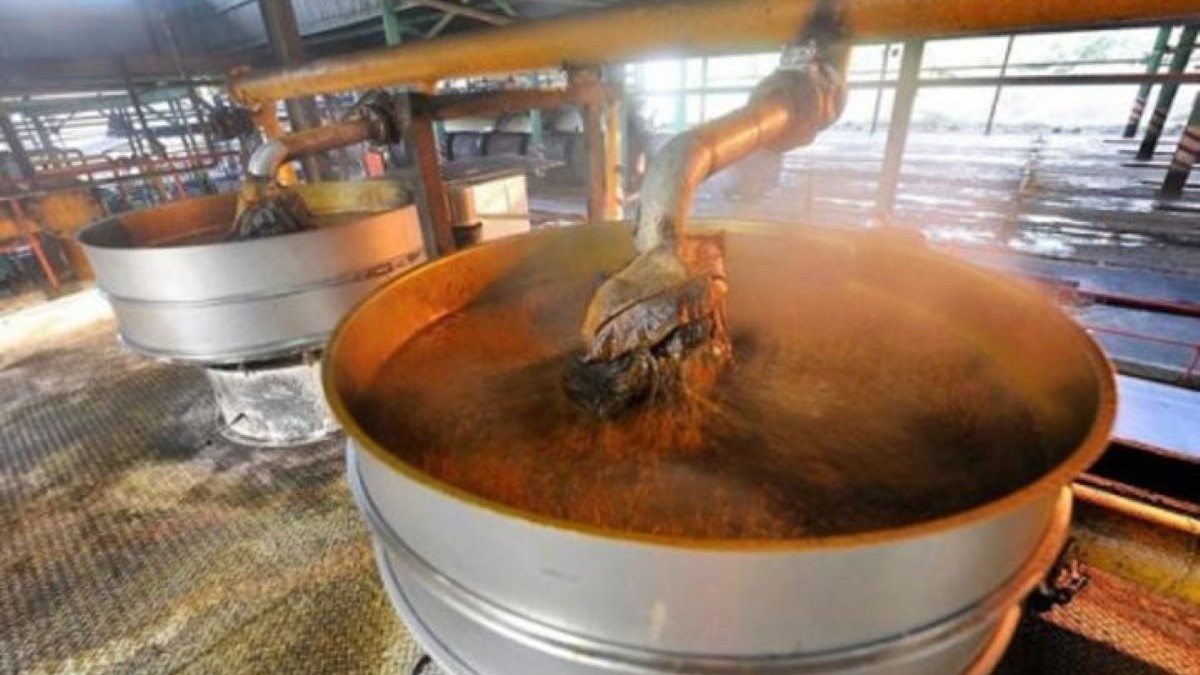
The document designed by the Ministry of Economy is based on a projected cost of 50.7 billion CFA francs to build an oil mill in Idenau, South-West region and the rubber production plant will be built in Pendamboko, in Moungo, Littoral region. The start of work is planned for 2027 and completion in the same year.
Contacted by EcoMatin, Franklin Ngoni Njie, the Director General of the CDC, nevertheless reassures that “everything is in progress” and the feasibility studies have been completed even if no data has filtered through on the production and/or processing capacities envisaged. The thorny issue of financing therefore seems to be the main bottleneck. Reason for the authorities to project the launch of the works in 3 years? “There is the national commission of the public debt which must sit. Outside, negotiations are underway with financial partners for the concrete realization of the project. The feasibility studies have been carried out”, nevertheless affirmed the top management.
It should be noted that compared to the CDC banana plantations located in relatively secure areas (Littoral and Maritime Coast), those of palm oil and rubber very often suffer the pangs of the security crisis with repercussions on production capacity. “Palm oil production amounted to 7,570 tonnes (-28.55%) and that of rubber to 6,217 tonnes (-3.88%). As for banana production, it stood at 21,122 tonnes (+27.09%) as of December 31, 2022,” notes the Technical Commission for the Rehabilitation of Public and Parapublic Sector Enterprises (CTR).
The CDC, a risky company (?)
The construction of the above-mentioned factories would make it possible to increase the production of palm oil and rubber in a context where, according to the CTR, the CDC is among the 17 public companies presenting a “high debt risk” in 2022. The reason, a year earlier, its equity suffered a fall of 183.14% (-23.9 billion CFA francs), a negative net result of 15.5 billion CFA francs (-214.84%). To allow the continuation of the activities of this company, the shareholders are considering the recapitalization of the company through a reconstitution of equity “within two years” for an amount estimated at 59 billion CFA francs.