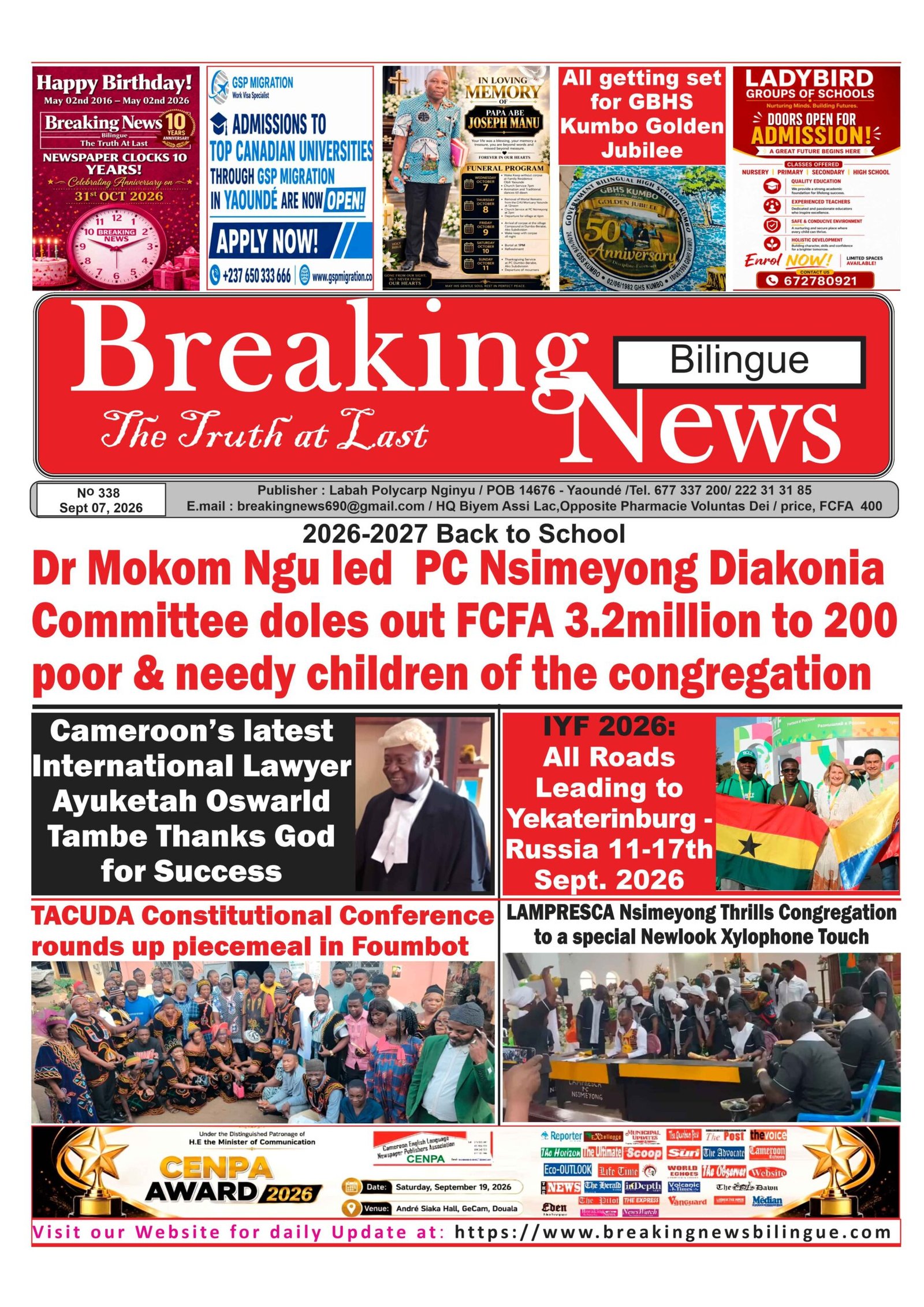
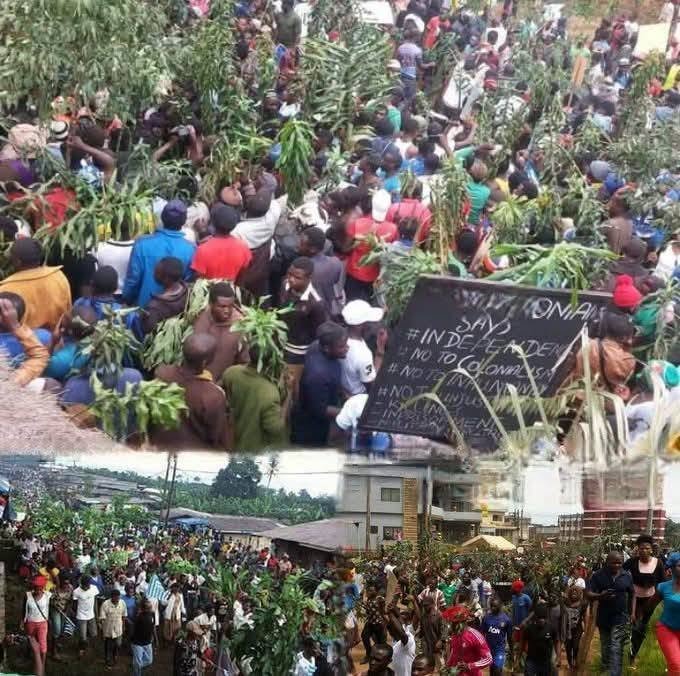
Latest Edition of BNB Now Available in All Newsstands
TWO CAMEROONS. TWO HISTORIES. TWO PEOPLES
The warning now coming from the highest levels of the American military carries a lesson that La République du Cameroun (LRC) should not ignore.
The Washington Post reports that senior U.S. military leaders have warned Defense Secretary Pete Hegseth that prolonging large-scale operations against Iran is unsustainable and risks weakening America’s ability to confront threats elsewhere.
That is the reality of prolonged war: eventually, the cost comes home.
America has learned this lesson before. Vietnam ended without the political victory Washington sought, while Afghanistan demonstrated again that overwhelming military superiority does not automatically produce a sustainable political settlement.
LRC should therefore ask itself a simple question:
After years of fighting Ambazonia, what exactly has been achieved?
The war has consumed lives, devastated communities, displaced populations and placed enormous pressure on an already struggling economy. Yet the Southern Cameroons question has not disappeared. If anything, the longer the conflict continues, the deeper the political, economic and social consequences become.
From the Ambazonian perspective, the comparison with Iran is about a fundamental principle: a people who believe their homeland and political future are under attack will continue resisting as long as the underlying grievance remains unresolved.
Military force cannot manufacture political legitimacy.
LRC should stop trying to solve a political and historical question exclusively through the barrel of a gun.
Instead of pouring scarce resources into an apparently endless war against Southern Cameroons, LRC should concentrate on the enormous challenges confronting its own state—including governance, corruption, economic development and its longstanding relationship with France.
Leave Ambazonia alone.
Let the people of Southern Cameroons determine their own political destiny.
And let LRC determine its own.
Because history cannot simply be erased by repetition:
THERE ARE TWO CAMEROONS.
Two colonial histories.
Two political trajectories.
Two peoples with distinct historical experiences.
The United Nations administered the two territories separately under the trusteeship system before the plebiscite process.
One name does not automatically create one nation.
The question before history is therefore not whether LRC can continue fighting indefinitely.
The question is whether it is prepared to recognize that military force cannot substitute for a political settlement.
American military leaders are warning Washington about the costs and strategic consequences of prolonged war.
LRC should listen.
Stop the war.
Stop the destruction.
Leave Ambazonia alone.
Concentrate on rebuilding LRC.
TWO CAMEROONS. TWO HISTORIES. TWO PEOPLES.
First published by Uchiba Nelson
With additional information from Timothy Enongene, Associate Editor-in-Chief, Independentist News
September 5, 2026
ANGLOPHONE UNITY IS NOT THE QUESTION: THE QUESTION IS AMBAZONIAN SOVEREIGNTY
There is nothing wrong with calling for unity among our people. In fact, unity is indispensable. But there is a fundamental distinction that must never be blurred: the restoration struggle is not a campaign to reconcile “North West” and “South West.” It is a struggle to free Ambazonia and begin exercising authority and sovereignty over our restored country.
That distinction matters.
We are not starting from the premise that Ambazonia is a region waiting to be granted another constitutional arrangement within La République du Cameroun (LRC). Our position is that Ambazonia has already restored its independence and that the struggle now is to establish and exercise effective authority over that territory. Whether one agrees with that political position or not, that is the objective around which the restoration movement has been organised.
Therefore, if one day LRC genuinely agrees to a third-party-mediated political negotiation with the restoration leadership, we should be clear about what such negotiations are about. It cannot be a meeting between “North West” and “South West.” It cannot be a negotiation between federalists and special-status advocates. It cannot be another internal Cameroonian constitutional conference.
It would be a negotiation between two political entities claiming competing authority over the territory and its future—two governments, represented by their respective leaders.
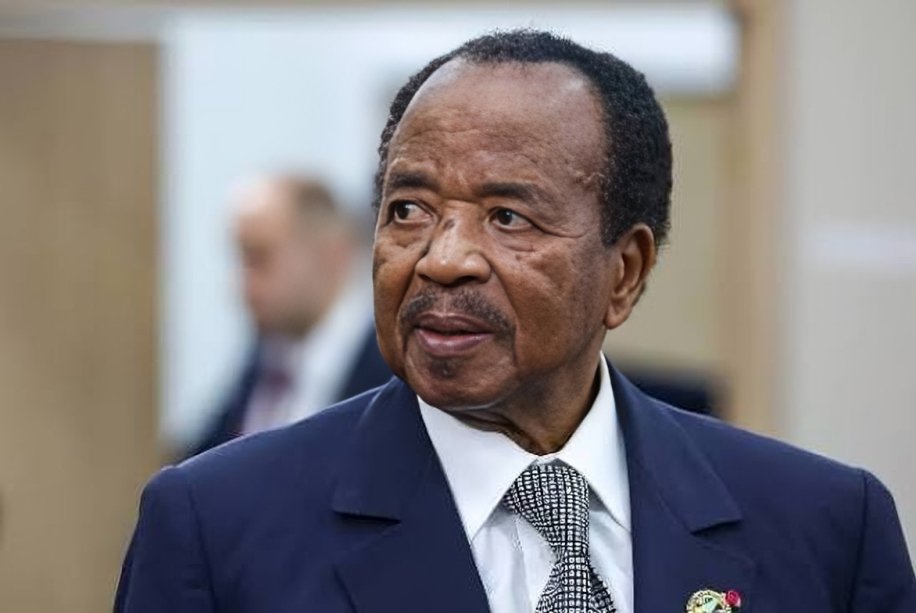
On the Ambazonian side, that leadership is Dr Samuel Sako. On the LRC side, it is Paul Biya, as the head of the government of La République du Cameroun.
That is the political reality that must guide our thinking.
Our history of political leadership did not begin with Facebook commentators, self-appointed mediators or today’s politicians in Yaoundé. Our political journey has passed through identifiable leaders—from Emmanuel Mbela Lifafa Endeley, to John Ngu Foncha, to Augustine Ngom Jua, to Sisiku Ayuk Tabe, and now Dr Samuel Sako. Whatever one’s assessment of these leaders, they belong to the political history through which our people have travelled.
And this is precisely why the sudden insistence on reducing the present struggle to a “North West versus South West” problem deserves scrutiny.
Where was this supposed problem when our people were fighting together against the dismantling of their political, legal, educational and cultural institutions? Where was it when the restoration struggle emerged? Where was it when people from different counties sacrificed, suffered and died?
The answer is simple: differences existed, as they do in every society, but that does not mean that the people constituted two separate hostile nations.
The danger today is that a political narrative originating from the structures of LRC can be repackaged and brought back into our communities as though it were an organic Ambazonian problem requiring an Ambazonian solution.
We must be smarter than that.
Some of our forebears may have been persuaded into accepting political arrangements that divided our people or placed them within structures they did not fully control. That history must teach us, not imprison us. We cannot allow yesterday’s political engineering to become tomorrow’s permanent identity.
The terminology itself matters. “North West” and “South West” are administrative labels associated with the Cameroonian state. They should not be allowed to define the political destiny of a people whose restoration movement claims a much broader national identity.
Our vision is an Ambazonia organised across Midland, Savannah and Atlantic, with its own counties and local government structures. The objective should be to construct institutions in which a citizen from Bachuo Ntai, Essimbi, Ikiliwindi, Bamenda, Buea, Mamfe or any other community can live, work, invest, travel and participate in national life without being treated as a second-class citizen because of geography or ethnicity.
That is the unity we need.
Not unity merely to sit down and discuss which Cameroonian constitutional arrangement should be given to us.
Unity to build the country we say we have restored.
This is also why we must distinguish between political disagreement within Ambazonia and political opposition from LRC.
Cameroon politicians such as Maurice Kamto and Issa Tchiroma, whatever their differences with the Biya administration and whatever their ambitions to replace Biya, belong to the political establishment of LRC. From the perspective of the restoration movement, replacing one LRC president with another does not answer the fundamental question of Ambazonian sovereignty.
A change of president in Yaoundé does not automatically change the political status of Ambazonia.
A new face at the Unity Palace does not transform a territorial dispute into a domestic disagreement.
And a new political party in Yaoundé does not become the government of Ambazonia merely because it opposes the incumbent.
We must therefore stop allowing LRC’s internal political competition to redefine our struggle.
If Kamto wants to become president of LRC, that is an LRC political question.
If Tchiroma wants to become president of LRC, that is an LRC political question.
If another LRC politician wants to replace Paul Biya, that too is an LRC political question.
Our question is different:
When will Ambazonia be free?
That is why those who continue to push the “North West and South West problem” into the centre of the restoration struggle must explain exactly what problem they are trying to solve.
Are we fighting to reconcile two hostile countries? No.
Are we fighting to create a federation inside LRC? No.
Are we fighting for a special status? No.
Are we fighting to secure the position of an Anglophone Vice-President in Yaoundé? No.
We are fighting to free Ambazonia.
That does not mean that internal problems do not exist. They do. Tribalism exists. Political disagreements exist. Leadership disputes exist. Personal rivalries exist. Economic inequalities exist. We must confront all of them. But the answer is not to surrender our national project to the old administrative divisions through which Yaoundé has historically managed our people.
Our internal house must indeed be repaired—but we are repairing the house of Ambazonia, not preparing a better room inside LRC.
That distinction should be written in bold across every serious discussion about the future.
We need unity because no divided people can effectively exercise sovereignty. We need strong institutions because independence without institutions is merely a declaration. We need economic networks because political freedom without economic capacity remains vulnerable. We need disciplined leadership because sovereignty requires administration, law and responsibility.
But we should never confuse preparation with surrender.
If negotiations eventually come, let them come.
If they are mediated by a credible third party, let the mediator sit between the parties.
Let Ambazonia speak through its recognised leadership.
Let LRC speak through its government.
Let the international community listen.
And let the substantive questions be placed on the table: territory, sovereignty, security, citizenship, borders, resources, institutions, transitional arrangements and the future relationship between two peoples claiming different political destinies.
That is a negotiation.
A gathering to decide whether Ambazonia deserves “special status” is not.
A conference to reconcile “North West” and “South West” is not.
A political bargain over who gets to become Vice-President of LRC is not.
We have travelled too far, sacrificed too much and learned too many painful lessons to allow the objective of the struggle to be quietly rewritten.
We must unite, but we must know what we are uniting for.
We must heal our internal divisions, but we must not manufacture divisions that do not define our national struggle.
We must listen to one another, but we must not allow political actors from Yaoundé to decide the vocabulary through which we understand ourselves.
We must debate leadership, but we must not reduce a national liberation struggle to personalities.
And if anyone has become tired of the struggle, there is no shame in admitting it. This has been a long and painful journey. But political fatigue should not become a reason to confuse the people or redirect the struggle.
If you can no longer continue the fight, step aside peacefully. If you choose another political destination, pursue it honestly. But do not return to the restoration movement carrying Yaoundé’s old “North West versus South West” script and present it as the future of Ambazonia.
We have learned.
We have evolved.
We understand the political game better than our forebears were allowed to understand it.
The objective is not to become better represented inside somebody else’s political house.
The objective is to build our own house—and ensure that every Ambazonian, regardless of county, village, tribe, language or social status, is protected by its laws.
From Endeley to Foncha.
From Foncha to Jua.
From Jua to Ayuk Tabe.
From Ayuk Tabe to Dr Samuel Sako.
The political journey has not been without controversy, disagreement or pain. But the restoration project cannot be reduced to a temporary quarrel between two administrative regions.
Ambazonia is the project.
Freedom is the objective.
Sovereignty is the destination.
And when the time comes for a genuine third-party-mediated negotiation, we should enter that room knowing exactly who we are, what we represent and what we are negotiating about.
Not North West versus South West.
Not federalists versus special-status advocates.
Not one LRC politician versus another.
Ambazonia and La République du Cameroun.
Two political claims.
Two governments.
Two leaders.
One historic question:
Who determines the political destiny of Ambazonia?
Timothy Enongene
Associate Editor-in-Chief