
NIGERIA’S FIVE CARDINALS: A 50-YEAR JOURNEY FROM EKANDEM TO OKPALEKE
How five Nigerians rose to the College of Cardinals — and why Anambra now holds a unique place in the country’s Catholic history
By Staff Reporter
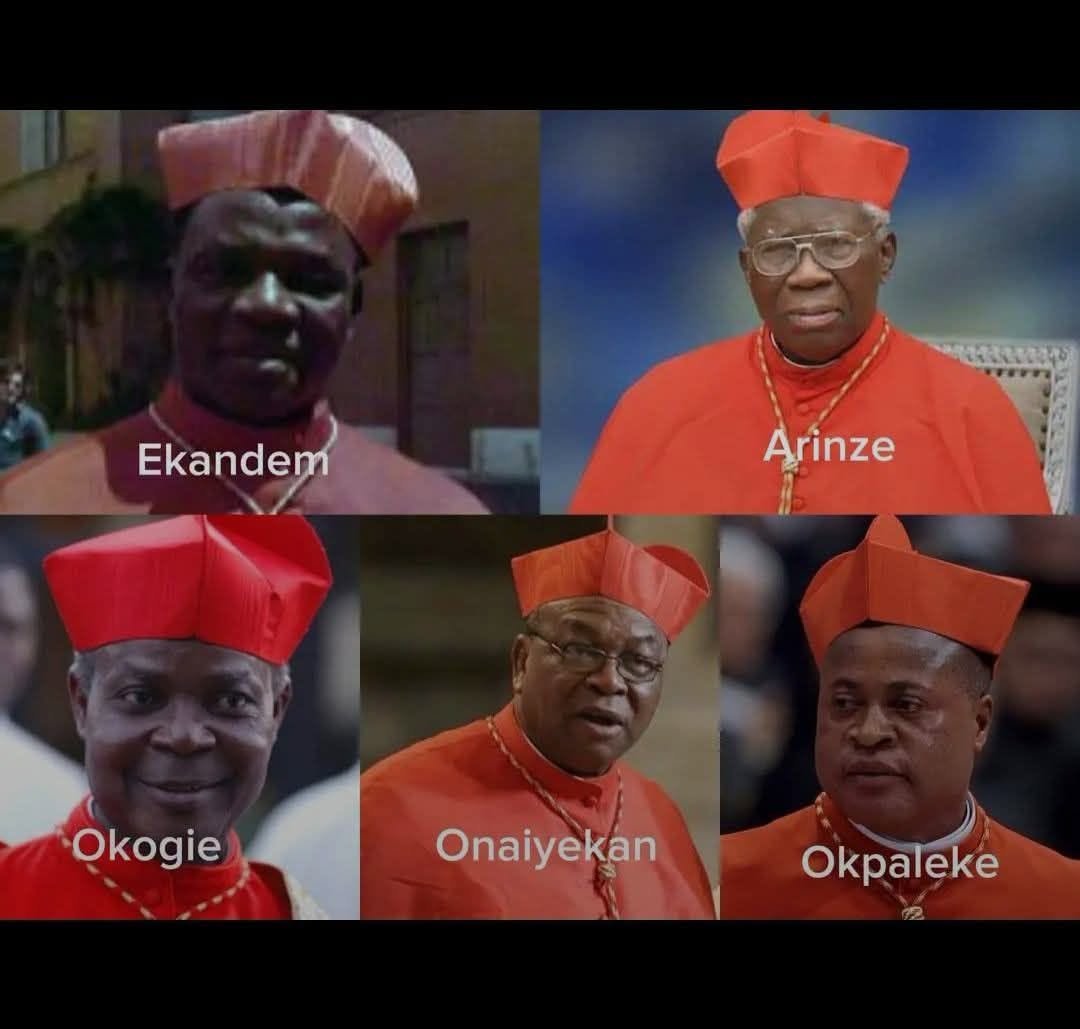
Nigeria has produced five cardinals in the history of the Catholic Church, beginning with the historic elevation of Dominic Cardinal Ekandem in 1976 and continuing through the appointment of Peter Cardinal Okpaleke in 2022.
Their elevation reflects not only the growth and influence of Catholicism in Nigeria, but also the increasing prominence of the African Church within the global Catholic community.
The five cardinals, drawn from different parts of Nigeria, have served the Church in Nigeria and internationally in positions ranging from diocesan leadership to senior responsibilities within the Roman Curia.
1. DOMINIC CARDINAL EKANDEM (1917–1995)
Born in Akwa Ibom State, Dominic Ekandem was ordained a priest in 1947 and subsequently became the first Bishop of Ikot Ekpene.
His greatest historical distinction came in 1976, when Pope Paul VI elevated him to the College of Cardinals at the age of 59.
Cardinal Ekandem became the first indigenous cardinal from West Africa, marking a major milestone for the Catholic Church on the continent.
His elevation was also a significant recognition of the rapid development of Christianity and Catholic institutions in Nigeria during the post-independence era.
2. FRANCIS CARDINAL ARINZE
Born in 1932 in Eziowelle, Anambra State, Francis Arinze was ordained a priest in 1958.
He was elevated to the College of Cardinals by Pope John Paul II in 1985.
Cardinal Arinze subsequently became one of the most prominent African figures in the Vatican, serving as Prefect of the Congregation for Divine Worship and the Discipline of the Sacraments, after previously serving as President of the Pontifical Council for Interreligious Dialogue.
For decades, Arinze was regarded as one of the most influential Nigerian voices in the Catholic Church worldwide and was frequently mentioned among possible papal successors following the death of Pope John Paul II in 2005.
3. ANTHONY CARDINAL OKOGIE
Anthony Olubunmi Okogie, born in 1936, became a prominent figure in the Nigerian Catholic hierarchy and served as Archbishop of Lagos.
He was elevated to the College of Cardinals by Pope John Paul II on 21 October 2003.
Cardinal Okogie became particularly well known for his outspoken interventions on social justice, governance, poverty and the welfare of ordinary Nigerians.
His elevation further strengthened Nigeria’s position as one of Africa’s most important Catholic countries.
4. JOHN CARDINAL ONAIYEKAN
Born in 1944 in Kabba, Kogi State, John Onaiyekan was ordained a priest in 1969 and later became Archbishop of Abuja.
He served as Archbishop of Abuja from 1994 to 2019 and was elevated to the College of Cardinals by Pope Benedict XVI on 24 November 2012.
Cardinal Onaiyekan became internationally respected for his advocacy for dialogue between Christians and Muslims, particularly amid religious tensions and insecurity in Nigeria.
His public interventions have frequently emphasized peaceful coexistence, responsible leadership and the need to address the underlying causes of conflict.
5. PETER CARDINAL OKPALEKE
The most recent Nigerian to enter the College of Cardinals is Peter Ebere Okpaleke, born in Amesi, Anambra State, in 1963.
He became Bishop of Ekwulobia and was announced as a cardinal by Pope Francis on 29 May 2022. He was formally elevated during the consistory held on 27 August 2022.
Cardinal Okpaleke’s elevation was particularly significant because it made him the second cardinal from Anambra State, joining Cardinal Francis Arinze.
At present, he is the only Nigerian cardinal under the age of 80 and therefore eligible to participate as an elector in a papal conclave, subject to the rules governing the College of Cardinals at the time of a conclave.
ANAMBRA’S UNIQUE DISTINCTION
The distribution of Nigeria’s five cardinals reveals an interesting geographical pattern.
Anambra State is the only Nigerian state to have produced two cardinals: Francis Cardinal Arinze and Peter Cardinal Okpaleke.
The other three came from different parts of the country: Dominic Ekandem from Akwa Ibom, Anthony Okogie from Edo/Lagos and John Onaiyekan from Kogi.
That gives Anambra a unique place in Nigeria’s Catholic history.
FROM EKANDEM TO OKPALEKE
The story of Nigeria’s cardinals is, in many ways, a story of the country’s Catholic journey itself.
When Dominic Ekandem became a cardinal in 1976, he broke new ground as the first indigenous West African cardinal. Nearly five decades later, Peter Okpaleke’s elevation demonstrated how deeply Nigeria has become embedded in the leadership structure of the worldwide Catholic Church.
Between them came three other towering Nigerian churchmen — Arinze, Okogie and Onaiyekan — each contributing to the growth, visibility and influence of the Nigerian Church.
As of 2026, therefore, Nigeria’s cardinalial history stands at five men over five decades, with Anambra uniquely represented twice and Cardinal Peter Okpaleke currently carrying Nigeria’s voting-age representation in the College of Cardinals.
From Dominic Ekandem in 1976 to Peter Okpaleke in 2022, the journey represents almost half a century of Nigerian participation at the highest levels of the Catholic Church
NIGERIA’S FIVE CARDINALS: A 50-YEAR JOURNEY FROM EKANDEM TO OKPALEKE