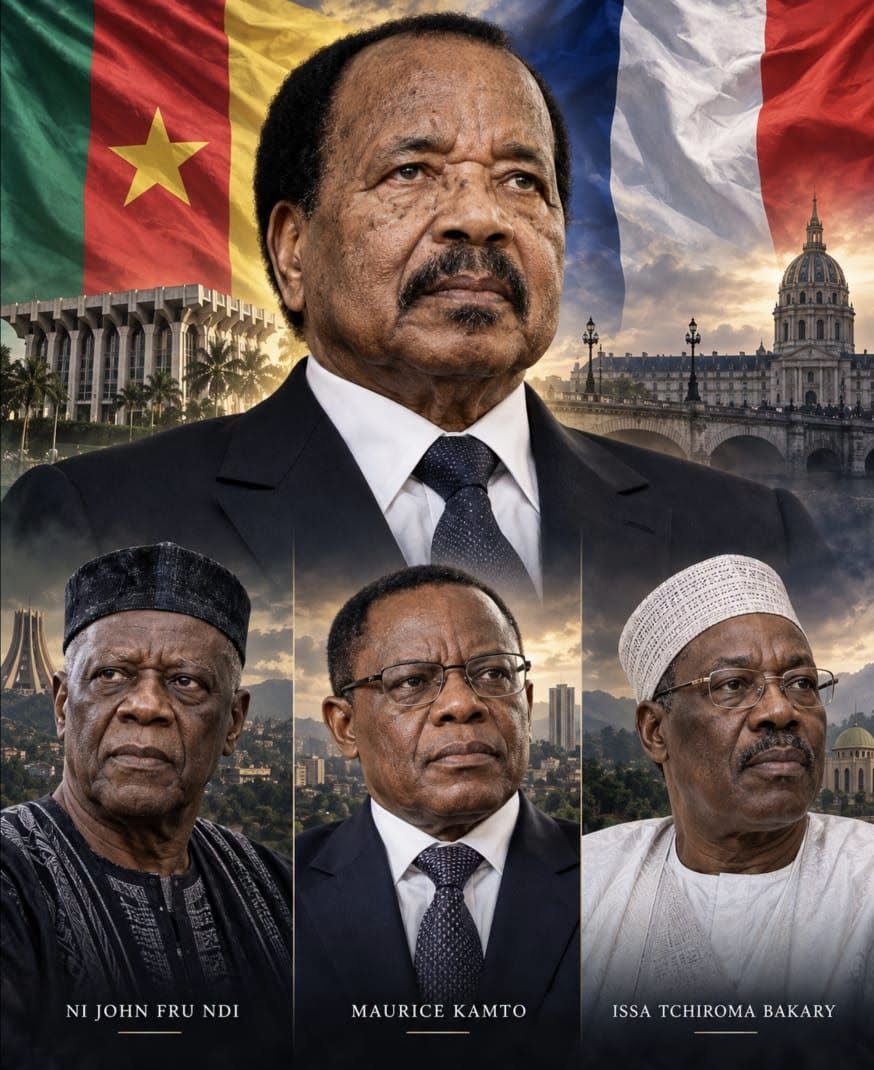
PAUL BIYA’S NINE-YEAR ABSENCE FROM THE UN GENERAL ASSEMBLY: WHO REALLY KEEPS HIM IN POWER?
Before Asking Why a 93-Year-Old Man Still Rules Cameroon After Nearly 44 Years, Ask Who Controls and Protects the System Around Him
(By Dr. David Makongo)
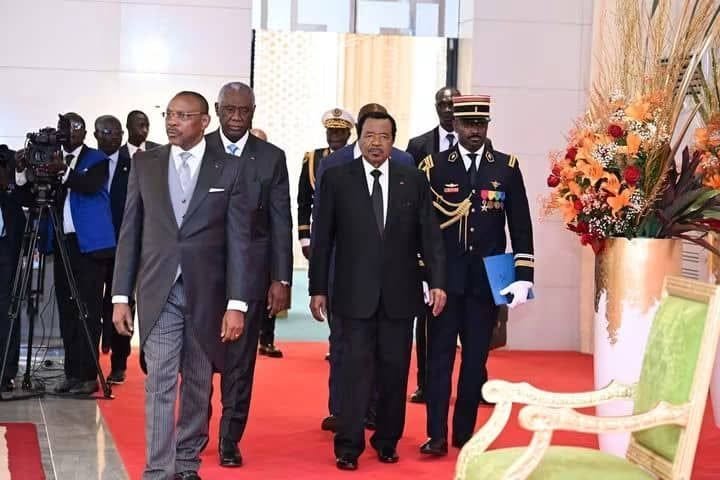
As world leaders gather for the 81st Session of the United Nations General Assembly, President Paul Biya is once again expected to be absent from the global stage.
The last time he personally addressed the United Nations General Assembly was on 22 September 2017. Nearly nine years later, Cameroon’s President has remained largely absent from the world’s most important annual gathering of national leaders—yet he remains firmly in power at home.
Let us therefore begin with an uncomfortable truth:
Paul Biya is not still in power because Cameroonians love him so much. He is not still ruling merely because he repeatedly defeats opposition candidates at the ballot box. And his extraordinary longevity cannot be explained simply by the weakness or disunity of the opposition.
Before asking why a 93-year-old man is still ruling Cameroon after nearly 44 years, we must ask a more serious question:
Who protects the system that keeps him in power? Paul Biya became President of Cameroon on 6 November 1982. By November 2026, he will have governed the country for 44 years.
Such extraordinary political longevity cannot be explained merely by popularity, electoral victories or the weaknesses of individual opposition candidates. It is better understood by examining the interconnected network of foreign interests, regional political elites, state institutions and coercive forces upon which the system depends.
1. FRANCE AND THE EXTERNAL PROTECTION OF THE SYSTEM
France has not single-handedly kept Paul Biya in power, and Cameroonians must not transfer responsibility for all their political failures to Paris. Nevertheless, France has historically exercised considerable diplomatic, economic, monetary, military and commercial influence in Cameroon.
Successive French governments have generally appeared to prefer a familiar and predictable administration capable of protecting strategic interests over the uncertainties of political transition. As long as the Cameroonian Government guaranteed stability, security cooperation, commercial access and continuity, democratic shortcomings rarely produced consequences serious enough to threaten the regime’s survival.
This is how powerful foreign interests can influence African politics: they do not necessarily require the support of millions of citizens. They need access to the relatively small number of people who control the presidency, security institutions, strategic contracts and natural resources.
France may not control every decision made in Cameroon, but its historical influence and strategic tolerance have helped create an external environment within which the system could survive.
2. POLITICAL ELITES ACROSS CAMEROON’S TEN REGIONS
The system has sustained itself by establishing networks of ministers, senators, parliamentarians, traditional rulers, senior administrators, businesspeople and political appointees across Cameroon’s ten regions.
These elites are presented as representatives of their communities. However, many depend upon presidential appointments, government contracts, administrative protection or political patronage. Consequently, their primary loyalty risks shifting from the people they are expected to represent to the authority that guarantees their positions and privileges.
The Senate is constitutionally expected to represent regional and local interests, while Parliament is supposed to legislate and hold the Government accountable. Yet when political careers depend more upon party loyalty and presidential favour than public performance, these institutions risk becoming protective walls around executive power.
This helps explain why widespread suffering across the ten regions does not automatically produce political change. Millions may complain, but a relatively small network of regional gatekeepers can contain, redirect or neutralise popular anger.
The opposition has often concentrated on winning the support of the population, while the ruling establishment has concentrated on controlling those who organise, administer and influence that population.
3. CONTROL OF THE ELECTORAL AND CONSTITUTIONAL GATEWAYS
Popular support alone is insufficient when the institutions that organise elections, resolve disputes and proclaim final results are not widely trusted as genuinely independent.
Elections Cameroon—ELECAM—administers essential aspects of the electoral process. The Constitutional Council adjudicates presidential-election disputes and proclaims the final results. Its eleven members are appointed by the Head of State following designations originating from several institutions, including the Presidency, National Assembly, Senate and Higher Judicial Council.
However, when the presidency, governing party, Parliament and senior legal institutions operate within the same political ecosystem, constitutional separation may exist formally without producing meaningful independence in practice.
The opposition therefore enters elections seeking votes, while the ruling establishment enters them with decades of influence over the institutional machinery surrounding those votes.
Opposition parties have also repeatedly weakened themselves through fragmentation, personal rivalries, delayed coalitions, inadequate organisation outside major cities and failure to maintain permanent structures in every electoral district and polling station. They frequently unite around public anger but separate over leadership and personal ambition.
A divided opposition is therefore confronting not merely another political party, but a deeply entrenched political and institutional system.
4. THE MILITARY, ADMINISTRATION AND JUDICIARY AS THE FINAL DEFENSIVE WALL
Every long-lasting political system ultimately depends upon the institutions and individuals responsible for executing orders.
The military and security services control the instruments of force. Territorial administrators regulate public meetings, demonstrations and much of local state authority. The judiciary controls prosecutions, detention and access to legal remedies. Parliament may enact laws, but these institutions largely determine how state power is experienced by ordinary citizens.
Where appointments, promotions, budgets and professional advancement remain highly centralised, public officials may conclude that their future depends more upon satisfying the political hierarchy than defending politically neutral institutions.
This does not mean that every soldier, magistrate, administrator, ELECAM official, senator or parliamentarian is dishonest. It means that the structure can reward obedience, discourage independence and make personal or professional courage extremely costly.
The opposition has repeatedly failed because it has concentrated on removing one man without building the organisation, discipline, regional unity and institutional strategy necessary to transform the system that sustains him.
THE CENTRAL TRUTH
Paul Biya has remained in power for nearly 44 years because power in Cameroon is not determined solely by who commands the largest following.
It is also determined by who influences:
– foreign strategic relationships;
– political elites across the ten regions;
– the Senate and National Assembly;
– ELECAM and the Constitutional Council;
– the military and territorial administration; and
– the judiciary and machinery of enforcement.
The opposition continues to ask:
“How many Cameroonians want change?”
But the more consequential questions are:
Who controls the institutions through which change must pass?
Who controls the people who manage those institutions?
Whom do powerful leaders depend upon to remain powerful?
Until the opposition stops competing merely for popularity and begins organising around institutional reform, credible national unity, polling-station protection, judicial independence and permanent grassroots structures across all ten regions, it may continue winning public sympathy while losing the struggle for political power.
The true seat of power may not be the throne itself, but the hands that protect it.
— Dr. David Makongo, PhD, LLM, JD, LLB
PAUL BIYA’S NINE-YEAR ABSENCE FROM THE UN GENERAL ASSEMBLY: WHO REALLY KEEPS HIM IN POWER?