Pope Francis Seeks Divine Comfort for Nkambe Amba Victims in Heartfelt Appeal
In the wake of the tragic events that unfolded in Nkambe town, Cameroon, Pope Francis has extended his heartfelt prayers and invoked the Blessed Virgin Mary’s consolation for the victims and their families. The attack, which occurred on February 11, disrupted a sacred celebration and caused the loss of at least one life, leaving many injured.
The Pope’s message of solace comes as a beacon of hope amidst the sorrow that has gripped the community. His call for the intercession of the Virgin Mary to bring strength and consolation is not only a spiritual gesture but also a profound act of solidarity with those affected by the violence. The Holy Father’s words resonate with a deep understanding of the pain and suffering that such senseless acts of violence inflict upon individuals and communities.
Pope Francis’s response to the Nkambe Amba attack is consistent with his approach to similar incidents worldwide. He emphasizes the sanctity of life and the importance of respecting sacred places, echoing his previous messages following attacks in other parts of the world. The Pope’s consistent stance against violence and his advocacy for peace and healing underscore the Catholic Church’s commitment to supporting victims and condemning any form of aggression against innocent civilians.
The conflict in Cameroon’s English-speaking regions has escalated since 2016, following a government crackdown on protests. The emergence of an armed separatist movement seeking independence for the so-called Republic of Ambazonia has further intensified the situation. The Pope’s message, therefore, is not only a source of comfort but also a call to action for peace and respect for human dignity.
As the world grapples with the aftermath of the Nkambe Amba attack, the Pope’s invocation of divine blessings upon the Cameroonian people and the entire nation serves as a reminder of the enduring power of faith and the universal quest for harmony. It is a poignant reflection of the role that spiritual leaders can play in healing wounds and fostering a spirit of resilience in the face of adversity.
For more detailed information on the Pope’s message and the situation in Cameroon, readers can refer to the comprehensive coverage provided by ACI Africa.
The conflict in Cameroon, particularly in the English-speaking regions, has deep and multifaceted roots. The crisis, which began in 2016, has been driven by a combination of historical, political, socio-economic, and cultural factors.
Historically, the division between the English-speaking and French-speaking regions of Cameroon dates back to the colonial era. The country was divided between Britain and France, leading to the development of distinct cultural and administrative systems. The reunification of these territories in the 1960s was meant to be a federation of two equal states, but over time, the English-speaking regions have felt increasingly marginalized by the central government, which is dominated by French-speaking officials.
Politically, the centralization of power in Cameroon has led to discontent and a sense of disenfranchisement among the Anglophone population. There is a perception that sensitive political offices and opportunities for advancement are often attributed to specific tribes or regions, exacerbating feelings of exclusion and inequality.
Socio-economically, Cameroon faces significant challenges, including poverty, unemployment, and limited access to basic services. The informal sector dominates the economy, and there is a high reliance on agriculture, which is vulnerable to climate-related effects such as floods and droughts. These conditions have been worsened by the conflict, leading to displacement and humanitarian crises.
Culturally, there are persistent gender inequalities and socio-cultural constraints that limit access to education and economic opportunities, especially for women and youth. This has been compounded by the humanitarian crises, further challenging the long-term recovery of affected people.
The conflict has also been fueled by the government’s repression of protests over the increasing influence of French in the English-speaking legal and educational institutions. The violent response to peaceful demonstrations escalated tensions and gave rise to an armed separatist movement seeking independence for the so-called Republic of Ambazonia.
Additionally, inter-ethnic clashes and elite manipulation through abusive control of power have been recurrent drivers of violent conflict in Cameroon. The lack of sufficient economic and employment opportunities contributes to these tensions, as does the attribution of political power and resources to specific tribes.
The situation is further complicated by external factors such as the jihadist insurgency in the Lake Chad area and the presence of refugees from neighboring countries, which strain local resources and exacerbate existing conflicts.
In summary, the conflict in Cameroon is the result of a complex interplay of historical grievances, political marginalization, socio-economic instability, and cultural disparities. Addressing these underlying causes will require a concerted effort from all stakeholders, including the government, civil society, and the international community, to foster dialogue, reconciliation, and sustainable development. For a more detailed exploration of the conflict’s causes and potential solutions, the Cameroon Humanitarian Needs Overview 2023 and the Cameroon Crisis Response Plan 2023 provide comprehensive insights.
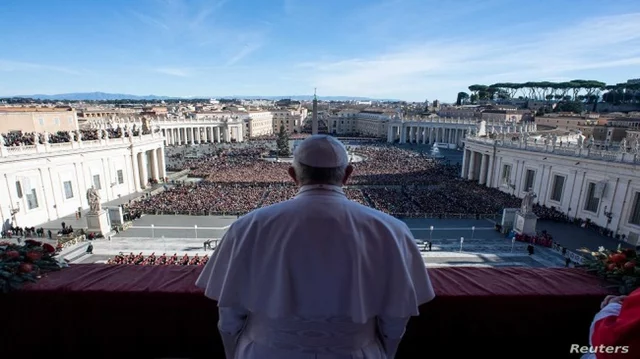
Pope Francis has implored for the Blessed Virgin Mary’s “strength and consolation” for the victims of the February 11 bomb attack on Nkambe town in Cameroon that reportedly led to the death of at least one person, injuring dozens.
Further, the bomb explosion reportedly disrupted Holy Mass at Christ the King Jakiri Parish of Kumbo Diocese, drawing the attention of Bishop George Nkuo who condemned the attack “in the strongest terms”.
In a statement, Bishop Nkuo narrated the attack, saying, “On the day of the disruption an Improvised Explosive Device was detonated at the Nkambe ceremonial grounds where youths were gathered to celebrate the National Youth Day, leaving one person dead and many injured.”
“We strongly condemn and denounce any form of violence perpetrated during public and spiritual gatherings and within the sacred spaces of Churches and hospitals,” the Catholic Bishop is reported as saying in the statement.
He added, “We condemn in the strongest terms this heinous and senseless attack on innocent civilians during the Youth Day celebration in Nkambe.”
In a solidarity message addressed to Bishop Nkuo that ACI Africa obtained Tuesday, February 27, the Holy Father prayed for the “intercession of the Virgin Mary to bring strength and consolation to all who are affected by this drama.”
“His Holiness Pope Francis was saddened to learn of the tragic bomb explosion that occurred in Nkambe on February 11, and the loss of human life it caused,” the message that was signed by the Secretary of State, Pietro Cardinal Parolin, reads in part.
The message continues, His holiness “joins in the mourning of the families, showing them his closeness and his pain.”
Praying for the eternal rest of the dead, entrusting them to the mercy of God, the 266th Catholic Pontiff also wishes quick recovery and healing for the wounded.
Pope Francis reiterates his message of respecting sacred places that he had given in his condolence message following Sunday’s attack on a Church and mosque killing dozens in Burkina Faso.
“As a sign of comfort, the Holy Father invokes on the Cameroonian people and the entire nation divine blessings,” reads the February 27 solidarity message.
Cameroon’s English-speaking regions plunged into conflict in 2016 after a protest by lawyers and teachers turned violent. An armed movement of separatists claiming independence for the so-called Republic of Ambazonia emerged following the government’s crackdown on protesters.
School boycotts have become common in these areas, as have enforced moratoriums on public life, resulting in what is known as “ghost towns”.