Six Cameroonian professors and four others were reportedly deported from Nigeria in 2018 over an alleged plot to destabilize the government of President Paul Biya. A request for intervention has been made to the House of Representatives.
The Plight of Academics: A Call for Justice and Intervention
In a world where academic freedom is a fundamental right, the story of six Cameroonian professors and four others stands as a stark reminder of the fragility of this liberty. These individuals, who were legally residing in Nigeria as refugees and asylum seekers, found themselves ensnared in a geopolitical quagmire that led to their alleged abduction and deportation to Cameroon in January 2018. The charges laid against them were severe—accusations of plotting to destabilize the government of President Paul Biya of Cameroon—a claim that has since been contested and ruled upon by Nigerian courts
.
The case has drawn international attention, not only for the legal implications but also for the human rights concerns it raises. The detained academics have sought the intervention of the Nigerian House of Representatives, appealing for an urgent resolution to their prolonged detention. Their plight underscores the broader issues of legal jurisdiction, human rights, and the protection of academics in politically volatile regions.
The professors, some of whom were lecturers at Nigerian universities, have faced trials that they and their legal representatives have deemed unfair. Despite rulings in their favor by Nigerian courts, which declared their arrest and deportation illegal and called for their release and compensation, they remain in detention at the Kondengui Security Detention facility in Cameroon. This situation has prompted calls for the Nigerian government to take a more assertive role in securing their release and upholding the judgments of its judiciary.
The United Nations Human Rights Council Working Group on Arbitrary Detention has also found the arrest and detention by Nigeria and Cameroon to be illegal, further complicating the international legal landscape. The detained individuals have petitioned for the Nigerian House of Representatives to facilitate their release, highlighting the need for a concerted effort to address the injustices they have faced.
This case is emblematic of the challenges faced by scholars and academics who find themselves at the intersection of political conflict and academic pursuit. It is a call to action for governments, international organizations, and the academic community to rally in support of the principles of academic freedom and human rights. The resolution of this case will not only impact the lives of the detained individuals but will also set a precedent for the treatment of academics in similar situations globally.
As the world watches, the hope is that justice will prevail, and the six Cameroonian professors and their colleagues will be granted the freedom they so rightfully deserve. Their case is a testament to the courage of those who stand firm in their convictions, and a reminder of the collective responsibility to protect the rights and freedoms of all individuals, especially those who contribute to the advancement of knowledge and understanding.
The international community awaits the outcome of the April 16 discussion in the Nigerian House of Representatives, which could potentially bring an end to this long-standing ordeal. The resolution of this case will not only serve as a measure of justice for the detained individuals but will also reflect on the commitment of nations to uphold the rule of law and human rights. It is a moment of truth for all involved, and a defining point for the principles of academic freedom and integrity in the face of political adversity.
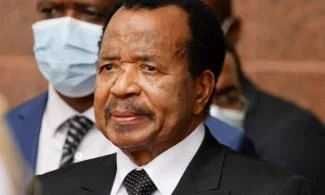
According to the Nation, they said they had been imprisoned in Cameroon since January 2018. It was learned that they were being detained at the Kondengui Security Detention facility in Cameroon. The detainees who claimed to be legal residents in Nigeria alleged that they were illegally abducted and deported from Nigeria on January 5, 2018, to Cameroon, on “frivolous allegations of plotting to destabilize the government of La Republique du Cameroon (LRC) President Mr. Paul Biya.”
They added that they were unlawfully prosecuted and remanded in prison in their home country, Cameroon despite two subsisting judgments given by Nigerian courts which declared their prolonged detention as unlawful.
Those who submitted the petition to the Nigerian federal lawmakers on their behalf are Prof. Carlson Anyangwe, Prof. Chidi Odinkalu, Barr. Fru Joseph Awah, Barr. Abdul Oroh and Barr. Mbinkar Ernestine Singeh.
They added that considering the position of Nigerian courts on this, the House of Representatives should compel the Cameroonian government to free them from prison and compensate them financially.
They also added that in October 2022, the UN Human Rights Council Working Group on Arbitrary Detention (UN-HRC-WGAD) in Communication 59/2022 of October 14, 2022, found their arrest and detention by Nigeria and Cameroon arbitrary and illegal and asked both countries to unconditionally free the victims and pay them appropriate compensation.
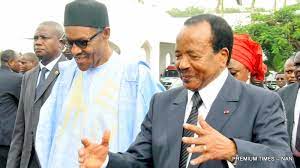
The petition reads: “Cause the government of Nigeria to institute an urgent action to secure the implementation of Communication 59/2022 of 14th October 2022 of the UN-HRC-WGAD calling for the release of the Petitioners.
“Cause the Government of Nigeria to take action and implement the rulings in the 3 judgments of the Federal High Court of Abuja in 2019, ordering the release and compensation of these Petitioners.
“Cause Nigeria to leverage on the Abuja 2002 ruling in the case of Kelvin Ngwang Ngumne et al Vs the FGN, demanding that Nigeria intervenes to resolve the conflict between Southern Cameroons and La Republique du Cameroun and respect for the particular clause of the Green Tree Agreement which demands that both la Republique du Cameroun and Nigeria retain their boundaries at independence, To pursue the self-determination quest of the Southern Cameroons to its logical conclusion as mandated by the FHC 2002 judgment.
“Cause the Government of Nigeria to take action and urgently initiate proceedings before the ICJ and other international jurisdictions citing la République du Cameroun to be sanctioned for fraudulent misrepresentation during the Bakassi Peninsula case in the ICJ.
“Cause the Government of the Federal Republic of Nigeria to take its rightful place as “big brother” in African politics and cause the African Union or the United Nations to intervene in the matter between the Southern Cameroons and La Republique du Cameroun or to proceed as mediator and resolve the ongoing conflict and restore peace and stability in the Gulf of Guinea region.”
At the last hearing of the subject before the House Committee on Public Petitions, Mohammed Manu, a representative of the Ministry of Foreign Affairs, stated that the Ministry of Foreign Affairs had no record of the petition.
He did, however, state that their results proved that the government was handling the situation as a security and legal concern.
Hon. Mike Etaba, Chairman of the Committee, adjourned the hearing till April 16, 2024, for proper service and hearing.