TENSION IN YAOUNDE CAMEROON
A MUST READ
“To Certain Fools”
By Aristide Mono
Contrary to the fantasies spread by a few malicious, intellectually ill-equipped, or politically unhinged minds, we have never mocked Paul Biya’s age or physical condition. Reaching such an advanced age is an invaluable blessing, particularly in a country where life expectancy stands at around 56 years for men and 58 for women. It is, indeed, remarkable for a man of his age to continue carrying on. Political opposition can never justify contempt for another human being; we are human beings and deeply religious people. There is therefore no point in diverting the debate.
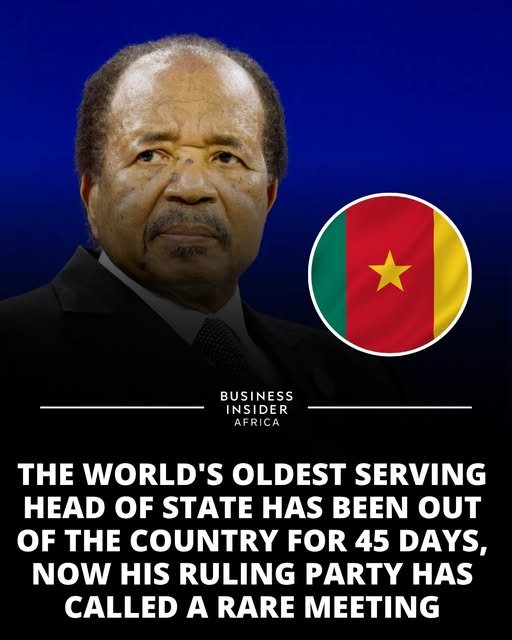
When we intensified the pressure over the question of the President’s return—counting the days, for example—we were pursuing three specific objectives.
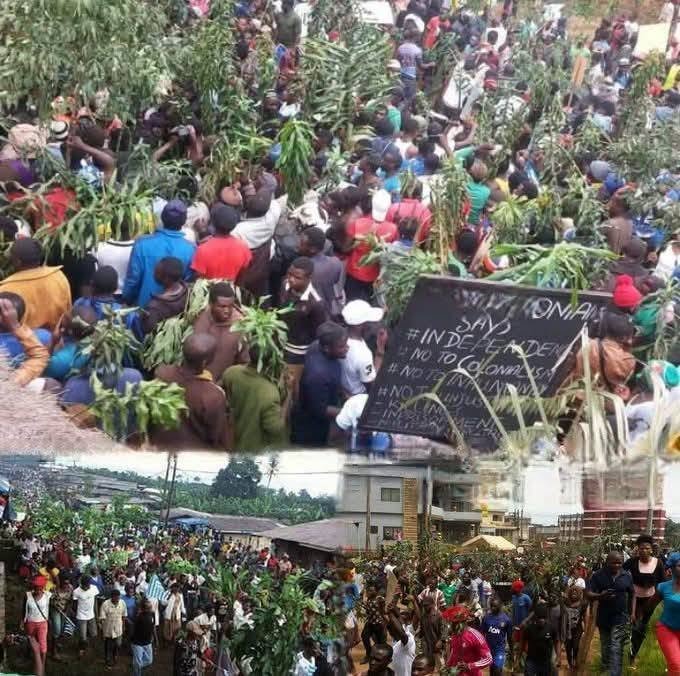
First, we wanted to confront him with his own appetite for power: if, at the age of 93, after 44 years of uninterrupted rule, he insisted on securing another seven-year term at the cost of demonstrators’ blood, then he should assume that decision and actually govern the country.
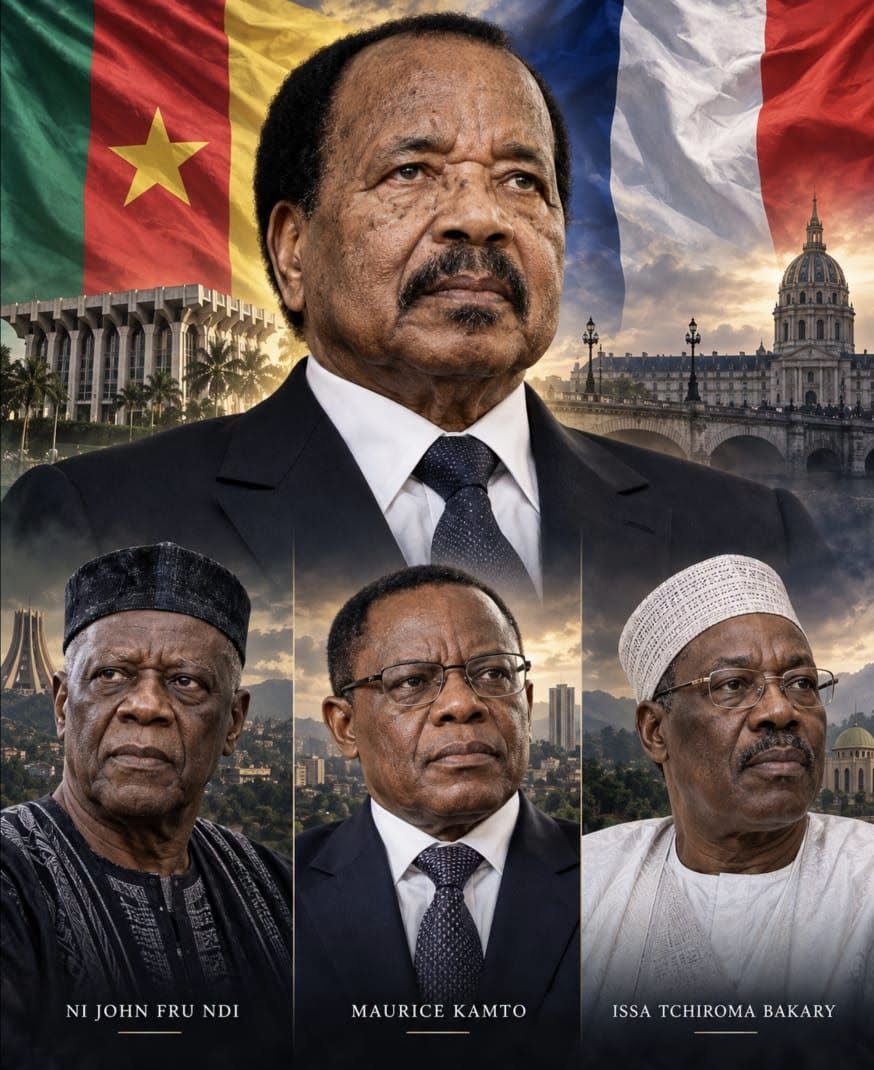
Second, we wanted to make sure that his associates, who are eyeing his position and preparing a negotiated succession behind closed doors, with France’s cooperation, were not attempting to replay the Bongo succession scenario in Gabon, where Omar Bongo’s death was allegedly concealed for months to facilitate the installation of his successor.
Finally, we wanted to expose the contradictions of those around him regarding the claim that his stay abroad was not for medical reasons.
This was therefore in no way an act of mockery, nor was it fundamentally about seeing him physically back in the country—for his presence is effectively no different from his absence. It was about the vigilance required of citizens in the face of a governing order whose methods resemble those of a mafia and which is capable of the worst.
Our only—and principal—concern lies in the relationship between his actual physical condition and the enormous burden resting on his shoulders. The office he occupies has now become a source of physical suffering, both for him personally and for the Republic.
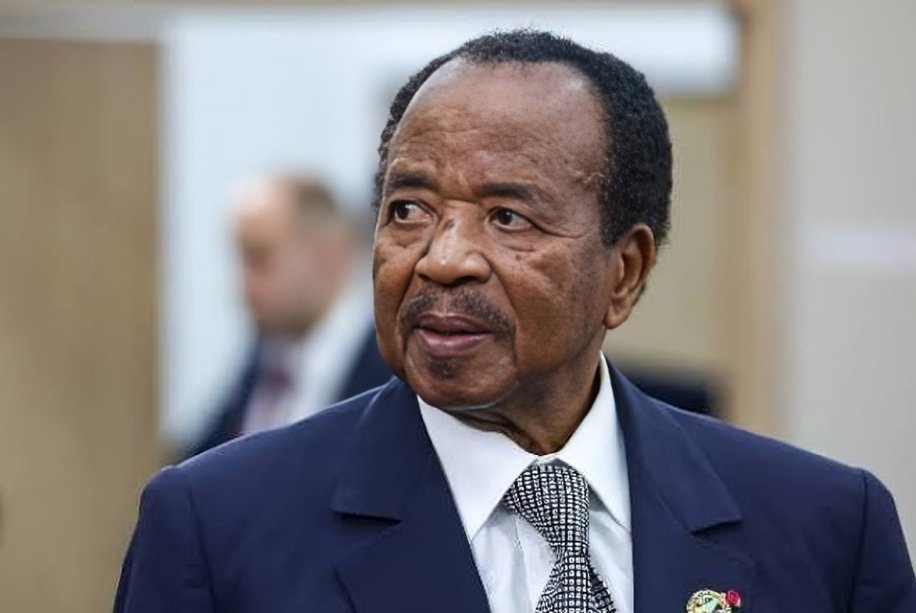
On an individual level, the President has difficulty standing for long periods, struggles to move around, and experiences difficulty moving his limbs. He is forced to exert himself simply to perform certain gestures in public, solely because he is Head of State.
In the face of this obvious hardship, we must ask: does he really have no alternative but to subject himself to such an ordeal in front of the entire world? Can he not allow himself to rest and withdraw from physical activities that he now performs only with extreme difficulty?
This suffering also affects those around him. In public, his wife and aides are forced to monitor his every movement with great care. Each time he appears in public, the fear that something might go terribly wrong can be read on everyone’s faces, creating a climate of collective anxiety rarely, if ever, seen in another country.
Why impose such a torturous protocol on everyone instead of choosing a peaceful withdrawal?
For several years now, the national broadcaster, CRTV, has been reduced to a television circus that is as cumbersome and stressful as it is humiliating. It has resorted to a ridiculous game of APPEARANCE-DISAPPEARANCE on screen: he suddenly appears, then disappears, only to reappear somewhere else. The cameras are hurriedly redirected whenever the President has to make even the slightest movement, apparently to conceal his difficulties.
Even the rare images that make it through the filter are no longer reassuring or uplifting.
His prolonged absences from public life and from the national territory only reinforce the obvious de facto vacancy at the head of the state. The cacophony generated by succession battles further confirms this vacuum, disrupting the coordination of the governing apparatus and directly threatening the country’s political and security stability.
The President’s weakening has allowed a “ça gâte-ça gâte” oligarchy to usurp presidential authority and use it for pernicious purposes—purposes that not only deepen the suffering of the population but also risk plunging the country into a terrible civil war.
It is incomprehensible that the RDPC claims it cannot find anyone within its own ranks willing to put an end to this suffering. Even within their monarchical logic of negotiated succession, what prevents them from reaching an arrangement with Paul Biya that would spare him such stressful and physically demanding public appearances?
To summarize: in principle, we have no personal problem with the President’s physical condition. Our concern is that a man in such a condition should no longer force himself to endure the physical burden of the presidency.
Those who celebrate and cheer while he is visibly placed in physically uncomfortable positions are showing a complete lack of humanity. No one could be happy to watch their own grandfather struggle to climb the stairs of a supermarket simply to provide for the family when all it would take is to ask him to rest and allow his children to take over.
We understand that, for the fanatics—the naïve and the political tribalists—and for the opportunists—the foxes—who surround the President, the person of Paul Biya matters very little.
For the foxes, their only objective is to extract everything they can from the man until the very end. Even if he were writhing in pain under the physical weight of the presidency, their only concern would be to continue benefiting from his presence at the head of state: plundering public coffers, accumulating enormous fortunes, oppressing the vulnerable, and scheming to preserve their positions of power.
If Paul Biya had to run alongside 20-year-olds simply to prove his ability to rule, I swear these profiteers would enthusiastically encourage him to run a 400-meter race.
This is no longer merely selfishness. It is the most complete form of human cruelty.
Once again, for the attention of those fools who understand absolutely nothing about our approach, who read our statements without grasping their nuances or their strategic political orientation: no one is mocking Paul Biya’s age or physical condition. His longevity is, in fact, a blessing.
We are simply denouncing the fact that he is clinging at all costs to a position that is no longer compatible with his physical strength.
Even if he were 100 years old and still physically capable of carrying out the duties of the office, our concern would be far less intense.
As for me, Aristide Mono, if the President were my father, not only would he and I be arguing at home to make him stop playing this exhausting game, but I would also demand that his advisers—who are there only to take advantage of him and his weakened condition—stop encouraging him to continue down this path.
The TGV of Information