
Gaza Truce on the Horizon as Hamas Relents on Major Demand 2024
The Dynamics of Negotiation: Understanding the Gaza Truce Developments
In the complex tapestry of Middle Eastern politics, the prospect of a truce in Gaza has recently taken a significant turn. Reports have emerged that Hamas, the militant group that has controlled Gaza since 2007, has altered its stance by dropping a key demand that previously hindered progress towards a ceasefire agreement. This development could potentially pave the way for a cessation of hostilities that have affected the region for an extended period.
The key demand in question, which Hamas has reportedly set aside, involved an upfront commitment from Israel to end the war. The removal of this precondition suggests a strategic shift that may reflect a broader desire for de-escalation and dialogue. According to various sources, including a senior Hamas official and an Egyptian official, this decision came after receiving verbal commitments and guarantees from mediators that negotiations would continue until a permanent ceasefire is reached.
The intricacies of these negotiations are delicate, with multiple parties, including the United States and Egypt, playing pivotal roles as mediators. The U.S.-backed proposal for a phased truce and hostage exchange deal appears to be at the centre of these discussions. The phased approach suggests a gradual process, beginning with a complete six-week ceasefire, followed by negotiations on the terms of the second phase, which could involve the release of remaining hostages and prisoners.
The international community has been closely monitoring these developments, with cautious optimism expressed by some Israeli sources regarding the likelihood of reaching an agreement. However, the situation remains fluid, and the outcome of ongoing negotiations is not guaranteed. The demand for written guarantees from mediators underscores the fragility of trust between the parties involved and highlights the importance of tangible commitments in ensuring the durability of any potential truce.
As the world watches and hopes for peace, the situation in Gaza serves as a reminder of the complexities inherent in conflict resolution. The path to peace is often fraught with challenges and setbacks, but the current developments may represent a critical step forward. The willingness of Hamas to modify its demands could be indicative of a new chapter in the pursuit of stability and security for the people of Gaza and the broader region.
The unfolding events in Gaza will undoubtedly have far-reaching implications, not only for the immediate parties involved but also for the geopolitical landscape of the Middle East. The pursuit of a truce is more than a political manoeuvre; it is a quest for a return to normalcy for countless individuals whose lives have been disrupted by conflict. As negotiations continue, the hope for a lasting peace remains a beacon for all those yearning for an end to the violence and a start to the healing process.
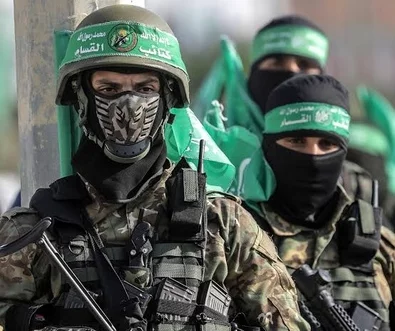
Hamas has given its initial approval of a U.S.-backed proposal for a phased cease-fire deal in Gaza, dropping a key demand that Israel commit up front to a complete end to the war, a Hamas official and an Egyptian official said Saturday.
The apparent compromise by the militant group, which controlled Gaza before triggering the war with an Oct. 7 attack on Israel, could deliver the first pause in fighting since November and set the stage for further talks on ending a devastating nine months of fighting. But all sides cautioned that a deal is still not guaranteed.
Inside Gaza, the Health Ministry said an Israeli airstrike on a school-turned-shelter killed at least 16 people and wounded at least 50 others in the Nuseirat refugee camp. Children were among the dead and wounded. Israel’s military said it struck several “terrorists” operating in the area of the school and had tried to lessen the risk to civilians.
The two officials, who spoke on condition of anonymity to discuss ongoing negotiations, said Washington’s phased deal would start with a “complete” six-week cease-fire during which older, sick and female hostages would be released in exchange for hundreds of Palestinian prisoners. During those 42 days, Israeli forces would withdraw from densely populated areas of Gaza and allow the return of displaced people to their homes in northern Gaza, the officials said.
A senior Hamas official, also speaking on condition of anonymity to discuss negotiations, later told The Associated Press that female soldiers would be among those released in the first phase.
Over that period, Hamas, Israel and mediators would negotiate the terms of the second phase that could see the release of the remaining male hostages, both civilians and soldiers, the first two officials said. In return, Israel would free additional Palestinian prisoners and detainees. The third phase would include the return of any remaining hostages, including bodies of the dead, and the start of a years-long reconstruction project.
Hamas still wants written guarantees from mediators that Israel will continue to negotiate a permanent cease-fire deal once the first phase goes into effect, the two officials said.
The first Hamas official told the AP the group’s approval came after it received “verbal commitments and guarantees” from the mediators that the war won’t be resumed and that negotiations will continue until a permanent cease-fire is reached.
“Now we want these guarantees on paper,” that official said.
Months of on-again off-again cease-fire talks have stumbled over Hamas’ demand that any deal include a complete end to the war. Israeli Prime Minister Benjamin Netanyahu has offered to pause the fighting but not end it until Israel reaches its goals of destroying Hamas’ military and governing capabilities and returning all hostages held by the militant group.
Hamas has expressed concern that Israel will restart the war after the hostages are released. Israeli officials have said they are worried Hamas will draw out the talks and the initial cease-fire indefinitely without releasing all the hostages.
Netanyahu’s office did not respond to requests for comment, and there was no immediate comment from Washington. On Friday, the Israeli prime minister confirmed that the Mossad spy agency’s chief had paid a lightning visit to Qatar, a key mediator, but his office said “gaps between the parties” remained.
“For the first time in many months, we feel hopeful,” a statement by many families of hostages said. “Netanyahu, we have seen how you repeatedly thwart deals in real-time. Don’t you dare break our hearts again?” Anti-government protesters gathered again Saturday night.
Israel launched the war in Gaza after Hamas’ October attack in which militants stormed into southern Israel, allegedly killed some 1,200 people — mostly civilians — and abducted about 250. Israel says Hamas is still holding about 120 hostages — about a third of them now thought to be dead.
Since then, the Israeli air and ground offensive has killed more than 38,000 people in Gaza, according to the territory’s Health Ministry. The offensive has caused widespread devastation and a humanitarian crisis that has left hundreds of thousands of people on the brink of famine, according to international officials.
The cease-fire deal would see around 600 trucks of humanitarian aid entering Gaza daily, with half of them bound for the enclave’s hard-hit north, the two officials said. Since Israel’s assault on the southernmost city of Rafah, aid supplies entering Gaza have been reduced to a trickle.
“We want to eat, but from where we can eat? The country is exhausted. The country is destitute. It is not suitable for living,” said Walid Hegazi, a resident of the Jabaliya refugee camp in northern Gaza. “We’re sorry for the donkeys because we ate their wheat and barley.”
Also Saturday, the Hamas-run Interior Ministry said four police officers were killed in an Israeli airstrike in Rafah. The ministry, which oversees civilian police, said the officers were killed during foot patrols. It said eight other officers were wounded. Israel’s military did not immediately respond to questions.