
National Treasury Boost: Cameroon’s 335 Billion CFA Francs Fundraising—What’s Next?
Public finances: what will the 335 billion CFA francs raised by Cameroon be used for?
The Republic of Cameroon’s recent mobilization of 335 billion CFA francs represents a significant boost to the nation’s public finances. It has sparked a conversation about the allocation and utilization of these funds. This substantial sum is poised to be pivotal in the country’s ongoing development projects and economic strategies.
One of the key areas where a portion of these funds is expected to be channelled is the modernization and enhancement of Cameroon’s National Fire Brigade. A recent financial agreement with France, amounting to approximately 32.8 billion CFA francs, underscores the commitment to upgrading emergency, rescue, and firefighting equipment. This initiative aims to bolster the country’s response capacities and foster human capital development, aligning with the National Development Strategy 2020 – 2030 (NDS30).
Moreover, the investment in the National Fire Brigade is anticipated to have a ripple effect beyond national borders. It is designed to support the training of firefighters from neighbouring countries, potentially positioning Cameroon as a regional leader in civil security and contributing to the development of an African civil security mechanism.
In addition to emergency services, the World Bank’s commitment portfolio for Cameroon, which includes an estimated 1,552 billion CFA francs for various active projects, indicates that only a fraction of the promised funds have been disbursed so far. The effective utilization of the newly raised capital could accelerate the execution of these projects, enhancing infrastructure, healthcare, education, and other critical sectors.
Furthermore, the economic implications of such financial mobilization extend to debt management. France’s advocacy within the Paris Club and the G20 has facilitated a moratorium on debt servicing for impoverished nations, translating into significant debt relief for Cameroon, including contributions from France itself.
The strategic deployment of the 335 billion CFA francs is crucial for Cameroon’s economic resilience and growth. It represents an opportunity to address immediate needs while laying the groundwork for sustainable development. The focus on improving public services, investing in infrastructure, and managing debt reflects a comprehensive approach to leveraging public finances for national advancement.
As the government of Cameroon navigates the allocation of these funds, transparency and accountability remain paramount to ensure that the financial resources yield the maximum benefit for the Cameroonian people and contribute to the nation’s long-term prosperity.
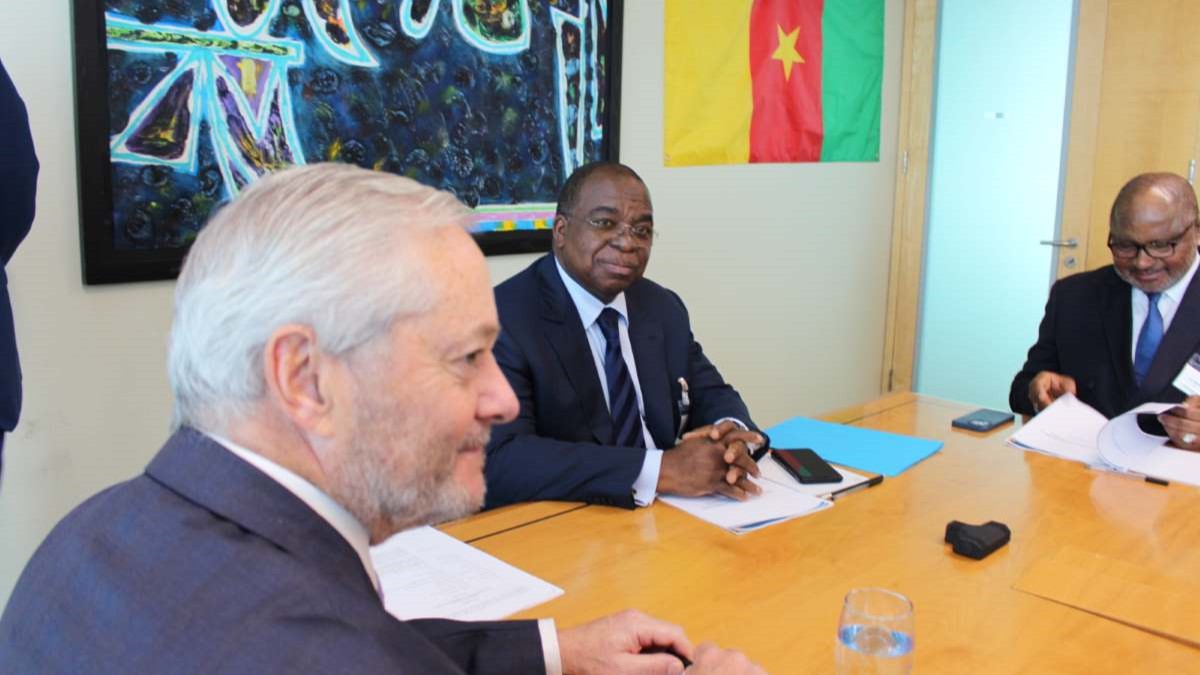
The settlement of the domestic debt mainly concerns the settlement of part of the outstanding payments, the total amount of which, according to the amending finance law of June 2024, amounts to 537 billion CFA francs. Beyond that, it will also be a question of injecting this money into the revival of certain major projects whose work has been at a standstill for months due to a lack of liquidity. The Minister of Finance specifies that the allocation of these resources will impact growth, which will be revived thanks to the renewed activity of SMEs in the country.
This international bond issue, which closed from July 29 to 31, 2024 in London, was carried out, assures Louis Paul Motaze, in a context of volatile market conditions. Also, the investor community, convinced of the credibility and quality of Cameroon’s signature, was seduced by the macroeconomic indicators presented by the country during the operation.
This allowed the Minister of Finance to discuss with investors and rating agencies to reassure them about Cameroon’s economic prospects and attractiveness. It will be recalled that the country had been sanctioned by rating agencies, notably Moody’s, after a late payment. Last March, Standard & Poor’s raised the country’s rating by one notch to B-, citing improvements in budget management.
This international bond issue, co-arranged by the American bank Citigroup with Cygnum Capital Middle East, allows Cameroon to be the fifth country in sub-Saharan Africa to successfully issue an international bond in 2024 after Côte d’Ivoire, Senegal, Benin and Kenya.