Gov’t forces on rampage kill three civilians in Kumbo, burn houses
The situation in Kumbo, Cameroon, has escalated with reports of government forces engaging in violent actions that have resulted in the loss of civilian lives and destruction of property. On February 7, 2024, it was reported that four civilians were tragically killed at a control point in Kiyan, a village within the Kumbo central subdivision. This incident is part of a series of violent confrontations between government forces and separatist fighters in the region.
The conflict in the English-speaking regions of Cameroon has been ongoing, with both sides experiencing casualties. The government’s military operations and the separatist fighters’ actions have led to a volatile and dangerous environment for civilians. The recent abductions and killings of government officials by separatist fighters have further intensified the situation.
The government has denied allegations of civilian casualties during these military raids, but reports from local sources and witnesses suggest otherwise. The complexity of the conflict, with its deep-rooted political and social dimensions, makes it difficult for those outside the region to understand the full scope of the events and the suffering of the people caught in the crossfire.
The international community has expressed concern over the violence and the humanitarian impact on the civilian population. Calls for dialogue and a peaceful resolution to the conflict have been made, but a tangible solution seems distant with the continuation of hostilities.
The loss of life and the displacement of communities in Kumbo and other affected areas highlight the urgent need for effective conflict resolution strategies. All involved parties must consider the long-term consequences of their actions on the civilian population and work towards a peaceful and sustainable solution.
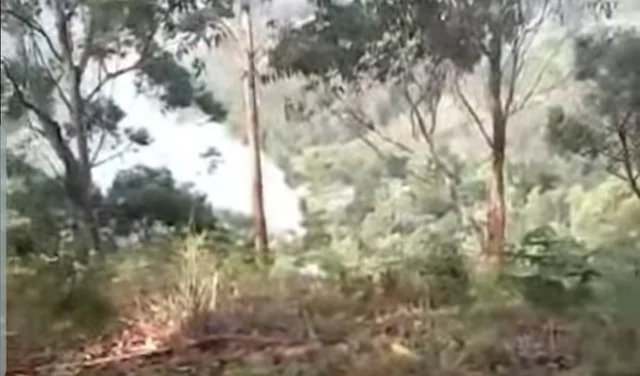
Houses were set ablaze in three villages in the Bui division of the North West region as Government forces went on a rampage attacking areas that they suspected were hideouts of separatists.
Eid Mubarak was a black event in the Kumbo, Bui division after houses were set on fire in the Sop, Jakiri subdivision. This came two days after houses were also set on fire in Ber and Kwanso in the Kumbo subdivision.
On the night of Eid Mubarak, civilians and one separatist fighter were killed in Bamfem as soldiers went on a rampage to avenge the death of their colleagues who had been ambushed by members of Bui Unity Warriors, a separatist group fighting in the area.
Amongst the victims were a handicapped, popularly known as Pa Oriel,90. He was removed from his home alongside a relative and neighbor and then killed. Their bodies were dumped in a nearby stream.
Meanwhile, on social media, Separatists brandished an AK47 gun which they claimed was seized from members of the Rapid Intervention Battalion which they killed.
The conflict in Cameroon, often referred to as the Anglophone Crisis, has deep and multifaceted roots. It is a complex situation with historical, political, economic, and social dimensions that have contributed to the current state of unrest.
Historically, the conflict stems from the colonial era, where the territory of present-day Cameroon was divided between French and British colonial powers, leading to the formation of two distinct cultural and linguistic regions: the Francophone and the Anglophone. The reunification of these territories after independence did not fully address the governance and representation concerns of the Anglophone minority, which has led to feelings of marginalization.
Politically, the centralization of power and the lack of effective political representation have exacerbated tensions. The Anglophone community has long felt underrepresented in the decision-making processes and governance of the country. This has been compounded by the government’s reluctance to engage in meaningful dialogue and address the grievances of the Anglophone regions.
Economically, there is a perceived inequity in the distribution of resources and development opportunities. The Anglophone regions, which are rich in natural resources, believe that they have not received a fair share of the nation’s wealth and development projects. This has fueled resentment and a sense of economic disenfranchisement among the population.
Socially, the conflict is also driven by cultural and linguistic differences. The imposition of French legal and educational systems in the Anglophone regions has been a source of contention, leading to calls for the preservation of the English common law system and the Anglo-Saxon educational heritage.
The crisis has been further complicated by the actions of both government forces and armed separatist groups, leading to a cycle of violence that has resulted in significant civilian casualties and displacement. The situation is further aggravated by the presence of other armed groups in the region, such as Boko Haram, which adds another layer of complexity to the conflict.
Efforts to resolve the conflict have been hindered by a lack of political will, the intransigence of the warring factions, and the development of a war economy. The international community has called for dialogue and a peaceful resolution, but progress has been slow, and the situation remains volatile.
Understanding the root causes of the conflict in Cameroon is essential for developing effective strategies for peace and reconciliation. It requires a comprehensive approach that addresses the historical grievances, political representation, economic disparities, and social and cultural differences that have fueled the unrest.