

Historic Move: Cameroon Approaches Massive Palm Oil Import Since 2018
Cameroon is set to import 225,000 tonnes of palm oil, marking the first time in six years that the country has reached such a high level of imports. This move is driven by the need to meet domestic demand, which has outpaced local production capabilities.
In recent years, Cameroon has faced challenges in balancing palm oil production with sustainable practices. Despite being the largest palm oil producer in Central Africa, the country still relies on imports to satisfy its needs. Efforts to boost local production have included initiatives like the establishment of the inter-professional council of palm oil producers (INTERPALM-CAM) and the Oil Palm Adaptive Landscape (OPAL) project, which aim to improve both the quality and quantity of palm oil produced.
The decision to increase imports highlights the ongoing struggle to achieve self-sufficiency in palm oil production while addressing environmental and social impacts. Sustainable production practices are crucial to mitigate issues such as deforestation, water pollution, and soil erosion.
This significant import milestone underscores the importance of continued efforts to enhance local production and sustainability in Cameroon’s palm oil industry.
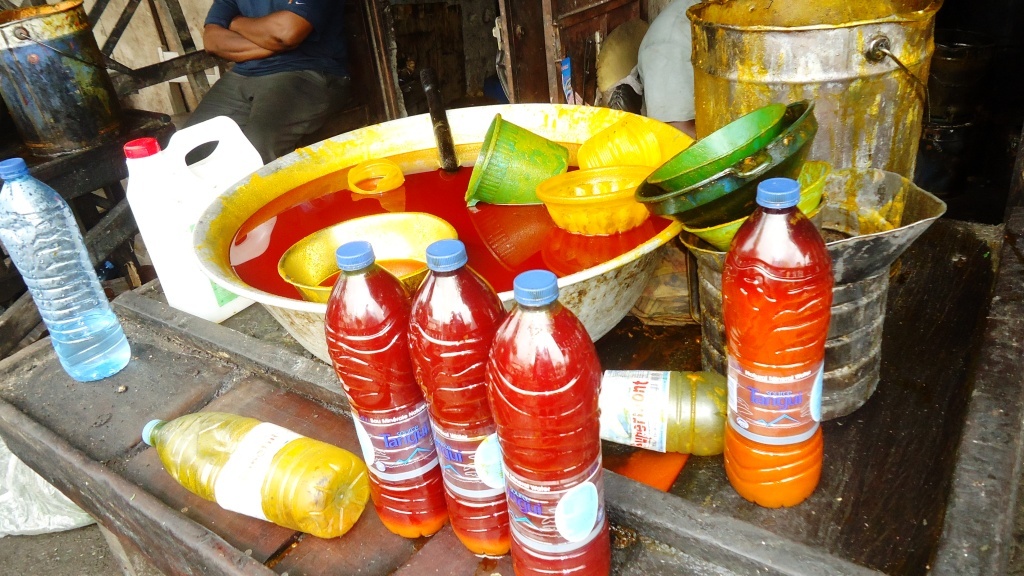
The refiners want, through this large volume, to keep prices unchanged on the national market. The authority notes that the price of 25,500 CFA francs for a 20-litre can be in effect since December 2023 and 1,500 CFA francs per litre is “maintained”, despite high international prices. At the close of the session on July 9 of raw materials prices, a ton of palm oil was traded at $869, a variation of +1.24% per day and +3.14% per month. On the other hand, in the first quarter of 2024, according to the central bank’s report on the export price index for agricultural products from CEMAC countries, a ton of palm oil stood at more than 12%. “So that means that what we felt we had achieved in terms of gains will be swallowed up over the last six months of the year.”
It must be said that Cameroon’s strong dependence on palm oil imports is due to the insufficiency of local production. Oscillating between 350,000 and 400,000 tonnes each year, this national production struggles to meet local demand. This is all the more so since, in recent days, production has fallen drastically. “Local production has seriously declined in recent days,” admits Jacquis Kemleu, SG of Ascroc. He adds that “you cannot meet a demand of more than a million tonnes with a production that is close to 400,000 to 500,000 tonnes and import 200,000 tonnes thinking that it is a lot.” The increase in this structural deficit is the consequence of an exponential increase in investments in processing for more than 10 years, while the production of raw materials has practically stagnated.
To reverse the trend, since December 2023, the interprofessional organization, Inter Palm-Cam, has been created. The main objective is to increase palm oil production in Cameroon in quantity and quality and to make it available for the secondary processing industries.
In addition, the government, in its recovery plan, is counting on a budget of 21.7 billion FCFA to support the development of palm oil production over the period 2024-2026. The operation will be supervised by two ministries: the Ministry of Agriculture and Rural Development and the Ministry of SMEs. According to government forecasts, this will include equipment subsidies for three primary processing agro-industries (CDC, Socapalm, Pamol), the objective being to ensure the upgrading of the latter, or even to replace their processing units to increase yields. In the same vein, support is planned for the acquisition of modern processing equipment (35 modern presses) for the benefit of cooperatives, the regeneration/rehabilitation of 5,000 hectares of village plantations and those of agro-industries as well as the construction of new oil extraction units.