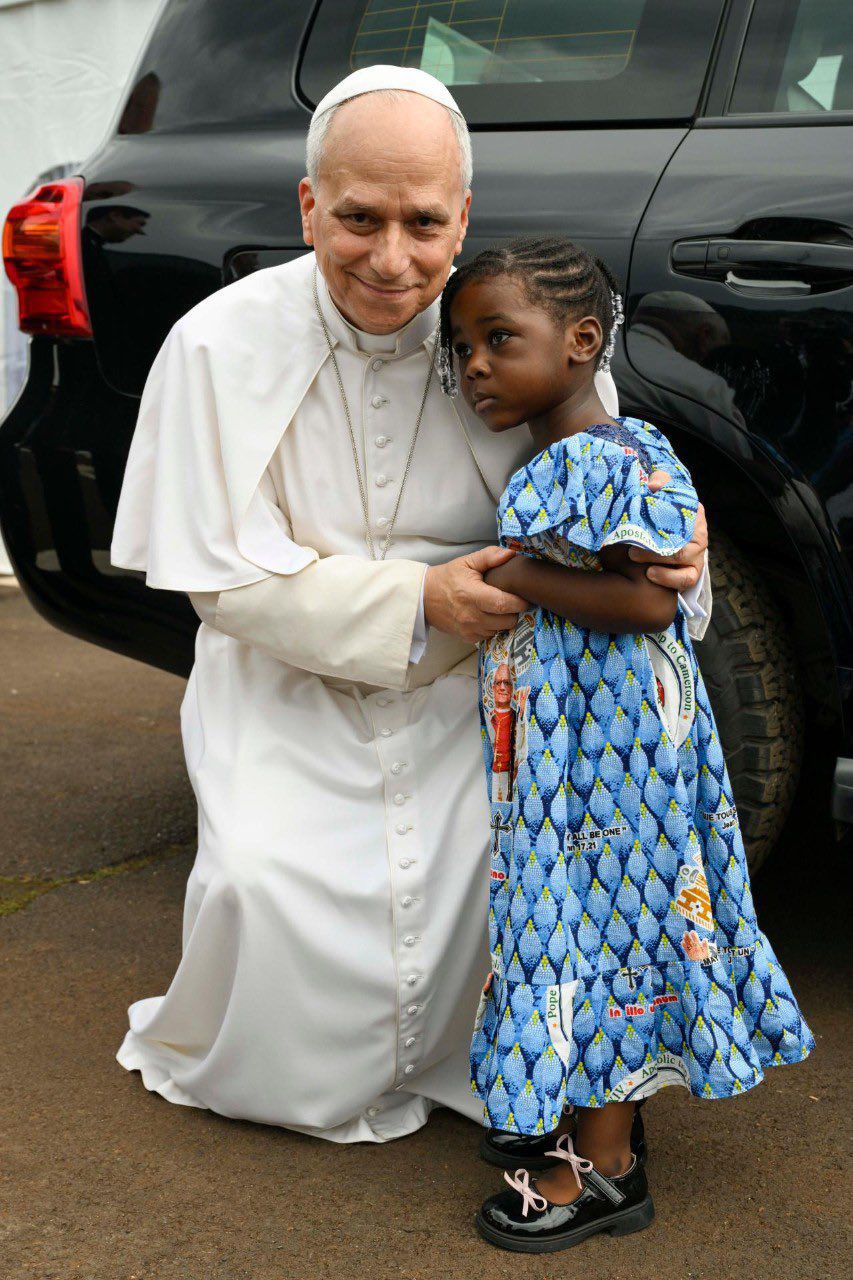
Pope Leo broke a political taboo in Bamenda
While the Anglophone crisis is often reduced to a “security problem,” the Pope reminded us that behind diplomatic euphemisms, there are shattered lives, burned villages, and scattered families.
“Those who strip your land of its resources usually invest a large part of the profits in weapons.”
It reminds us that the crisis is not an accident, but a system.
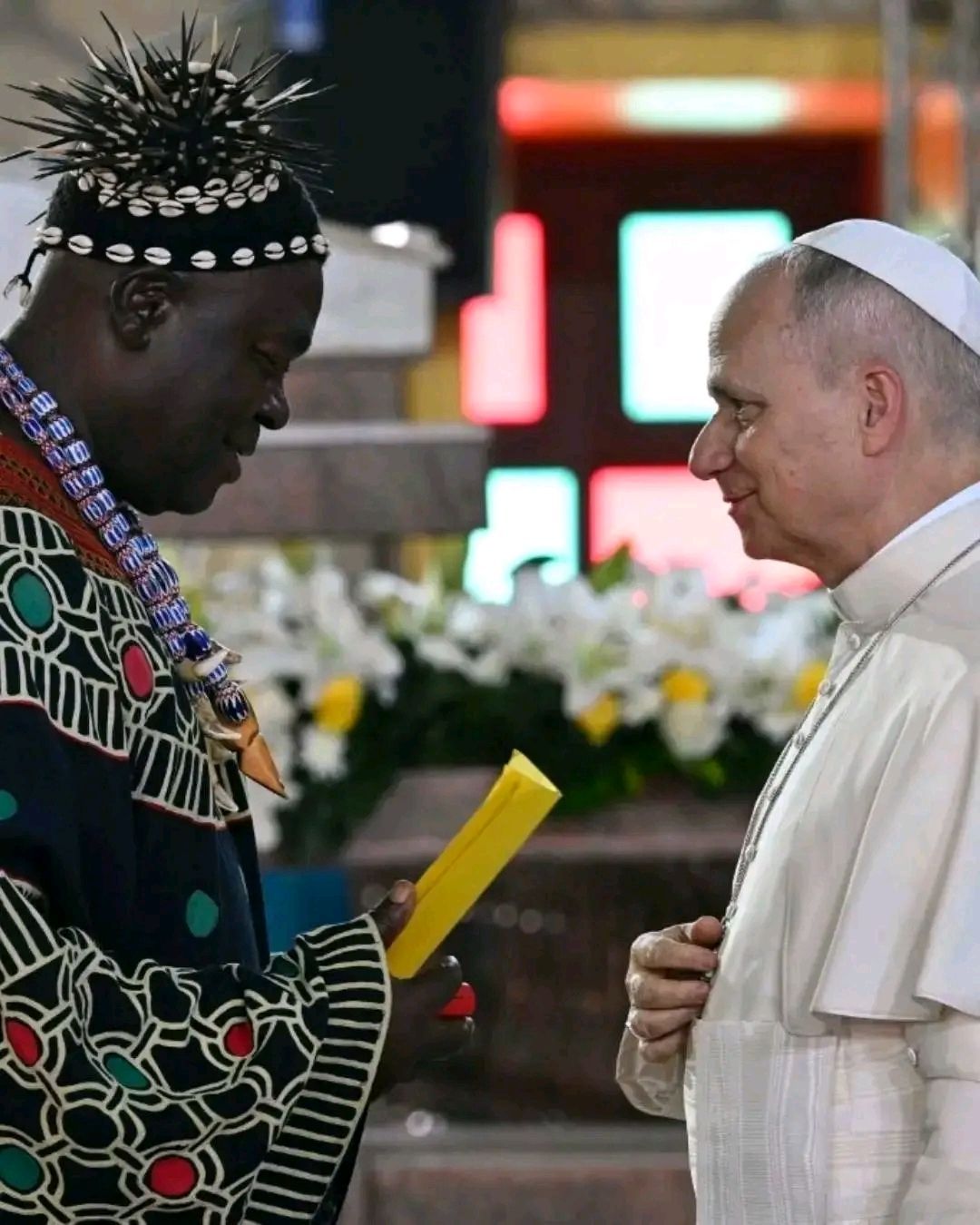
The Pope did not come as a lecturer. He came as a beggar—a rare posture in a world saturated with authoritarian certainties.
He reversed the usual logic: it is not the powerful who bring peace, but the people who already carry it.
He declared:
“Bamenda, you are today the city on the hill.” In other words, light comes from the periphery, not the center.
In a country where power is concentrated in Yaoundé, this statement is a harsh reminder: legitimacy is not decreed, it is earned through contact with real suffering.
The Pope pointed to “warlords” economic interests fueling the conflict, the arms spiral, and international indifference. The perversion of a world that finances death but not reconstruction
He reminded us that violence is not only the act of armed groups, but also of those who, through calculation or inertia, allow it to persist.
He denounced a “world turned upside down,” an expression that, in the Cameroonian context, sounds like a political diagnosis.
In the Augustinian tradition, this clarity is not an intellectual luxury: it is a moral requirement. Peace cannot be built on lies.
The Pope highlighted a fact many ignore: despite violence, the crisis has not turned into a religious war.
Christians and Muslims have chosen to walk together. They created a “Peace Movement.” They refused the logic of division. In a country where identity fractures are often exploited, this interreligious alliance is a major political act.
The Pope praised it as a sign for the whole world.
The Pope spoke of “conversion,” not as spiritual withdrawal, but as a historical turnaround. He called for a “180-degree turn.” In a context where positions seem fixed, where narratives clash, where deaths accumulate, this invitation is a reminder: peace is not a slogan, it is a rupture.
It requires breaking away from domination logics, renouncing the profits of war, and rebuilding trust.
The Pope did not name political leaders. He did not need to. His speech, by its clarity alone, questions choices, silences, strategies, and omissions.
When he says, “The world is destroyed by a few dominators and sustained by a multitude of solidarity brothers and sisters,” he reminds us that peace will not come from the calculations of a few, but from the will of all.
It is a message addressed to Bamenda, but also to Yaoundé, Douala, Garoua, and Bafoussam. A message addressed to decision-makers, diplomats, and economic actors. A message that says: peace is not a decoration, it is a responsibility.
The Pope concluded with a simple appeal:
“Let us move forward without growing weary, with courage, and above all, together, always together.”
In a country where fractures are multiplying, where official discourse struggles to convince, where populations feel abandoned, this phrase is a reminder: peace will not come from above, but from below—from those who refuse hatred, from those who care for others, from those who teach, from those who dialogue.
Bamenda is not only a wounded city. For the time of a speech, it has become the mirror of a possible Cameroon:
a lucid, courageous, united, and standing Cameroon.
(e) Vincent Sosthène FOUDA/BN
Pope Leo broke a political taboo in Bamenda