African and Russian Journalists Strengthen the Solidarity of the Peoples of the World
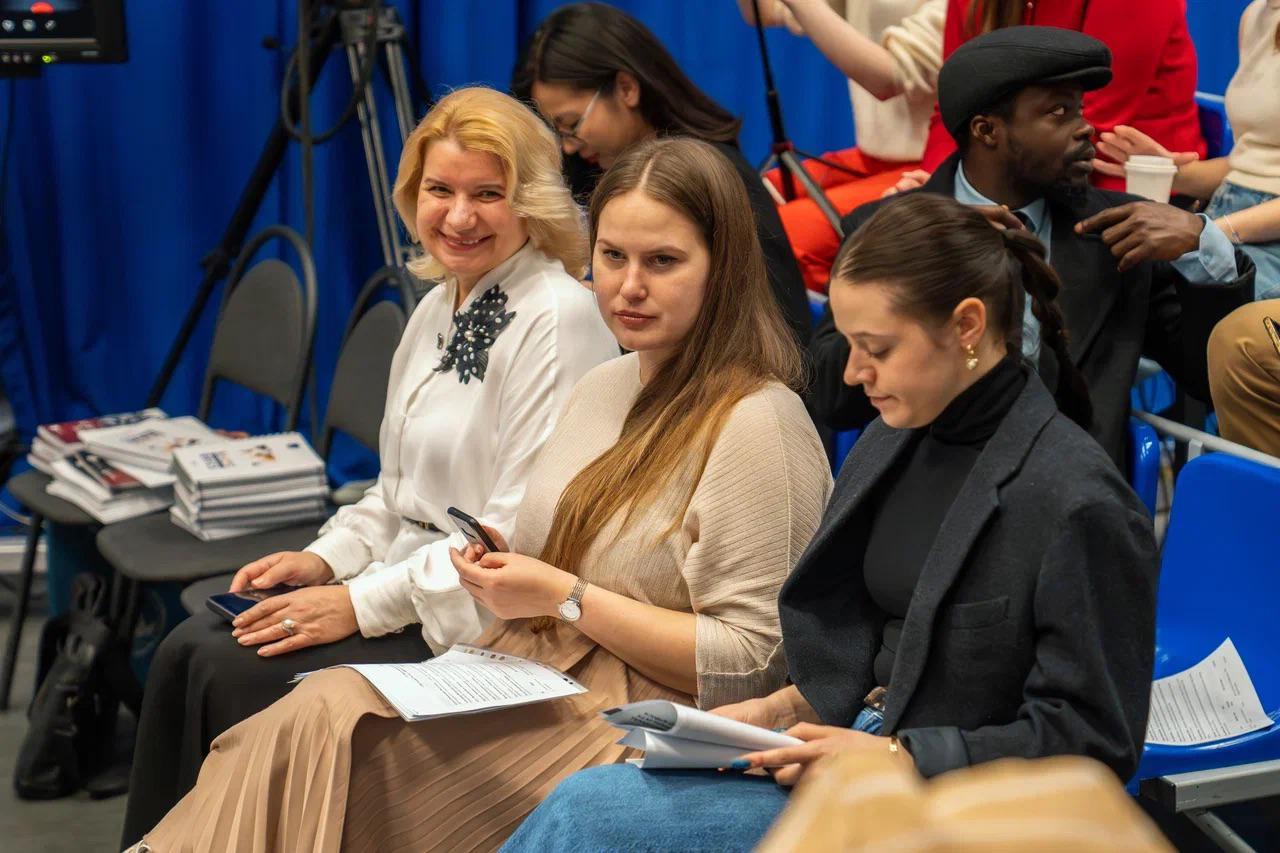
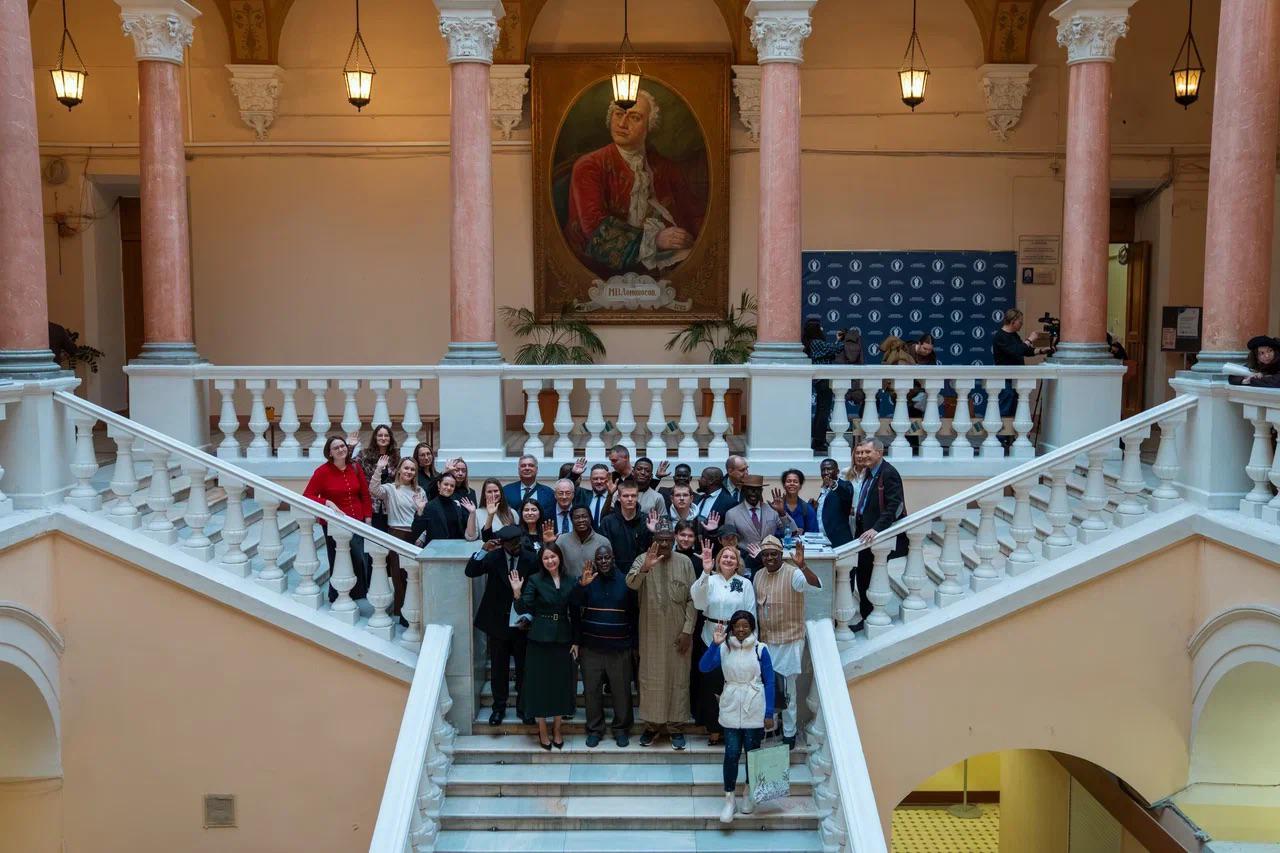
On April 28, 2026, the 4th International Forum of Russian and African Journalists was held. Following an established annual tradition, it took place at the television studio of the Faculty of Journalism of Lomonosov Moscow State University (MSU).
The 4th Forum was timed to coincide with the Year of Unity of the Peoples of Russia and was dedicated to the theme: “Mass Media of Russia and Africa: Their Role in Strengthening Friendship and Solidarity Among the Peoples of the World.”
The event is organized annually by the Russian-African Club of Lomonosov MSU, jointly with the Faculty of Journalism and the Faculty of Global Processes of MSU. This year, the Forum was held with the support of the Federal State Unitary Enterprise “Information Telegraph Agency of Russia (ITAR-TASS),” the Foundation for Public Diplomacy, and the National Association of Mass Media Researchers.
Applications to participate in the Forum were received from prominent experts from Russia, Algeria, Ghana, Gambia, Cameroon, Libya, Mali, Mauritius, Mauritania, Nigeria, Chad, Sudan, Tunisia, and India.
During the Forum, pressing issues of Russian-African information cooperation were discussed. Key topics included the role of mass media in building partnerships between Russia and Africa, the transformation of media systems in the context of digitalization, and the experience of covering traditions, languages, and ethnic identity as a new direction in the Russian-African dialogue. The Forum was held in a hybrid format in Russian, English, and French.
Dean of the Faculty of Journalism at MSU, Vice-President of the Russian-African Club, Academician of the Russian Academy of Education, Professor Elena Leonidovna Vartanova addressed the forum participants with a welcoming speech. She emphasized the importance of intercultural dialogue for forming a unified information space amidst the complex global transformations in the modern world. The Dean warmly welcomed the delegation from Nigeria, from Kaduna State University, with which the Faculty of Journalism has a cooperation agreement.
Forum participants were welcomed by Anna Alexandrovna Gladkova, Leading Researcher and Acting Head of the Department of Foreign Journalism and Literature at the Faculty of Journalism of Lomonosov MSU, who also served as one of the event’s moderators.
A welcome address was sent to the Forum by Yaroslav Lvovich Skvortsov, Dean of the Faculty of International Journalism at MGIMO. He spoke about his recent trip to South Africa, noting that South Africa and the continent as a whole remain a “media blank spot” for Russian media, just as Russia is very poorly covered for African audiences. The expert emphasized the need for serious, thoughtful, and in-depth work in this area.
Oleg Valentinovich Osipov, an Africanist journalist and analyst at the ITAR-TASS Analytical Center, also expressed concern about the mutual information deficit in the journalism of Russia and Africa. The expert voiced the need to expand the network of Russian correspondent posts across the African continent. He noted this is especially important in current realities, as colonial powers, particularly France, are leaving the continent. Russia needs to expand its presence in all spheres, and the media space is a crucial component of this process. Osipov cited the example of the Russian Orthodox Church, which is actively working in Africa, opening churches and parishes in many African countries, and receiving great support and love from local populations.
A welcome address at the Forum was delivered by Timur Vladimirovich Shafir, Secretary of the Union of Journalists of Russia and Head of the International Department of the Union of Journalists of Russia. In his opinion, it is now especially important to find common ground in the mutual perception of the peoples and cultures of Russia and Africa through media communication. Shafir emphasized that today the media space is undergoing a period of very serious transformations – technologies, audiences, and means of communication are changing. Therefore, journalism is now a zone of special responsibility and professional honesty, and direct dialogue between Russian and African journalists is of particular importance. The speaker expressed confidence that the Forum will serve as a starting point for many new joint initiatives.
Louis Gouend, Chairman of the Commission for Relations with African Diasporas and Media of the Russian-African Club of Lomonosov MSU and President of the African Business Club, emphasized that the journalism of solidarity promoted by the Forum is impossible without communication tools. In his opinion, one such tool is the media platform Rusafromedia – an information resource created by the Russian-African Club of MSU in 2022. This platform provides all the conditions for a free and open exchange of opinions, relevant information, and the promotion of initiatives in all areas of cooperation between Russia and Africa. The speaker expressed concern that Russian journalists are much less active on the Rusafromedia platform than their African counterparts and urged those present to use this resource more actively.
In his speech, Alexander Fedorovich Berdnikov, Executive Secretary of the Russian-African Club of MSU and Chairman of the Commission for Public Security and People’s Diplomacy of the Council for Nationalities Affairs under the Government of Moscow, noted that now, as momentous processes unfold in the world, journalism and the entire media sphere are literally becoming a battlefield where information wars and special operations are taking place. The speaker emphasized that the Forum is taking place on the eve of the third Russia-Africa Summit, making it crucial for participants to develop solutions and initiatives for interaction in the field of Russian-African journalism that will form the basis of practical recommendations for preparing for the Summit. Berdnikov conveyed to the Forum greetings from the Honorary President of the Russian-African Club of MSU, Rector of Lomonosov MSU, Academician Viktor Antonovich Sadovnichy, and from the First Vice-President of the Russian-African Club of MSU, Dean of the Faculty of Global Processes of MSU, Professor Ilya Vyacheslavovich Ilyin.
Ilya Leonidovich Shershnev, Director of Programs at the Russian-African Club of Lomonosov MSU, Director of the Research and Education Center “Globus-21 Century” at the Faculty of Global Processes of Lomonosov MSU, and President of the Foundation for Public Diplomacy, noted that journalism is a powerful tool that strongly influences public opinion formation. Alongside public diplomacy, peacebuilding journalism, which helps resolve international conflicts, is also exceptionally important. The expert invited forum participants to contribute to the creation of an international textbook on public diplomacy and peacebuilding journalism, which is currently in development.
Lyubov Vladislavovna Sakhno, Head of the Protocol and African Department of the TASS International Relations Office, representing Russia’s oldest news agency, spoke about TASS’s work in providing African media with news feeds in foreign languages. According to her, over 400 media outlets in Africa use these resources free of charge. The speaker also discussed the TASS Media Forum, which traditionally takes place on the sidelines of the Russia-Africa Summit.
Buynta Ochirovna Bembeeva, Editor-in-Chief of the “African Initiative” news agency, noted that in recent years, Africa has been appearing noticeably more often in Russian news. The speaker spoke about the “African Initiative’s” experience working in Africa. The agency is represented in many countries of the African continent through signing cooperation agreements with local information resources. The agency also collaborates with bloggers and organizes a journalism school for young African journalists. Such close on-the-ground interaction, directly cooperating with African media, is a key factor for full-scale journalistic activity.
Daria Mikhailovna Labutina, an international journalist, Africanist, and author of the project “Galloping Across Africa,” shared this view and added that broadcasting in local languages is of great importance in Africa.
A speaker from Nigeria, Professor Ayodele Babatunde Joseph of Kaduna State University, discussed the use of strategic communications to strengthen partnerships and unite the cultures of our countries and continents. He agreed with his Russian colleagues on the need to expand the presence of Russian news agencies in Africa and African media in Russia. The expert cited the example of a well-known British radio station that broadcasts in Nigeria alone in five languages: Hausa, Yoruba, Igbo, Pidgin English (which they call “Naijin”), and standard English. “That is a successful strategy,” the professor was forced to note.
Artur Zograbovich Grigoryan, Junior Researcher at the Center for History and Cultural Anthropology of the Institute for African Studies of the Russian Academy of Sciences, while discussing the problems and prospects of Russian-African media cooperation, emphasized the need for alternative approaches based on historical common ground. According to the speaker, Africans remember that Russia never colonized Africa; on the contrary, it helped fight the shackles of colonialism and neo-colonialism.
Inga Anatolyevna Koryagina, Candidate of Historical Sciences, Associate Professor of the Marketing Department at Plekhanov Russian University of Economics, Director for International Development of the Russian-African Club of Lomonosov MSU, and Honorary Representative of the Moscow Chamber of Commerce and Industry in African countries, reported on specific results achieved by the Russian-African Club of MSU in promoting Russia in Africa through local media. The speaker noted that the club was represented in the media of over 25 African countries, publishing more than 300 pieces; stable ties were established with more than 50 media partners.
Mohammad Bashir Ali, a representative of the Nigerian delegation and Professor at Kaduna State University (Nigeria), addressed the role of media in promoting economic and entrepreneurial cooperation between Russia and Africa. The expert emphasized that despite numerous challenges dictated by the complex international situation in both Africa and Russia, there is enormous potential for opportunities in this area. He concluded that it is necessary to strengthen consolidation in the media sphere.
Andrey Konstantinovich Shitov, Political Observer for ITAR-TASS and Lecturer at the Faculty of Journalism of Lomonosov MSU, spoke about his personal experience travelling to African countries and shared memorable photos from his personal archive. The speaker titled his presentation ” ‘Umuntu ngumuntu ngabantu’ (A person is a person through other people): What a Russian Journalist Learned from Trips to Africa.” According to the speaker, the most important criterion in a journalist’s work is the trust their reports inspire in the audience.
Participants from Nigeria, Yushau Ibrahim Ango and Ayodele Babatunde Joseph, Professors at Kaduna State University, presented on “Creative Industries and African Media Systems in the Context of Digitalization,” analyzing the impact of digital media on entrepreneurship in Nigeria’s economy. The experts concluded that dependence on digital platforms introduces new vulnerabilities, including algorithmic unpredictability in the economy. This work contributes to entrepreneurship and media research by theorizing digital platforms as entrepreneurial infrastructure, which has implications for policy, platform governance, and understanding how media shape economic life in the African context.
A Libyan expert, Professor Jalal Otman, Founder and General Director of the Libyan Institute for Investigative Journalism (LIFID), noted that the current Forum is taking place at a time when we must rethink our role as journalists in shaping the future of international relations. When we talk about “journalism of solidarity” and partnership between Russia and Africa, we cannot ignore the great heritage that unites us, the expert believes. Culturally, Russian literature has long served as a compass guiding the pens of many Libyan writers, and the great Russian literary figures are rooted in the collective consciousness of Africans.
Denis Nyrkov, President of the African Bloggers Club, explained in his presentation how a partnership between Russia and Africa is being built through the club he leads. He called on everyone involved in the Russian-African agenda to join this community, where support and attention are always readily available.
Sergey Gennadievich Grachev, Deputy Director of the Media Research and Analysis Directorate at MIA “Russia Today” and Lecturer at the Faculty of Journalism of Lomonosov MSU, agreed with his colleagues that they are now facing unprecedented pressure from Western media. Despite this, media projects of Russian media in Africa continue to develop, the speaker noted, presenting analytical diagrams of the Sputnik agency’s presence on social networks, where broadcasting occurs in 33 languages.
Yulia Vadimovna Kazakova, an analyst and media researcher, continued the theme, discussing the most active media resources in the unified media space of Russia and Africa. According to the speaker, the development of joint IT platforms, particularly in the field of financial journalism, will significantly expand the possibilities of media interaction.
Nicolas Fricot, a journalist from Mauritius, presented his research on the role of artificial intelligence in modern journalism. The author emphasized that, despite the undeniable optimization in the media sphere, the widespread use of artificial intelligence carries many risks. Consequently, the need to use verified, respected sources of information becomes particularly acute.
Geliya Sergeevna Filatkina, Associate Professor at the Faculty of Journalism of Lomonosov MSU, believes that the main problems in the development of the media sphere in Africa are the uneven distribution of access to the internet, digital resources, radio, and the press. Furthermore, the dominance of state-controlled media, mostly controlled by the West, is a factor hindering the development of free journalism, combined with an acute shortage of qualified personnel.
Milana Vladimirovna Zakharova, Associate Professor at the Department of International Journalism, Faculty of Journalism, Lomonosov MSU, spoke about the challenges of overcoming the digital divide in African countries. The expert cited the ID Fayda project in Ethiopia as an example, which, in her opinion, is an effective tool for resolving the digital crisis.
Farid Mohamed Awal, a journalist from Ghana, called for updating what we tell each other about one another in the spirit of the times. According to the journalist, an outdated image of Africa as a region lacking security and modern technology dominates Russian news. At the same time, African media write about Russia mainly in political terms, without revealing the true depth of Russian culture and the soul of the Russian people.
Professor Abubakr Mohammed Abbakar Hussein, Lecturer at Bauman Moscow State Technical University, reminded that 2026 marks the 70th anniversary of diplomatic relations between Russia and Sudan and expressed gratitude to Russian scientists and institutions for their contributions to the study and preservation of Sudan’s archaeological heritage.
In conclusion, Hafiz Bassi, Chairman of the Commission for Youth Projects of the Russian-African Club of Lomonosov MSU, spoke. He supported the opinion of the journalist from Ghana, Farid Awal, that there is a pressing need to change outdated stereotypes when broadcasting about each other through political clichés. “We need journalism that brings us closer, not increases the distance,” the speaker emphasized. In his opinion, the issue of the lack of accredited African journalists in Russia also remains acute.
The participants reached a consensus that the Forum of Russian and African Journalists once again demonstrated the importance of such events for discussing critical problems, prospects, and strategies for strengthening mutual media presence between Russia and Africa. This is especially important in an era of change, where, in counterbalance to the aggressive rhetoric of Western countries and their satellites, the tools of public diplomacy, “soft power,” and peacebuilding journalism become most relevant and effective for creating a solid foundation for Russian-African dialogue.
Exclusive from Journalists Forum Russia-Africa
African and Russian Journalists Strengthen the Solidarity of the Peoples of the World