

Cameroon: The Presidency of the Republic instructs the continuation of the transfer of funds allocated to the Cdec
The Presidency of the Republic of Cameroon has recently reiterated its directive for the continuation of the transfer of funds allocated to the Caisse des Dépôts et Consignations (CDEC), emphasizing the importance of this process in the nation’s financial and institutional landscape. This move is part of a broader effort to operationalize the CDEC, which began in earnest in January 2023 with the appointment of key management personnel by the President of the Republic.
The CDEC, established by law in 2008 but only becoming fully operational in 2023, plays a crucial role in managing public and private funds and assets according to prevailing laws and regulations. The institution’s mission includes receiving, safeguarding, and managing certain sums and assets, which are critical for the country’s development initiatives.
In the 18 months since its operationalization, the CDEC has achieved significant milestones, including the establishment of its Board of Directors, the acquisition of a headquarters building, and the adoption of a three-year strategic plan covering 2023 to 2025. Furthermore, the CDEC has developed an organic framework, staff guidelines, internal rules, a code of ethics, and a professional code of conduct, which are essential for its governance and operational efficiency.
The transfer of funds to the CDEC has been a focal point of its activities, with the Prime Minister signing a decree on December 1, 2023, outlining the terms and conditions for this process. The decree set a six-month deadline, ending on May 31, 2024, for credit, microfinance, and payment institutions to transfer these assets to the CDEC. Despite some challenges, including resistance from certain financial institutions, the CDEC has made progress in securing the transfer of resources from various actors.
The Director General of the CDEC, Richard Evina Obam, has been vocal about the institution’s determination to recover idle funds, which are empowered by law to be received from financial institutions. In a recent interview, Obam highlighted the achievements of the CDEC and expressed his readiness to enforce strict adherence to the law governing deposits and consignments, as well as the Prime Minister’s decree.
The CDEC’s efforts have not been without obstacles. Some banks have been reluctant to declare or partially declare the funds to be transferred, fearing the impact on their deposit volumes and fund placement flexibility. However, the CDEC has successfully negotiated the transfer of significant sums from institutions such as BICEC and SCB Cameroun, demonstrating its commitment to fulfilling its mandate.
As the CDEC continues to solidify its position as a new national development agent, the Presidency’s instruction to continue the fund transfer process underscores the government’s support for the institution’s mission. The CDEC’s success in this endeavour will be a testament to Cameroon’s dedication to improving its financial infrastructure and supporting national development goals.
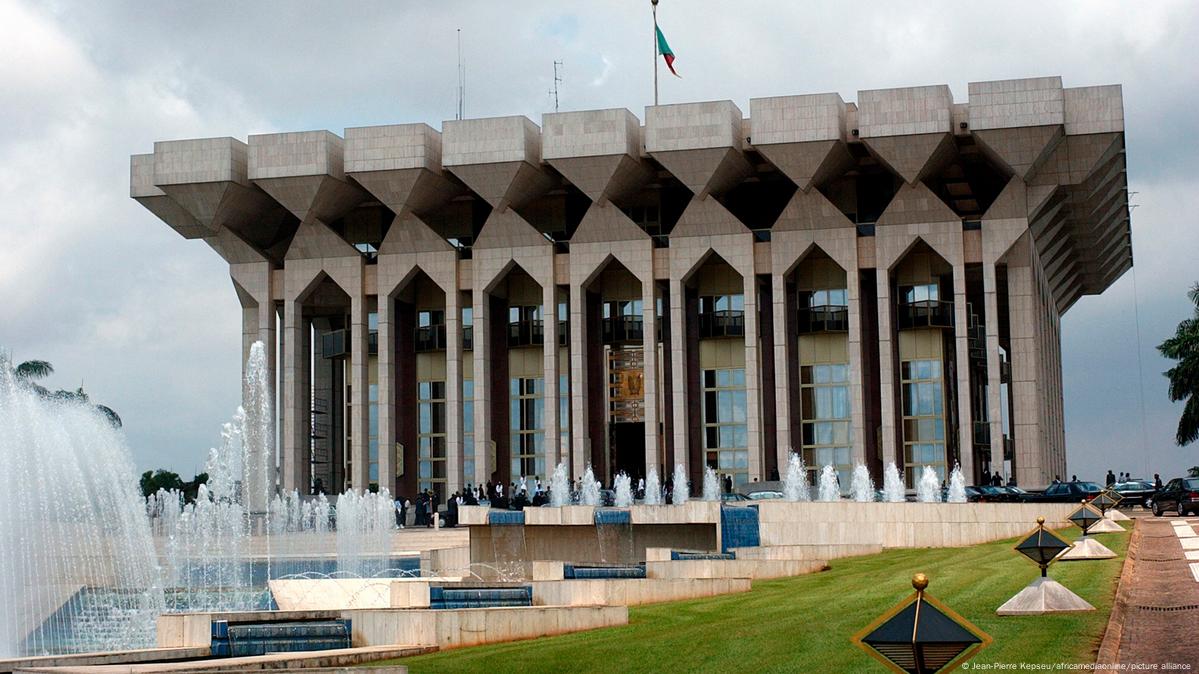
The circular letter signed on July 11, 2024, by the Secretary General of the Central African Banking Commission (Cobac) Marcel Ondele inviting banks, microfinance institutions and payment institutions in Cameroon to “suspend the process of transferring unclaimed assets to the Cdec” has prompted a reaction from the country’s highest authority. Through a letter addressed on August 1 to the Minister of Finance, the Secretary General of the Presidency of the Republic Ferdinand Ngoh Ngoh transmitted the instructions of the Head of State Paul Biya who invited Louis Paul Motaze to “ensure with the Cdec […] the effective, diligent and serene continuation of the process of transferring funds initiated”. Thus, Yaoundé invites the banking policeman to “report its correspondence of July 11, 2024, relating to the suspension of the process of transferring unclaimed assets, and to focus its reflections on possible residual banking activities, likely to be carried out by the Caisses de dépôts et consignations, when they have not created subsidiaries for this purpose”.
The crux of the matter
The said circular referred to the concerns expressed by the banking sector regulator in the Cemac zone regarding the obligation of Cameroonian banks to transfer so-called dormant assets to the Caisse de dépôts et consignations (Cdec). Stressing that this operation requires prior clarifications on their nature, the terms of conservation, management and restitution. A position supported by the International Monetary Fund (IMF). In a report published on July 22, 2024, and consulted by EcoMatin, the Bretton Woods institution emphasizes that “the Cdec should be fully recognized by Cobac as a financial institution, without benefiting from specific exemptions due to its state affiliation.” And to add: “the mandate of the Cdec should be explicit in this regard and appear in the implementing texts of the law governing the activities of the Cdec which must be adopted by the authorities.” The fact remains that Yaoundé does not see the matter in the same light.
In an interview granted on July 15 to EcoMatin, the Director General of the Cdec Richard Evina Obam protested against the exit of the Secretary General of the Cobac which he presented as a violation of the sovereignty of Cameroon. For the Cameroonian leader, it is incomprehensible that the banking regulator of the Cemac, responsible for ensuring compliance by credit institutions with the legislative and regulatory provisions issued by the national authorities, should come to request the postponement of the application of a decree of the Cameroonian Prime Minister, taken in application of a law of a sovereign State, this, he said, in contradiction with article 1 of the annexe to the convention establishing the Cobac.
“In the absence of a Community regulatory framework, sovereign Member States are free to apply their national laws and regulations that Cobac is required to ensure are respected by credit institutions, in application of Article 1 of the Annex to the Convention establishing a Central African Banking Commission,” said Richard Evina Obam. And to specify: “under the principle of subsidiarity and in the event of concurrent competences, Member States have competence by default over all areas not regulated by Community law, which is the case of the public deposit and consignment service. Community construction is done by the States and not by the defence of corporate interests.”
It should be noted that to date, at least 27 billion CFA francs have been transferred by several institutions to the Cdec, including Société Générale, Bicec, Standard Chartered Bank, SCB, Crédit Foncier du Cameroun and even Beac Cameroun, thus meeting the deadline of May 31, 2024, set by the Cameroonian Prime Minister.


