

Cameroon’s Financial Governance Receives a Boost with C2D Funds
Cameroon has recently taken a significant step towards enhancing its financial governance through a substantial allocation of nearly 7 billion CFA francs from the Debt Relief and Development Contracts (C2D). This initiative is a testament to the ongoing efforts to bolster economic stability and ensure sustainable development in the nation.
The C2D is a mechanism established by France following the Heavily Indebted Poor Countries initiative, aimed at aiding eligible countries like Cameroon in reducing poverty and achieving macroeconomic stability. Since reaching its completion point in 2006, Cameroon has seen a considerable portion of its external debt cancelled, allowing for more resources to be directed towards development projects.
The funds from C2D are allocated to various sectors critical to the country’s growth, such as health, education, infrastructure, agriculture, and environmental conservation. These sectors are pivotal in improving the living conditions of the population and driving the nation towards its strategic development goals outlined in the Growth and Employment Strategy Paper (GESP).
The recent allocation of nearly 7 billion CFA francs is designated to enhance the financial governance of Cameroon. This move aligns with the objectives of previous C2D agreements, which have collectively contributed a total of 967 billion CFA francs to the country’s development endeavours. The focus on financial governance is crucial, as it underpins the effective management of public finances, transparency, and accountability, all of which are essential for fostering trust and attracting further investment.
The C2D funds are not only a reflection of the collaborative relationship between Cameroon and France but also a symbol of the international community’s confidence in Cameroon’s potential for growth and prosperity. The implementation of policies supported by these funds is expected to catalyze positive changes across various sectors, ultimately contributing to the nation’s overarching aim of poverty reduction and economic advancement.
As Cameroon continues to navigate the challenges of development, the C2D funds serve as a vital resource in the country’s journey towards a brighter and more stable future. The commitment to improving financial governance is a promising sign that Cameroon is on the right path to achieving its long-term development goals and enhancing the quality of life for its citizens.
According to the Cameroonian Ministry of Finance, part of these funds has already contributed to the implementation of the accounting reform and the optimization of cash flow with the development of tools necessary for the establishment of the single Treasury account as well as the production of the General State Account.
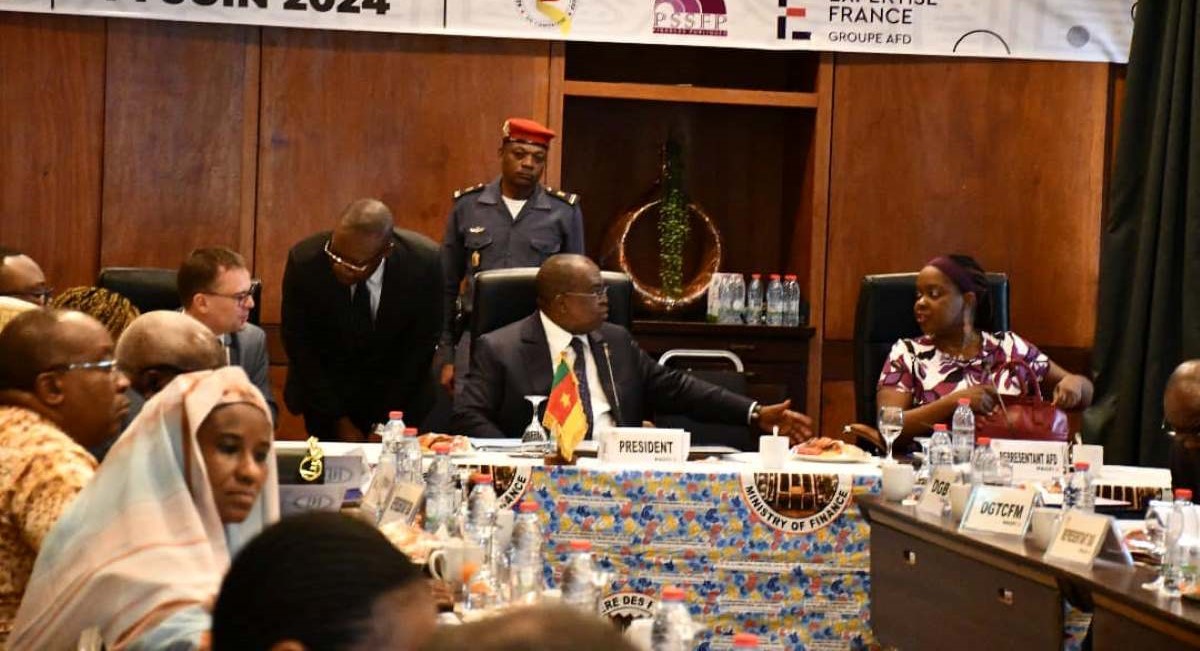
Nearly 7 billion CFA francs. This is the amount of the subsidy mobilized under the Debt Reduction and Development Contract (C2D) for the financing of the Financial Governance Support Project (Pagfi) in Cameroon, phase 3 of which (Pagfi 3) was launched last June. This project, whose objective is to improve public finance management by supporting reforms at both the central level and the level of decentralized and parastatal administrations, was showcased on July 31 in Yaoundé.
The Financial Governance Support Project is a program that started in Cameroon in 2015, the first phase of which, implemented in 2019, benefited from funding from the French Development Agency (AFD) of 377,000 euros (more than 248 million CFA francs) dedicated to facilitating the appropriation of the new financial regime of the State and promoting the transposition of the Cemac directives. The C2D subsidies intervened from the second phase called Pagfi 2, amounting to 4 million euros (more than 2.6 billion CFA francs). The objective of this phase was to strengthen the State’s capacity to control the execution of its budget. Thus, between October 2019 and April 2024, “the project played an active role in the reform of public finance management by focusing on major aspects such as planning of expenditure and the implementation of asset accounting,” explains an executive of the Technical Support Secretariat dedicated to the implementation of the C2D in Cameroon.
Reforms
The third phase of Pagfi (Pagfi 3) benefits from a larger envelope. That is a subsidy of 6 million euros (more than 4 billion CFA francs) from the C2D. This last phase supports the Cameroonian Ministry of Finance in strengthening the country’s budgetary credibility, improving budgetary and accounting information, as well as strengthening control of budgetary risks related to companies and public institutions. Thus, the constant revaluation of the envelope allocated under this program would be due to the amplification of the challenges related to the management of public finances in Cameroon. According to the Cameroonian public authorities, the Project is bearing fruit: the accounting reform and the optimization of the treasury financed within the framework of Pagfi 2 has made leaps forward with the development of the tools necessary for the establishment of the Single Treasury Account, the linking of the treasury to electronic banking, the switch to patrimonial accounting in established law as well as the production of the General State Account. As well as the implementation of the legal framework resulting from the transposition of the Cemac directives on the one hand and the Law on the General Code of Local Authorities 2019.
As a reminder, the Debt Reduction and Development Contract (C2D) is a tool that allows part of Cameroon’s debt to France to be converted into financing for vital projects in sectors such as health, education, agriculture and justice. To date, three C2Ds have been signed, for a total amount of 967 billion CFA francs, according to the AFD. The last C2D concluded in 2016 with an envelope of 405 billion CFA francs and is scheduled to end in 2026.


