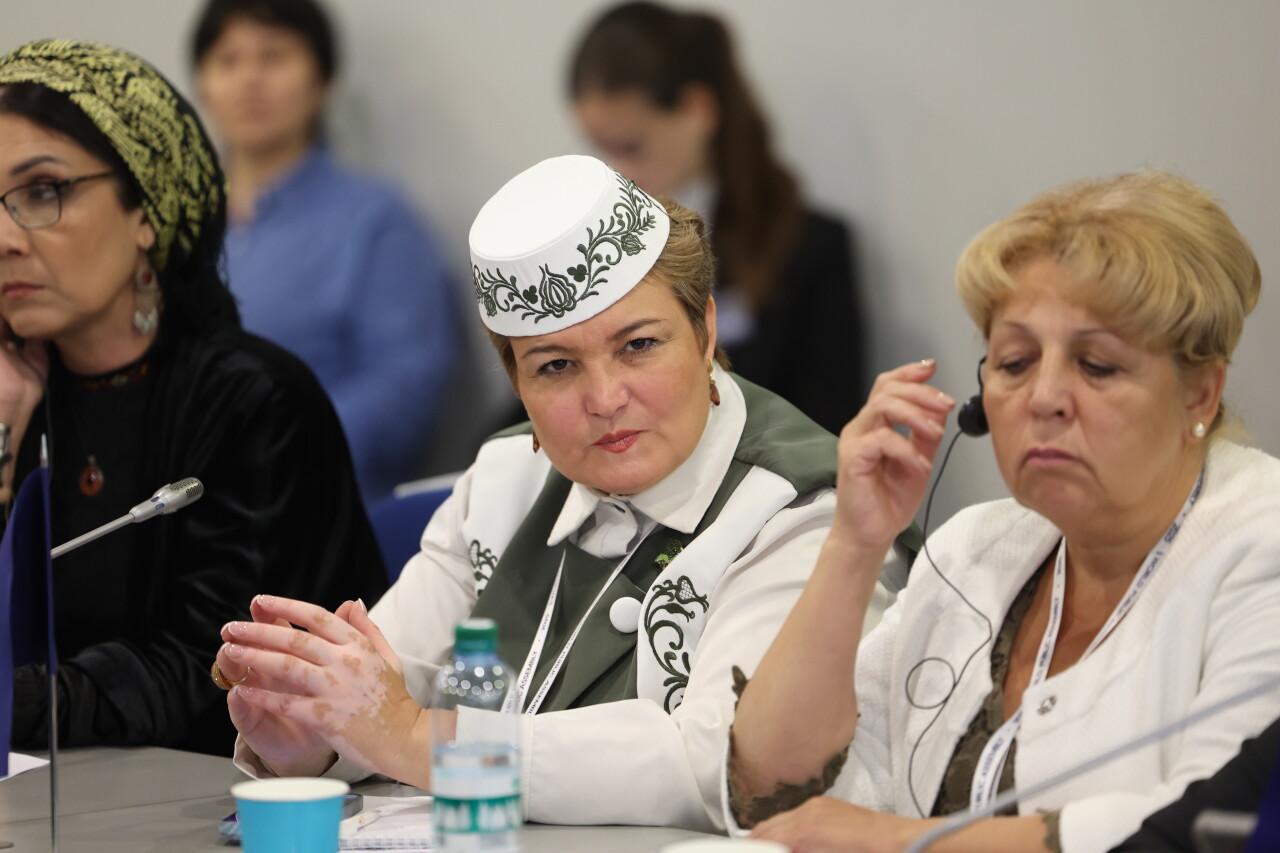
The International round table “Traditions as a resource for the future” has become one of the most colorful venues of the First World Public Assembly. Craftsmen of folk-art, cultural figures and representatives of public organizations from Australia, Zambia, India, Kazakhstan, Mexico, Russia and Turkmenistan met together.
The main motive of the discussion is to understand how traditions and crafts can become a living source of development of territories, uniting people and forming values of the future.
Carolina Gaspar, Director of the Mexico—Russia Cultural Center, recalled that “culture is not the past, but the present, which opens the doors to the future. It is a living, strategic and deeply human resource.”
Kazakh poet and public figure, Chairman of the Association of Legal Entities “Alliance of Non-governmental Organizations of the Kyzylorda region”, Izden Anar emphasized the continuity of traditions: “Traditions today are innovations yesterday. Innovations today are traditions of tomorrow.”
Experts said that culture is a special wealth that needs the attention of both each state individually and the whole of humanity.
“Culture is a garden. And a garden needs three elements: diversity, protection, and care. We are responsible for this wealth of humanity,” said Kevin Murray, Vice President of the World Union of Crafts (Australia).
Today, the more technologies develop, the more horizons of international cooperation expand, the more attention needs to be paid to moving deeper into oneself, one’s roots, traditions, and emotions,” said the speakers of the round table. The idea of preserving diversity is the key to strong relationships between nations and makes our future fabulous. Master of ceramics, Honored Artist of Turkmenistan Bakhtiyar Khojaniyazov confessed: “My goal is to revive the lost school of ceramics. It’s my childhood dream to create a fairy tale. I’m going to make a fairy tale.”
“Our craft expresses our identity and attitude towards the world. If we lose this art, we will lose our culture,” said Asif Shaikh, an Indian master embroiderer and founder of the Craft Design Society.
Chipata Mabuto (Zambia), a trustee of the Her Voice Foundation, which helps children from low-income families learn national crafts, spoke about the importance of cultural heritage as a resource for social change: “We improve the lives of vulnerable groups of the population, bringing beauty and art into their difficult lives with their own hands. It gives families extra income and creates a sustainable world.”
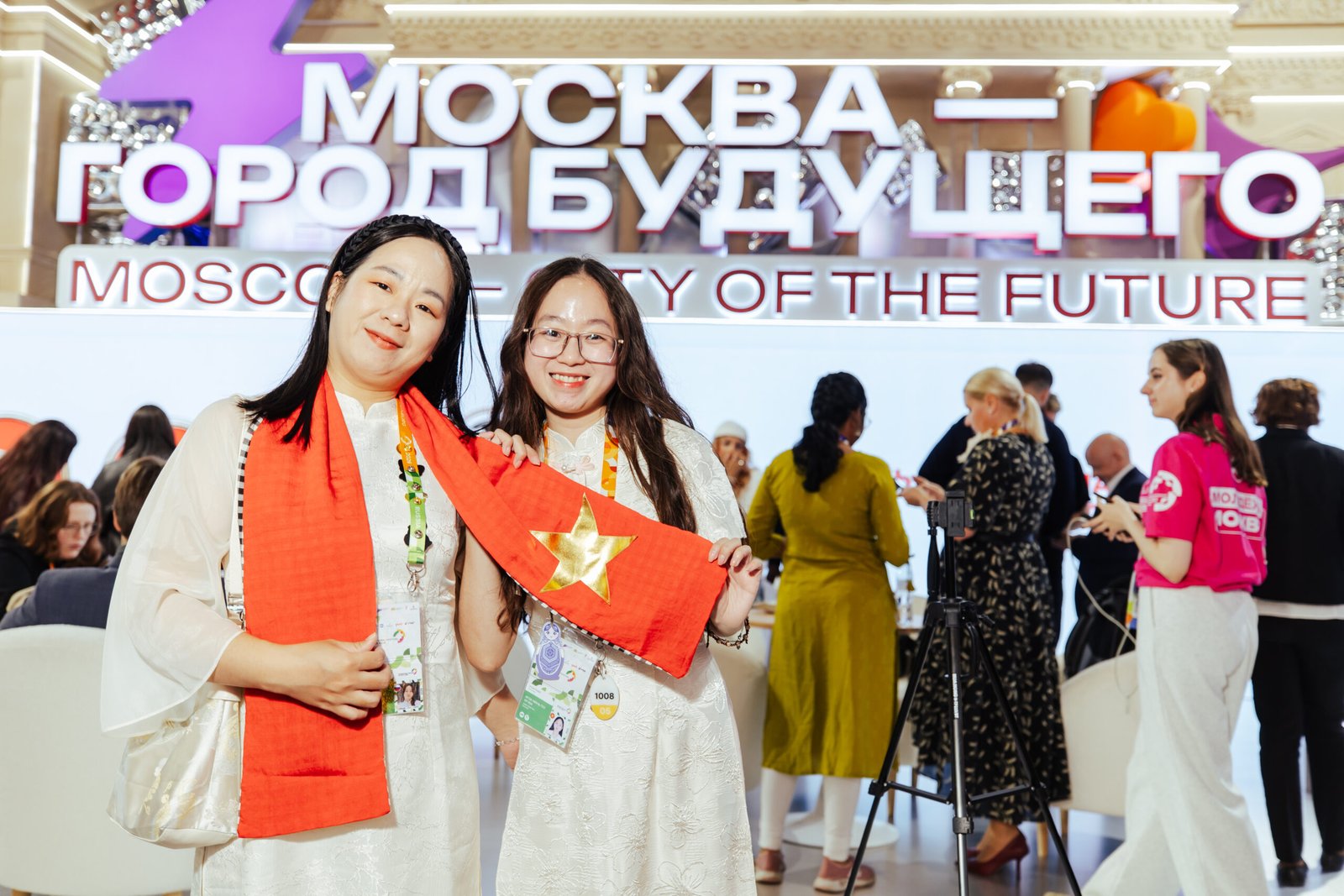
Special attention was paid to the Peace Belt project, which was created jointly by the World Peoples Assembly and the Center for Social Technologies “Dealing with Meaning”. It was presented by Elena Didenko, the Center’s project marketer, Head of the educational program and the Heritage Leaders Club, and Head of the ASO Territorial Development Production Center. Craftsmen from more than 119 localities around the world create a unique “social lace” from small fragments of fabrics and handicrafts, which are folded into a single “belt”. This symbol of unity has already united people from different countries.
In conclusion, the participants of the round table adopted a resolution noting:
• Crafts and traditions are not only a form of memory, but also a source of sustainable development and community unification;
• A culture based on continuity becomes a driving force for intergenerational dialogue and humanitarian diplomacy;
• Traditions gain new strength when not only craftsmen, but also active citizens and young people become their bearers.
Among the proposals are strengthening international cultural alliances, developing educational formats for the transfer of craft knowledge, scaling up best practices and supporting the Belt of Peace initiative as a symbol of unification through craft and beauty.
“Traditions are not the past, but the path to the future. We are ready to follow this path together,” the final document says.
Traditions as a Resource for the Future: The World Assembly discussed the Power of Crafts and Cultural Heritage